Best Time to Visit Vietnam: Where to Go Month by Month
Vietnam is long and each region keeps its own seasons, so somewhere is always at its best. For one trip through all three regions, March and April are the easiest months; October and November are lovely in the north but are peak flood season in central Vietnam.
See where to go each month ↓Written by Tụi mình mê biểnPublished Updated
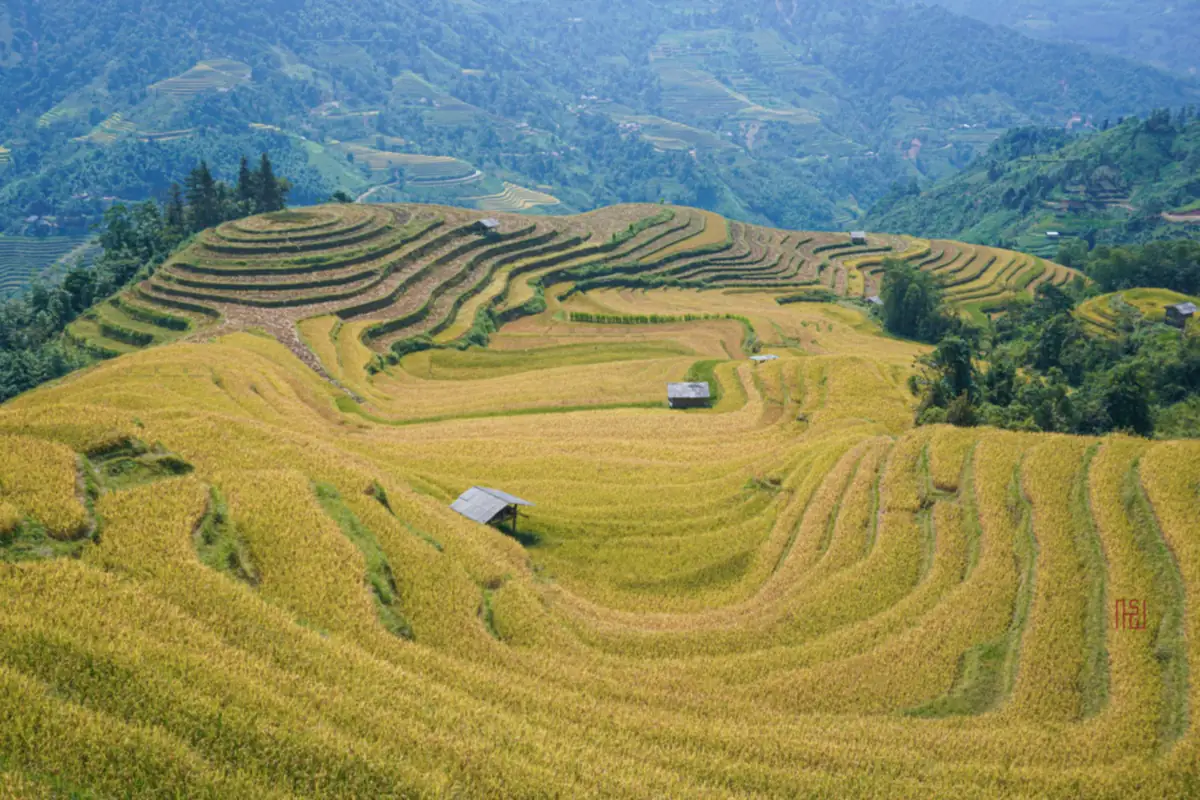
Photo: NKSTTSSHNVN
On a January morning, Sa Pa can wake up to around 8°C (46°F) while Ho Chi Minh City is past 30°C (86°F) by lunchtime and Hue is under a fine drizzle. So "when should I go?" only has an answer once you know which regions you want.
Where to go in Vietnam, month by month #
This table is based on long-term averages and the usual farming calendar. Rice and flower seasons shift a little each year; only a forecast close to your dates shows what your week will look like.
| Month | Good to go | Watch out for |
|---|---|---|
| January | The south, Phu Quoc and Da Lat (Đà Lạt); Nha Trang's dry season begins | Cold in the north, with frost on the high peaks during cold snaps; Hue and Hoi An still wet |
| February | The south, Phu Quoc, Nha Trang and Da Lat; Hoi An drying out | Tet 2027 falls in February; Hanoi turns damp and drizzly |
| March | Most of the country: the center is dry, the south is at the end of its dry season, the north is warming up | Hanoi still damp and drizzly |
| April | Hue, Da Nang, Hoi An, Hanoi, Ninh Binh (Ninh Bình) and Ha Long Bay | Hottest month in Ho Chi Minh City and the Mekong Delta, first rains late in the month; domestic crowds around April 30-May 1 |
| May | Central beaches and Nha Trang; rice ripens at Tam Coc (Tam Cốc) late in the month; planting season starts in the northern terraces | Rainy season begins in the south, on Phu Quoc and in Da Lat; the north heats up |
| June | Central beaches and Nha Trang | Hottest month in Hanoi and Hue; rain and storm season in the north; Phu Quoc wet |
| July | Central beaches and Nha Trang | Heavy rain and storms in the north and the mountains; school holidays fill the beaches |
| August | Central beaches and Nha Trang; rice starts turning gold around Sa Pa late in the month | Heavy rain across the north and mountains, with a risk of flash floods and landslides |
| September | Rice harvest season in the northern mountains; Nha Trang if your plans are flexible | Rain and storm season starts in Hue and Da Nang; viewpoints packed over the September 2 holiday |
| October | Hanoi, Ninh Binh and Ha Long Bay; buckwheat flowers in Ha Giang | Peak flood season begins in central Vietnam; Ho Chi Minh City and Phu Quoc still wet |
| November | The north, dry and mild; Phu Quoc's dry season from the second half of the month | Peak flood season in central Vietnam; Nha Trang's wettest month |
| December | The south and Phu Quoc; the north is dry and cold | Central Vietnam still wet; Phu Quoc hotels book up early for Christmas and New Year |
The best months for a trip across Vietnam: March and April #
A trip from Hanoi to Ho Chi Minh City will rarely dodge every shower, because the three regions get their rain at different times. March and April offer the best compromise: Hue and Hoi An are past their rainy season, the south is still dry and Hanoi is warming up.
We suggest starting in the south and finishing in the north: the first rains reach the south in late April, while Hanoi only turns warm and less humid from late March. In the middle of the route, you can take the train over the Hai Van Pass (đèo Hải Vân) between Hue and Da Nang instead of flying.
February, once Tet is over, is the next best choice, though Hanoi is damp and Sa Pa still cold. October and November work for trips weighted toward the north: start there, keep your central Vietnam days flexible, and save Phu Quoc or Ho Chi Minh City for the second half of November, when the southern rains taper off. In December and January, the simplest plan is to pair the cool, dry north with the sunny south and fly over central Vietnam. Summer suits a central beach trip better than a route across the country, since both ends are wet.
Rain and temperatures, place by place #
These are 2015-2024 averages from Open-Meteo model data; the last column gives the average daily low and high in the coolest and hottest months. The model works on grid cells a few tens of kilometers across, so some places differ from weather station records.
| Place | Drier months | Wettest month | Coolest and hottest month |
|---|---|---|---|
| North | |||
| Hanoi | Nov-Apr (36-94 mm, 1.4-3.7 in a month) | Aug, 419 mm (16.5 in) | Jan: 14.1-20.9°C (57-70°F); Jun: 26.6-33.4°C (80-92°F) |
| Ha Long | Nov-Apr (24-84 mm, 0.9-3.3 in) | Aug, 414 mm (16.3 in) | Jan: 14.4-20.1°C (58-68°F); Jun: 26.9-31.3°C (80-88°F) |
| Northern mountains | |||
| Sa Pa | Nov-Feb (79-122 mm, 3.1-4.8 in) | Aug, 454 mm (17.9 in) | Jan: 8.0-14.2°C (46-58°F); Jun: 18.6-23.9°C (65-75°F) |
| Mu Cang Chai (Mù Cang Chải) | Nov-Mar (38-77 mm, 1.5-3.0 in) | Aug, 430 mm (16.9 in) | Jan: 10.7-18.1°C (51-65°F); Jun: 20.8-26.6°C (69-80°F) |
| Dong Van (Đồng Văn), former Ha Giang province | Nov-Feb (61-107 mm, 2.4-4.2 in) | Jun, 311 mm (12.2 in) | Jan: 9.0-14.3°C (48-58°F); Jul: 21.1-26.5°C (70-80°F) |
| Central coast and highlands | |||
| Hue | Feb-Aug (66-176 mm, 2.6-6.9 in) | Oct, 572 mm (22.5 in) | Jan: 18.5-23.7°C (65-75°F); Jun: 26.3-34.5°C (79-94°F) |
| Hoi An | Feb-Aug (54-152 mm, 2.1-6.0 in) | Oct, 490 mm (19.3 in) | Jan: 20.0-24.1°C (68-75°F); Jun: 27.0-34.4°C (81-94°F) |
| Nha Trang | Jan-Aug (40-112 mm, 1.6-4.4 in) | Nov, 370 mm (14.6 in) | Jan: 21.7-26.3°C (71-79°F); Jun: 26.4-32.8°C (80-91°F) |
| Da Lat | Dec-Mar (21-65 mm, 0.8-2.6 in) | Sep, 290 mm (11.4 in) | Jan: 13.6-22.2°C (56-72°F); Apr: 15.7-25.9°C (60-79°F) |
| South | |||
| Ho Chi Minh City | Dec-Apr (13-77 mm, 0.5-3.0 in) | Sep, 346 mm (13.6 in) | Jan: 23.0-31.8°C (73-89°F); Apr: 25.8-34.2°C (78-94°F) |
| Phu Quoc | Dec-Mar (40-69 mm, 1.6-2.7 in) | Sep, 501 mm (19.7 in) | Jan: 23.7-29.2°C (75-85°F); Apr: 25.7-31.1°C (78-88°F) |
Northern Vietnam: autumn is the sweet spot #
In October and November, Hanoi is dry, with cool mornings and evenings that make a full day in the Old Quarter easy. Winter is dry and chilly with spells of smog; summer is hot, and heavy downpours can flood streets, so each season calls for different clothes and plans.
Storm season on the northern coast runs from about May-June to November, and when a storm approaches, cruise boats on Ha Long Bay are kept in port. In those months, put the cruise early in your northern days so you have time to rebook. Ninh Binh has two seasons of its own: golden rice at Tam Coc in late May and water lilies on the river from late October to December.
The northern mountains: September for golden rice #
Around Ta Van (Tả Van) near Sa Pa, the rice usually ripens in late August and early September; in Mu Cang Chai, the terraces turn gold during September. Harvest dates move with the year and the valley. If you can, go midweek and avoid the September 2 holiday.
Planting season, when the terraces are freshly flooded and reflect the sky, usually falls around May and June; in a late year, many fields in Mu Cang Chai only fill up in early July. For both flooded terraces and ripe rice, ask your homestay what the fields look like before fixing your dates. Ha Giang is at its best when the buckwheat flowers bloom in October and November. Mountain winters are cold, but snow in Sa Pa is rare and impossible to plan for.
Harvest season is also the tail end of the mountain rains, and from June to September flash floods and landslides on the passes are possible. Before a long mountain leg, check for flash flood and landslide warnings; if there is a warning for your route or the rain is heavy, postpone, whether you are riding yourself, sitting behind a driver or traveling with a guide.
Central Vietnam: dry from March, typhoons from September #
April to August is beach season in Da Nang and Hoi An, with plenty of sun and usually calm seas, and the easiest time for a trip to the Cham Islands (Cù Lao Chàm). Summer afternoons in Hue are very hot, so see the Imperial City and the royal tombs early or late in the day.
On the rivers from Quang Tri (Quảng Trị) down to Khanh Hoa (Khánh Hòa), flood season usually runs from September to December, and the biggest floods tend to come in October and November. You can still travel then if your tickets and rooms can be changed and you build in a spare day.
Nha Trang keeps a different calendar: dry from January to August, with most of its rain from October to December. If you are torn between beaches, you can compare 12 months of rain in Nha Trang, Da Nang and Phu Quoc.
Da Lat is wet from May to November, and its flower seasons come in two waves. Wild sunflowers bloom in late October and November; cherry blossom season follows around the turn of the year, from late December into January.
Southern Vietnam: dry from December to April #
The dry season is the best time for Mekong Delta floating markets and island days, though the first showers can reach Phu Quoc in late April.

Photo: Vyacheslav Argenberg
The rainy season from May to November is no reason to skip Ho Chi Minh City: most rain falls in the afternoon, mornings stay usable, and you just need to stay out of floodwater. Phu Quoc is different: from May to September the southwest wind blows straight onto the west coast and calm sea days become scarce, so the island is best in the dry season. The Mekong Delta also has its flood season from August to November, most visible upstream around Chau Doc (Châu Đốc) and Tan Chau (Tân Châu).
Tet and public holidays: crowded, pricey, and many places close #
Tet, the Lunar New Year, is Vietnam's longest holiday; in 2027, government offices close from February 4 to 10. Before Tet, trains, buses and flights fill up with people heading home; from the second to the fifth day of the new year, beaches, mountain towns and big pagodas are at their busiest. Room rates in resort towns such as Da Lat climb well above normal, and many family-run restaurants close for the first few days.
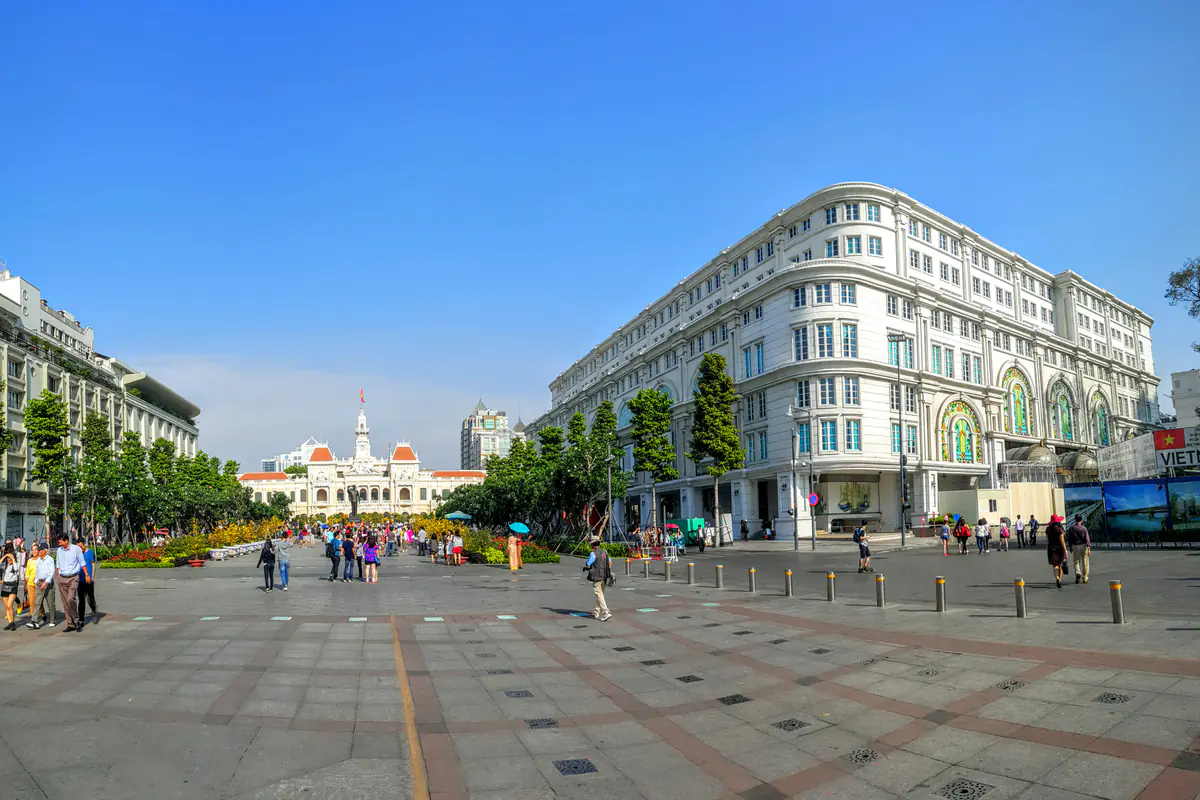
Photo: trungydang
If your dates are flexible, we suggest avoiding Tet week and arriving after the sixth day, when most shops and restaurants are open again. To see Tet itself, Hanoi or Ho Chi Minh City on the first three days is a good bet: the streets are quiet and many sights stay open. Book a refundable room as soon as your dates are set, and check what opens and closes over Tet.
Outside Tet, Vietnamese travelers are out in force over the April 30-May 1 and September 2 holidays and on summer weekends at the central beaches, so we suggest booking early. For Phu Quoc or Da Lat over Christmas and New Year, lock in your room in November.
Best time to visit Vietnam: your questions #
How long do I need for a first trip from north to south?
About two weeks covers Hanoi, Ha Long Bay or Ninh Binh, Hue, Hoi An and Ho Chi Minh City, with two long flights and the train between Hue and Da Nang. With three weeks you can add Sa Pa or Ha Giang in the north and Phu Quoc or the Mekong Delta in the south. With less than ten days, we suggest dropping a region rather than rushing through all three.
What should I pack for a March-April trip across Vietnam?
A light jacket for cool mornings and evenings in Hanoi and Sa Pa; breathable long sleeves, a wide-brimmed hat and sunscreen for midday in Hue and Ho Chi Minh City; and a compact rain jacket if you reach the south in late April. In the midday heat, rest in the shade or a museum and drink plenty of water; older travelers, anyone with a heart condition and families with young children should check with a doctor before the trip.
Related posts
Weather
Hanoi (Hà Nội) Weather by Month: When to Go and What to Pack
Monthly temperatures and rainfall for Hanoi, the most comfortable months, winter cold snaps, spring damp, summer heat and floods, air quality and what to pack.
Weather
Nha Trang Weather in November: Short Trips, Island Days and When to Reschedule
November rain can last several days, leaving little room to move a boat tour on a short trip. Keep the island day flexible and have a few plans for town.
Weather
Nha Trang Weather in October: Rain Patterns, Sea Days and a Flexible Plan
October has many rainy days, but that count says little about how much of your trip will be wet. Hourly forecasts are more useful when deciding what to do each day.