Sapa (Sa Pa) Trekking Guide: Routes, Local Guides, Homestays and When to Go
For a first trek, consider the roughly 10 km walk from town through Lao Chai (Lao Chải) to Ta Van (Tả Van), provided you are comfortable walking for several hours. Choose a dry day. You can return to town afterwards or stay overnight in a homestay. For Ban Ho (Bản Hồ), a local guide can help with unfamiliar trails and stream crossings. Fansipan (Phan Xi Păng) needs a separately arranged guided climb.
Written by Tụi mình mê biểnPublished Updated
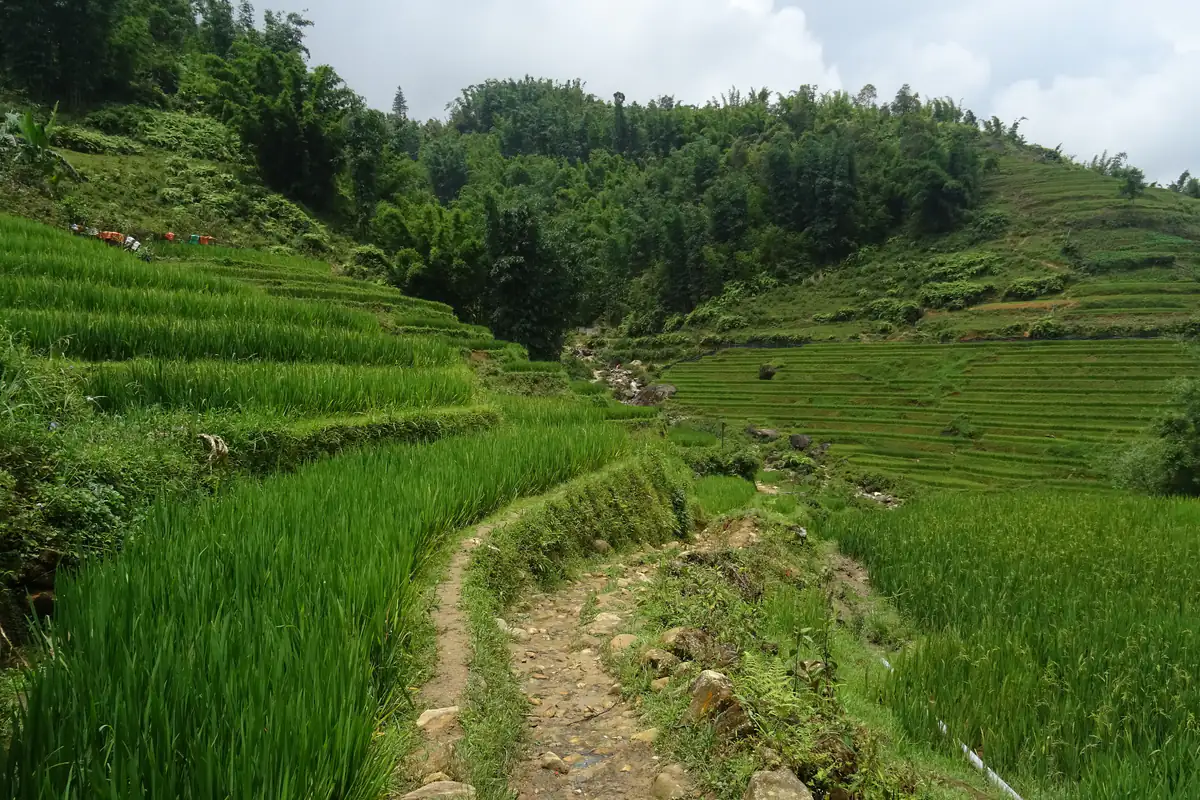
Photo: Christophe95
From central Sa Pa, Provincial Road 152 winds down toward the Muong Hoa Valley. Before long the trail leaves the asphalt and threads through the Hmong (Mông) terraces of Lao Chai, drops to the stream and reaches the stilt houses of the Giay (Giáy) people in Ta Van. It is the best-known walk around Sa Pa.
Distances are approximate map routes between the named places; trails through the terraces may differ. Confirm the actual route, walking time and pickup point locally.
| Route | The walk | Difficulty, notes |
|---|---|---|
| Cat Cat (Cát Cát) - half a day | About 2 km to the village, then stone steps down to the waterfall | Short, but with many steps; less suitable for limited mobility or sore knees |
| Lao Chai - Ta Van via Y Linh Ho (Ý Linh Hồ) - a day | About 10 km, 2-5 hours | Moderate; a good first trek if you can walk a few hours; slippery in rain |
| Ta Van - Giang Ta Chai (Giàng Tả Chải) - Ban Ho - two days, one night | Day 2: about 15 km from Ta Van, in addition to day 1 | Moderate; stream crossings: go with a guide, postpone in heavy rain |
| Fansipan on foot | Forest trails in the national park, 3,143 m summit | Hard; ages 16+, fit hikers, registered climb with a guide; postpone if severe weather is forecast |
Which Sapa trek: routes compared #
On the Lao Chai - Ta Van walk, you head down from town past Y Linh Ho and Lao Chai, have lunch in Ta Van, then take a car back or stay the night. Most of the morning is downhill, which is harder on the knees than on the lungs. The path mixes dirt, concrete and narrow terrace edges. On a morning bus from Hanoi (Hà Nội) you reach Sa Pa in the early afternoon, with time for Cat Cat at most, so save the longer walk for the next morning.
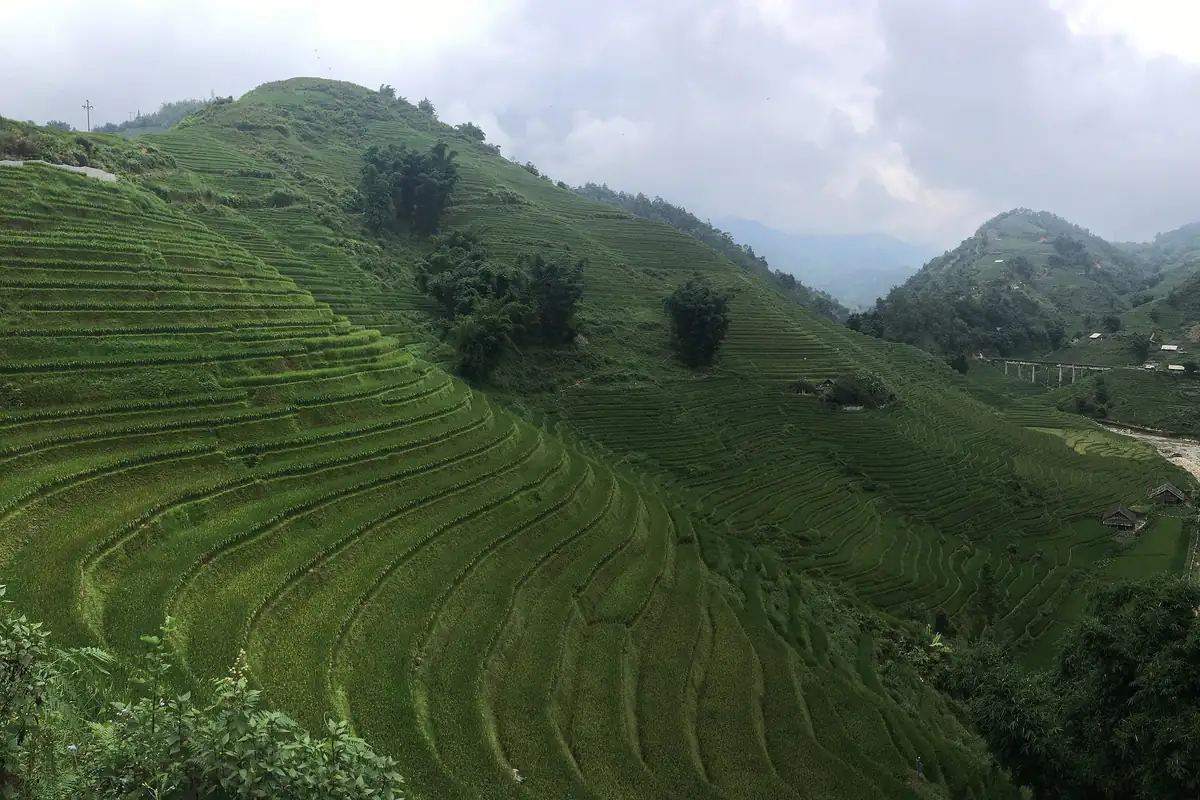
Photo: Christophe95
With two days, sleep in a Ta Van homestay and carry on next morning through Giang Ta Chai to Ban Ho, where a car can pick you up. This stretch is quieter, with forks in the trail and stream crossings. If you would rather ride mountain passes than walk, the Ha Giang (Hà Giang) loop suits that better.
Climbing Fansipan on foot
This is a demanding mountain hike in the national park, requiring more preparation than a village walk. Arrange registration and permit requirements with your operator or Hoang Lien National Park. Attempt the climb only with suitable fitness, a guide who knows the route and no severe-weather warnings.
Groups usually hire porters to carry gear; Bao Lao Cai reported in August 2025 that a porter earns about VND300,000-600,000 a trip, their wage rather than the price of a whole climb. Ask whether the price covers the VND150,000 climbing fee per person, tents and food; children under 16 may not climb (Lao Cai Resolution 17/2025). For the summit without the climb, there is the Fansipan cable car.
Do I need a guide for Sapa trekking? #
As of October 26, 2026, we found no rule requiring visitors to hire a guide to walk through the villages around Sa Pa. On a dry day, with an offline map, you can walk Cat Cat and Lao Chai - Ta Van on your own. Hire a guide for Ban Ho and unfamiliar forest trails. Heavy rain or flash-flood and landslide warnings mean postponing, even with a guide. In September 2025, two German visitors trekking on their own in Hoang Lien National Park got lost in a thunderstorm, and rising streams held back the first rescue team (Bao Lao Cai).
Book a guide through your homestay, hotel or a travel company with a real address. Ask for their on-site tour guide card number, issued by the province, and look it up in the Vietnam National Authority of Tourism's database. Agree the route, return time, what the price covers and whether you postpone or change route if it rains. If someone wants a deposit sent to an unfamiliar account, check who you are paying first.
Village entrance fees: Cat Cat, Lao Chai and Ta Van #
Cat Cat is right by town, with water wheels, a waterfall and cultural shows through the day. It is commercially operated and charges an entrance fee, so do not expect a forest hike. Its official site lists daily opening from 6:30-7am to 6pm but no ticket prices. Travel companies commonly list VND150,000 for adults (2025-2026), while children's prices vary by site; confirm on the village hotline, 088 638 1188.
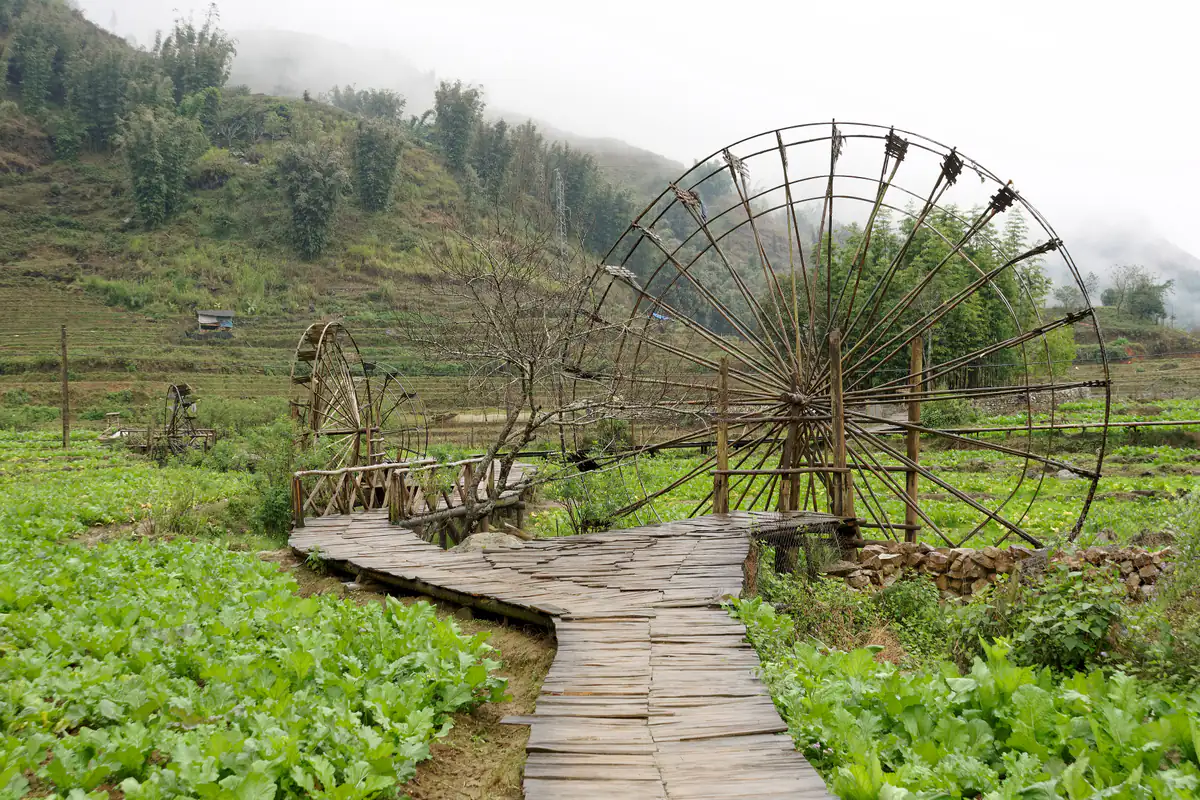
Photo: Jakub Hałun
The provincial sightseeing fee for the Muong Hoa Valley, where Lao Chai and Ta Van sit, stopped on August 1, 2021; the VND75,000 still quoted online dates from 2016. The sightseeing-fee table in Resolution 17/2025, in force since January 1, 2026, does not list Muong Hoa; ask your accommodation about any service charges on your chosen route. If someone asks you to pay, ask for a printed ticket showing who is collecting it.
Sapa homestay trek: two days, one night #
Ta Van has plenty of homestays, from VND200,000 per person in a shared room or VND700,000 for a double room a night (VnExpress, August 2026). Book ahead for Tet and the rice-harvest season.
Pick a homestay at the end of day one's walk and ask whether the price includes dinner, hot water and, in winter, an electric blanket. Leave big bags at your hotel in town and walk with a daypack and cash. Bring your passport: accommodation providers, including homestays, must declare foreign guests' temporary residence to the local police.
Best time for Sapa trekking #
Around Ta Van, the rice usually ripens in late August and early September, and the terraces are flooded for planting in May (VnExpress). If you are coming for the golden terraces, ask your homestay about this year's harvest dates. It is the prettiest time, but busy and still wet.
Open-Meteo model data for 2015-2024 puts Sa Pa's rainfall at roughly 280-450 mm a month from June to August, and still about 310 mm in September. Dirt paths turn to mud, slopes get slippery, streams rise fast and hillsides can slide.
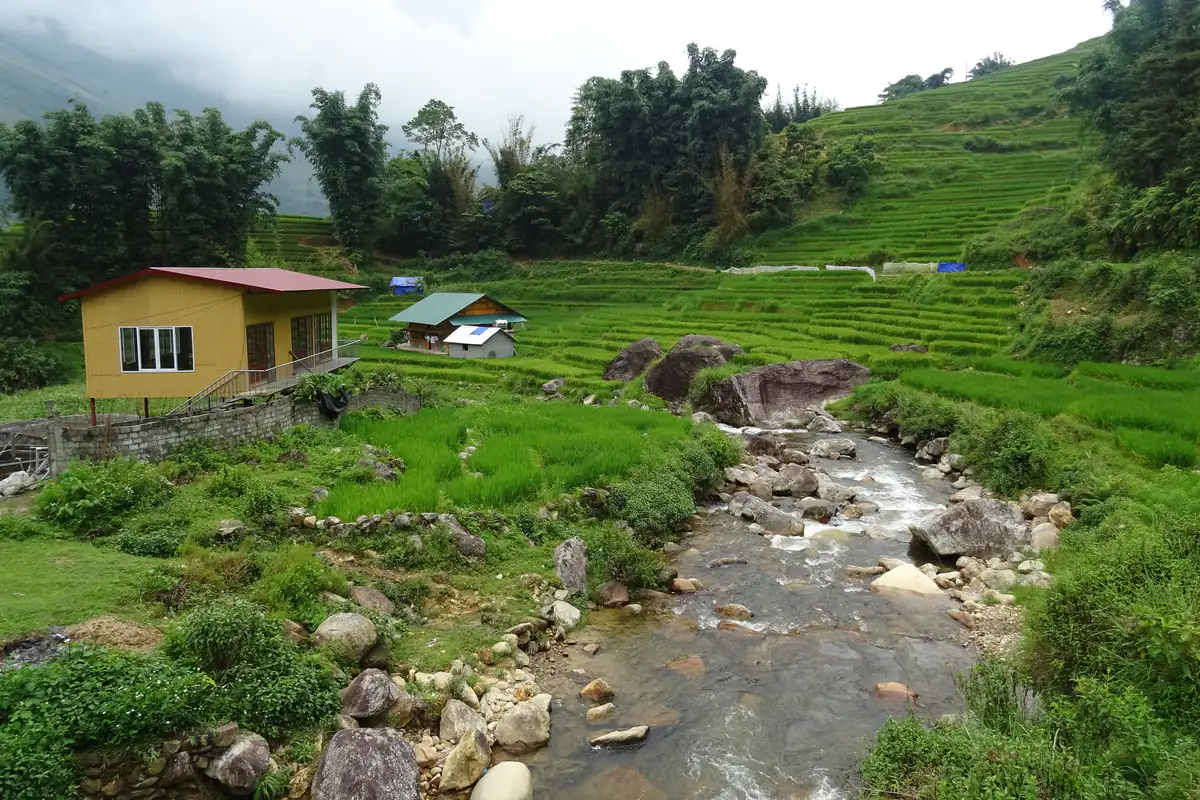
Photo: Christophe95
In October and November, rainfall drops to about 224 and then 79 mm and the air is cool; we think this is the most comfortable time to walk. From December to February, average daily lows in town are only 8-9°C, the high peaks see occasional frost, and snow is rare and impossible to plan for. Fog can hide the whole valley.
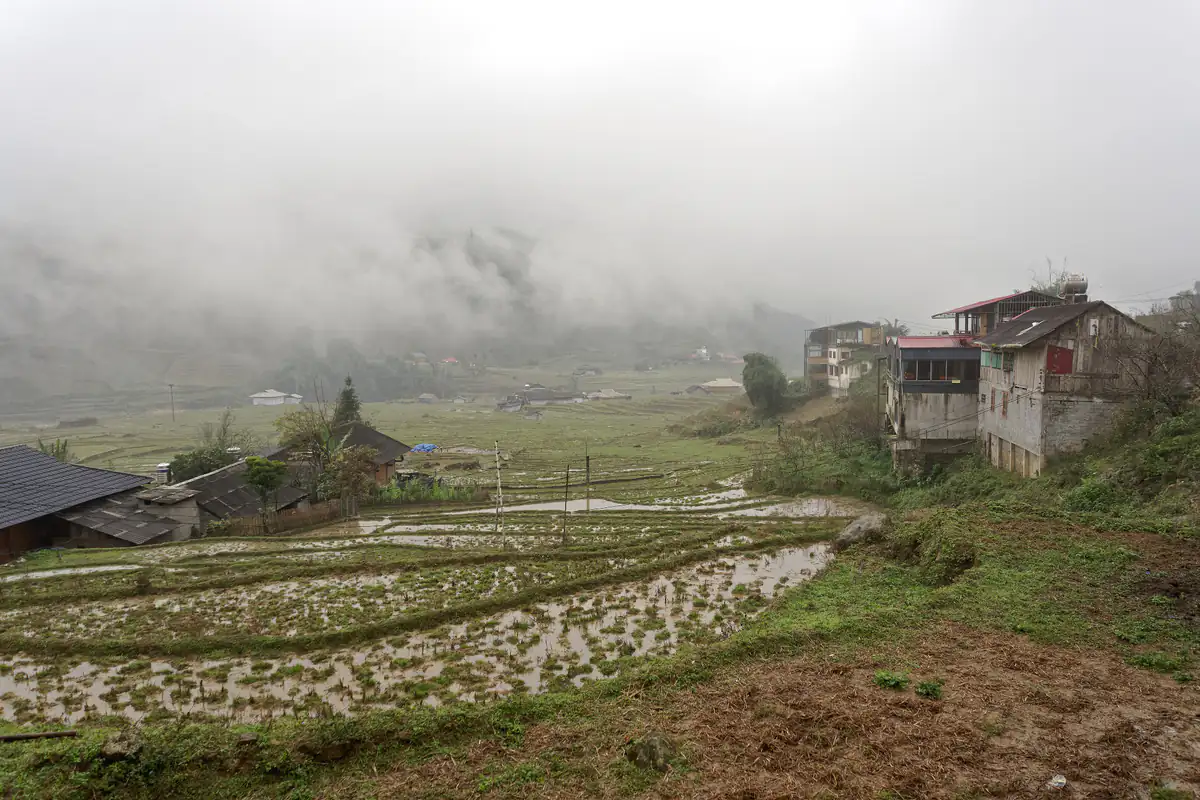
Photo: Jakub Hałun
What to pack #
- Worn-in shoes with good grip, and trekking poles if your knees struggle downhill.
- A rain jacket even in the dry season, plus warm layers from November to March.
- Enough water for the day, snacks, a hat and sunscreen.
- An offline map, a power bank and small-denomination cash.
Check that your travel insurance covers trekking, especially if you plan to climb Fansipan.
Visiting Hmong, Dao and Giay villages #
Lao Chai is a Hmong village, Ta Van is home to Giay and Hmong families, and Ta Phin (Tả Phìn) to Dao people. The terraces and gardens are working farms: stay on the path, do not step into the fields or cut across terrace walls off the trail, and close any gate behind you. Ask before photographing people, especially older people and children, and do not enter a house unless you are invited.
Sa Pa's authorities have spent years asking visitors not to give money to children or buy from persistent street vendors (DTiNews, February 2025). Do not hand out sweets either; to help, buy crafts from adults at homestays, markets or stalls. If someone walks with you for a while and then offers things for sale, buying is your choice: ask the price first, and decline politely if you are not interested.
Sapa trekking: FAQ #
Should I rent a motorbike to ride down to Ta Van and walk from there?
Motorbikes rent for about VND100,000-200,000 in Sa Pa town (VnExpress, August 2026). Ride yourself only if you hold a license valid in Vietnam for that class of bike (a Vietnamese license, or a valid 1968 Convention IDP issued by a contracting country, carried with your national license for the same vehicle class) and have experience on steep roads: the road to Ta Van has narrow, steep bends that get slippery in rain or fog. Otherwise take a taxi or a car booked by your homestay, and agree the fare before you get in.
Can I go Sapa trekking with young children?
Cat Cat is closest to town, but the way back is uphill, so judge your children's stamina. Try Lao Chai - Ta Van only if your children are used to walking for a few hours, the weather is dry and an adult stays right beside them; narrow terrace edges rule out strollers.
Should I book a Sapa trek from Hanoi or find a guide in Sa Pa?
A package from Hanoi is convenient on a two- or three-day trip, with transport, guide and homestay arranged; finding a guide through your accommodation in Sa Pa lets you discuss the route directly. Agree on weather-related changes and cancellation terms before paying.
Related posts
Road trips
Hanoi (Hà Nội) to Hoi An (Hội An) by Train: Times, Fares and the Transfer
Which overnight train crosses the Hai Van Pass in daylight, sleeper fares, the 30 km transfer from Da Nang Station, breaking the trip in Hue and keeping your things safe on board.
Road trips
Hanoi (Hà Nội) to Sapa: Sleeper Bus, Night Train or Private Car
Bus on the expressway or night train to Lao Cai, current SP train times and fares, the 35 km mountain transfer, rice harvest and winter, and timing your return on a 2-3 day trip.
Road trips
Ha Giang Loop (Hà Giang): Route, Itinerary, Easy Rider or Self-Drive
Distances for each leg, 3- and 4-day itineraries, when to ride yourself and when to book an easy rider, the best months and what to budget.