Booking Hotels and Tours in Nha Trang Safely: Checks Before You Pay
Before paying a hotel or tour deposit in Nha Trang, check who is taking the booking, who receives the money and the cancellation terms. Verify the contact details independently of the ad or message you received.
Written by Tụi mình mê biểnPublished Updated
Photo: Dominic Nelson
A social media post advertises a sea-view room on Tran Phu (Trần Phú), the beachfront road. You message the page, someone replies straight away with room photos and a bank account number, and explains that half the price secures the booking.
A quick reply, a 50% deposit or a different direct-booking rate does not, on its own, mean the offer is fraudulent. Before sending a deposit, take a few minutes to verify that whoever is handling the booking is the hotel or someone it has authorized.
Booking scams reported in Nha Trang #
Fake hotel pages are one of the booking scams reported in Khanh Hoa. In October 2024, 15 hotels and resorts, mostly upscale properties near Tran Phu, reported fake Facebook pages in their names. In August 2025 the provincial tourism department also warned about fake hotel websites, and in early October 2026 provincial police were still tackling impersonated accommodation pages.
| Booking situation | Signs worth checking | What to do |
|---|---|---|
| Fake hotel pages | Unfamiliar domain or number; a rate far below other channels; pressure to pay now | Cross-check independently, then call |
| Second payment request | A wrong reference, a frozen payment, a refund link | Stop paying; do not open links or share codes |
| Tickets or packages by message | Well below listed prices; bank transfer only | Buy through official channels |
| Binh Ba (Bình Ba), Binh Hung (Bình Hưng) and cut-price tours | Trips to Binh Ba or Binh Hung; many shopping stops | Do not book Binh Ba or Binh Hung. For other tours, check the operator and itinerary |
A second payment request can turn a lost deposit into a much larger loss. A Nha Trang hotel described the pattern in November 2024: the scammer claims the deposit is frozen, asks for another transfer, then sends a refund link that can expose your banking details.
Before you pay a deposit #
- Verify the website and phone number independently. Cross-check the domain and number against an independent listing, such as an official tourism directory or the booking platform you use. A website and Facebook page that link to each other are not enough, since a scammer can set up both; fake domains may differ by a single letter.
- Call rather than rely on chat. Ring the verified number and ask reception whether the room is available, what it costs and where the deposit should go. If the details do not match, pause payment and ask the hotel to verify the offer and whether the seller is authorized.
- Look at who receives the money. Hotels and tour companies usually take payment into a company account. If the payee is an individual or an unrelated company, ask the hotel about it on the verified number. A company name alone is not proof either.
- Get it in writing. The confirmation should show your name, dates, room type, total price, the deposit due, the cancellation terms and any extra charges worth asking about. It should come from the hotel's official channel, not only from the seller. After paying, ask the property to confirm the amount received.
- Check what support is available if a payment goes wrong. Before paying by card on the official website or through a booking platform, read the terms for your booking and check how to raise a dispute. Neither option guarantees a refund. For where cards work around town, see paying by card or cash in Nha Trang.
Tours and tickets: a few extra questions #
For a tour, ask for the operating company's name and travel business license number, then search quanlyluhanh.vn by either one with the nationwide option selected; filter by province only if you know where the business is registered. Listings show the license number, phone and often a website to compare with what the seller sent you. The site is in Vietnamese, so hotel reception may be able to help.
If you buy through an agent, a street-side desk or a social media creator, ask who runs the trip, whose name is on the confirmation and who receives the payment. Vietnam's National Authority of Tourism advises booking through official channels or reputable platforms, choosing tours run by licensed travel companies and considering travel insurance.
Agree in writing on the pick-up point and time, what the price includes, whether guests are insured, and what happens to your money if boats are not cleared to sail. If a tour costs far less than others, ask for the full itinerary: in October 2026, provincial police flagged cheap tours that pressure visitors into shopping stops. Do not book trips to Binh Ba or Binh Hung, even though they are still advertised online; tourism is not permitted in these areas.
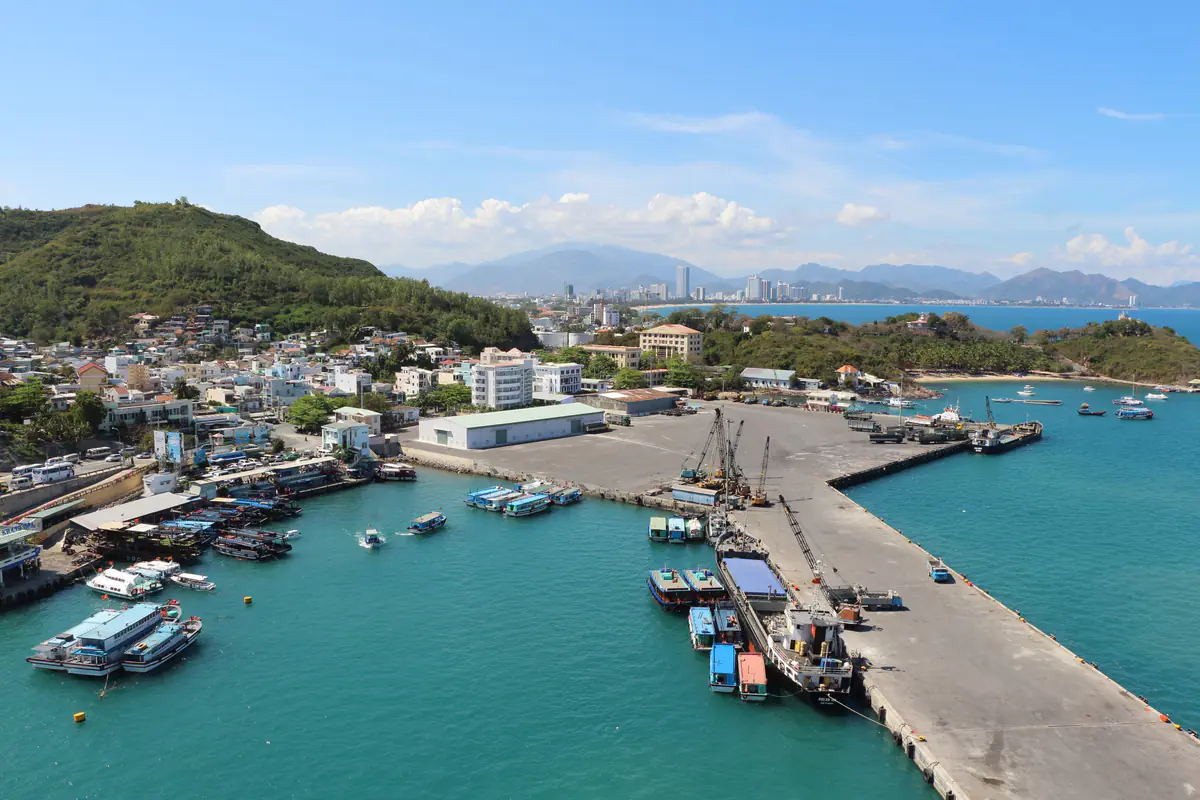
Photo: Ilya Plekhanov
VinWonders tickets include the return crossing to the island by cable car (from October 26 to November 10, 2026 the cable car is closed for maintenance and guests cross by speedboat). If an offer is much cheaper, check its price and inclusions against the operator's own listing before paying. Our VinWonders ticket guide explains the options. For VinWonders tickets, start at vinwonders.com; if you are unsure about a seller, check with Vinpearl through its official contact channels.
If you think you have paid a scammer #
- Contact your bank or card issuer straight away, using the number on your card or in your banking app. Report the suspected fraud and provide the payment time, amount, recipient account and reference. Ask the bank to investigate and explain any recovery options. Tell the bank immediately if you also disclosed a password, verification code or card details. For a card payment, ask about the dispute process. Freezing or returning funds depends on the circumstances; reporting quickly does not guarantee recovery.
- Keep the evidence: screenshots, links, messages, phone numbers and the payment receipt. Do not delete the chat, even if you have been blocked.
- Report it to the police in the ward or commune where you are staying, with your passport, the payment record and your evidence; reception can help with directions and calls. In an emergency, call 113.
- Call the Khanh Hoa tourist hotline on *2258 or 0947 528 000, which also takes scam reports.
- Tell the real hotel or company so it can warn other guests, report the fake page to the social media platform, and report the booking to the platform if you used one.
Your bank can investigate the transfer and explain how it will coordinate with the receiving bank and authorities. Accounts offering to "recover scammed money" or "unlock a frozen transaction" are often part of the same scam. If you need help with the police in another language, your embassy or consulate may be able to suggest local interpreters or lawyers.
Booking in Nha Trang: your questions #
Is a hotel Facebook page with a blue check mark and lots of followers safe to book through?
Not necessarily. Badges, likes and five-star reviews can be bought or faked, and some scam pages are renamed from older pages with large followings. Facebook's Page Transparency section shows when a page was created and whether its name has changed; a hotel page with a recent name change is worth asking the hotel itself about.
A small homestay wants an international bank transfer to a personal account. Should I pay?
Small homestays are often family-run, so a personal account is not in itself a sign of fraud. An international transfer is hard to reverse, though, so ask about paying by card on arrival or booking through a platform that shows its cancellation and refund terms. Otherwise, video-call the host to see the room, check that the account name matches the person you spoke to, and keep the deposit small.
I booked through a platform, and the hotel now asks me to pay by bank transfer instead. What should I do?
Compare the request with the payment terms in your booking confirmation. If the payment method, amount or deadline differs, pause and contact the platform's support team before paying.
📚 Sources
Information in this article draws on the sources below, as of the update date.
- VinWonders: Vinpearl Nha Trang cable car closed October 26-November 10, 2026 (October 1, 2026; in Vietnamese)
- Bao Khanh Hoa: Khanh Hoa sets up the *2258 tourist hotline, operating 24/7 and covering scam reports (December 3, 2025, in Vietnamese)
- Quan ly lu hanh (quanlyluhanh.vn): search travel businesses by name or license number, nationwide or by province (accessed October 17, 2026, in Vietnamese)
- Vietnam tourism database, Vietnam National Authority of Tourism: accommodation and travel business sections (accessed October 17, 2026, in Vietnamese)
- Khanh Hoa Tourist Information and Support Center: 0947528000 (accessed October 17, 2026, in Vietnamese)
- Vietcombank: Online transaction investigation requests, including transfers the recipient has not received (accessed October 17, 2026, in Vietnamese)
- BIDV: Terms and conditions for personal payment accounts, account freezes and reporting fraud or a disclosed password to the bank (effective April 21, 2025, accessed October 17, 2026, in Vietnamese)
- VnExpress International: Hundreds of customers scammed by fake room bookings in Nha Trang (September 29, 2024)
- Bao Khanh Hoa: Beware of fake hotel fan pages taking guests' deposits, 15 properties impersonated (October 23, 2024, in Vietnamese)
- Dan Tri: How scammers take hotel deposits, the frozen-system and refund-link tactics (November 12, 2024, in Vietnamese)
- SGGP: Khanh Hoa warns of online travel scams before the September 2 holiday, fake hotel websites (August 16, 2025, in Vietnamese)
- Tuoi Tre News: Vietnam's Nha Trang tightens tourism security, foreigner management (October 4, 2026)
- Viet Nam News: Tourism authority urges businesses to combat rising online booking scams (February 17, 2025)
- VietNamNet: Vietnam police warn of hotel booking scams targeting travelers online (May 5, 2025)
- Thanh Nien: Risks of unlicensed tours, National Authority of Tourism advice, Binh Ba and Binh Hung trips still advertised (August 21, 2026, in Vietnamese)
- Thanh Nien: Many lose hotel deposits, the Page Transparency check (May 14, 2026, in Vietnamese)
- Vinpearl: Warning about fraudulent and fake websites and Facebook pages, official sites and contact channels (December 12, 2024, archived April 28, 2025, in Vietnamese)
- CafeF: How to recover money transferred to a scammer, bank investigation then police report (October 19, 2025, in Vietnamese)
Related posts
Guides
Getting Around Nha Trang: Walking, Ride-Hailing, Taxis and Buses
Where to walk, when to book a motorbike or car in an app, how metered taxis work, the seafront electric buses, and what changes late at night or in heavy rain.
Guides
Nha Trang to Da Lat (Đà Lạt): Transport, Pass Hours and Itineraries
Choose a bus or car, time your crossing of the Khanh Le Pass, know the detour if it shuts, and pack for a beach town and a cool highland city on one trip.
Guides
Nha Trang Massage and Head Spa: What to Choose, Prices and Booking
Head spa, foot massage or body massage: pick by how tired you are, fit it in after an island day or before a late flight, and confirm the all-in price first.