Best Time to Visit Nha Trang: 12-Month Climate Table and Season Guide
The best time to visit Nha Trang depends on whether you want beach days, island trips or a slower, quieter break. The climate table and season notes below help you pick your dates; a forecast close to departure helps you adjust the plan.
Written by Tụi mình mê biểnPublished Updated
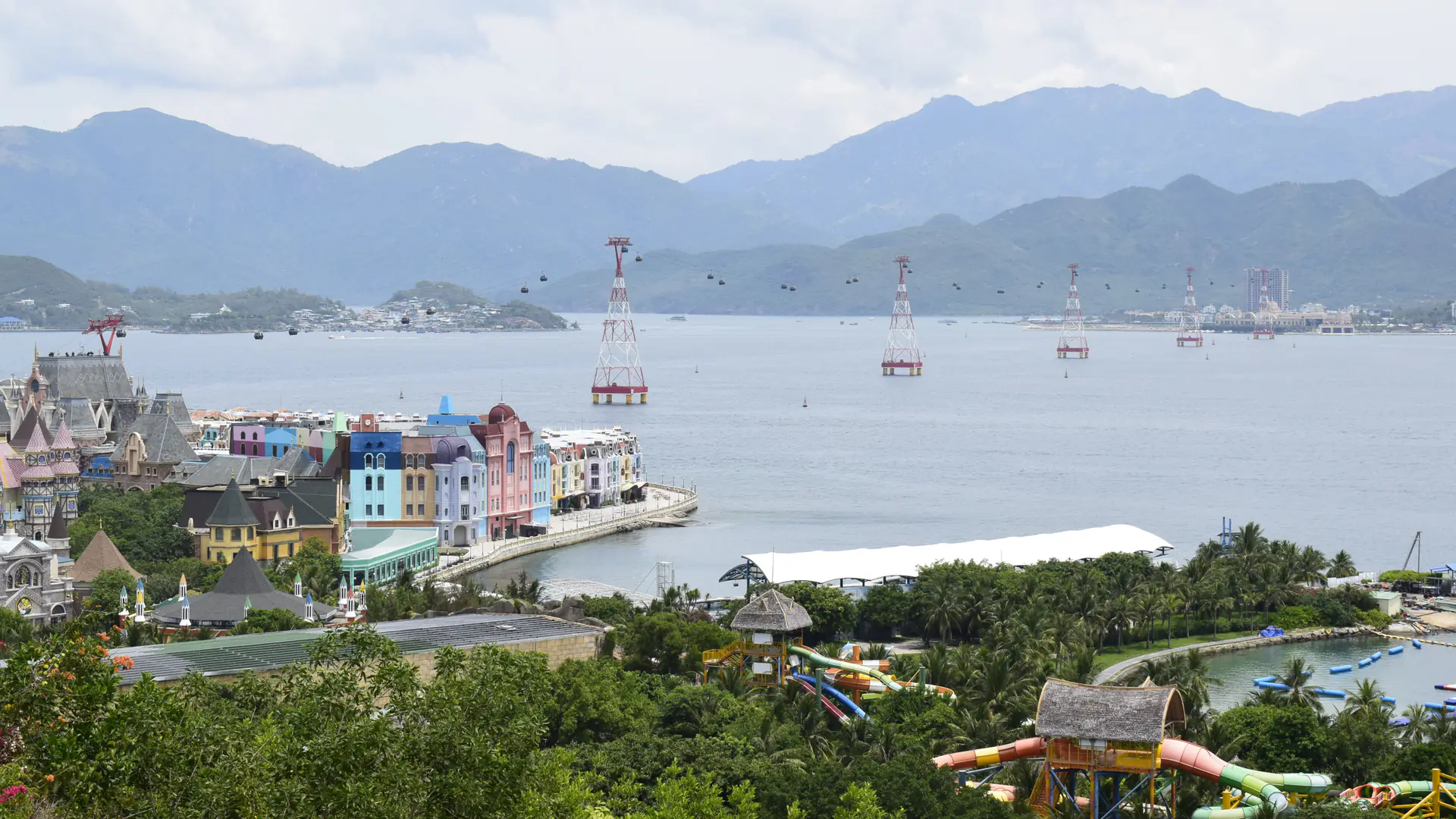
Photo: Rayrayokocha · CC BY 4.0 · Wikimedia Commons
Nha Trang has two clear seasons. From January to August there is little rain, the sea is usually calm and island boats run on a steady schedule. From September to December the rain arrives in waves and the swell builds. Temperatures barely change from month to month, so rain and waves are what shape your trip.
If the sea is the main reason you are coming, February through April is the easiest stretch: little rain, sun that is not yet harsh. May through August still suits beach days and island trips, just hotter and busier. October and November are the wettest months, better for a slow break than for days out on the water.
Below, we walk through the best time to visit Nha Trang one season at a time, using ten-year averages for 2015-2024 in the city center: what the weather does, what it suits, how prices move and which festivals fall when.
Best time to visit Nha Trang: the quick answer #
Average highs in Nha Trang sit at 26-33 degrees C all year. Even so, when you plan a swim, check the wave and wind forecast and the warnings on the beach, not just the temperature. The two seasons differ mostly in rainfall and in how calm the sea is.
Nha Trang climate table, month by month #
Ten-year averages for 2015-2024, central Nha Trang. A rainy day means 1 mm of rain or more. This is the picture across many years, not a forecast for your week, so use the table to choose a month and check the forecast once your dates get close.
| Month | Avg high (°C) | Avg low (°C) | Rain (mm/month) | Rainy days |
|---|---|---|---|---|
| Jan | 26.3 | 21.7 | 85 | 14 |
| Feb | 26.9 | 21.6 | 50 | 9 |
| Mar | 28.9 | 22.9 | 40 | 9 |
| Apr | 30.7 | 24.6 | 54 | 10 |
| May | 32.1 | 26.2 | 89 | 15 |
| Jun | 32.8 | 26.5 | 76 | 12 |
| Jul | 32.2 | 26.1 | 102 | 17 |
| Aug | 32.6 | 26.1 | 112 | 16 |
| Sep | 31.1 | 25.4 | 173 | 21 |
| Oct | 29.1 | 24.4 | 260 | 26 |
| Nov | 27.8 | 23.6 | 370 | 23 |
| Dec | 26.5 | 22.6 | 232 | 19 |
When you are weighing the best time to visit Nha Trang, the rain column is the one to read first. Rainfall is lowest in February-April, creeps up through summer, then piles up in October-November. November gets more than nine times the rain of March. December is drier than November but still wet, so "the rain stops in December" does not match ten years of data.
Dry season, January-August: sunny, and the sea is usually calm #
The dry season is when many people plan their trip around the beach and the islands. Rain is scarce, waves tend to be small and island boats keep a much steadier schedule than late in the year. Still, these eight months split into two quite different moods.
Early in the year it is breezy. By midyear it is hot.
January-April: cool breeze, the driest months
January and February are mild, with a steady onshore breeze and nights around 21-22 degrees C. January still carries a tail of the rainy season, with noticeably more rainy days than February-April. If your idea of the best time to visit Nha Trang is cool weather with little rain, February is usually the more comfortable pick.
March and April are the months many people choose for a beach trip. The sun is up but not yet fierce, the water is clear and the summer crowds have not arrived. If you are after the best time to visit Nha Trang for good beaches without the peak-season rush, start with March and April.
Spring also brings the Thap Ba Po Nagar (Tháp Bà Po Nagar) festival in the third lunar month each year, at the Cham towers ranked a special national relic since January 2025. The streets around the towers get busier during the festival, so book early and visit in the morning, ahead of the tour groups.
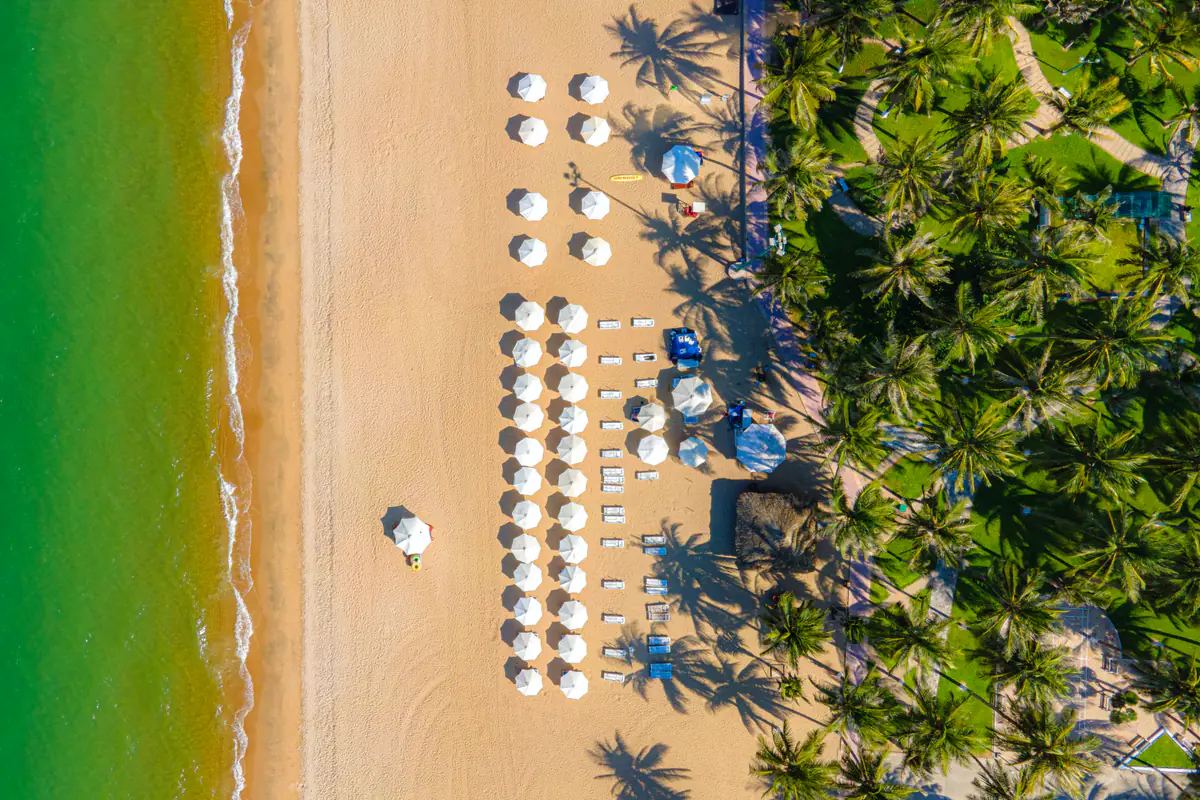
Photo: Hoàng Thạch · CC BY-SA 2.0 · Wikimedia Commons
Rip currents can show up even in the good season. In just six days of mid-February 2026, in the middle of the windy spell, 20 swimmers got into trouble here. Stay inside the eight marked swim areas, and stay on the sand when black or red flags are up.
May-August: long sunny days, warm water, busy streets
From May the sun gets stronger, with the year's highest temperatures at 32-33 degrees C. In return you get warm water, long days and pleasant evenings on the waterfront. July and August are a little wetter than early summer, mostly from evening thunderstorms.
A dry-season day has a clear rhythm. Early mornings are bright and the sea is flat, good for a swim or a boat out to the islands. After lunch the sun is harsh, the sand burns your feet and locals stay indoors for a nap. By late afternoon Tran Phu beach fills up again. Evening rain, when it comes, tends to pass quickly.
On the other hand, the peak months tend to be busier. In the first eight months of 2026, Khanh Hoa Province welcomed more than 18 million visitors, up 39.99 percent year on year. For June-August, book rooms and boat tours ahead instead of buying tickets at the pier.
If you want to line your trip up with a festival, the Khanh Hoa Sea Festival is the big summer event. The 2026 edition ran July 17-19 at 2 Thang 4 Square under the theme "Colors of the Ocean". The 2025 edition had 39 events and aimed for more than 600,000 visitors, so rooms around festival dates tend to fill early.
Midsummer is also jellyfish season. In July and August 2026, stinging jellyfish showed up in numbers around Hon Mun and Hon Bac, causing burns and blisters. Watch the water for a moment before you swim, and if you get stung, get ashore and find a lifeguard.
Rainy season, September-December: should you still come? #
If your holiday falls late in the year, the best time to visit Nha Trang becomes a question of how to travel in the rainy season. You can still come; the trip just takes a different pace. Rain here tends to come in spells, a torrential day or two followed by several bright ones, rather than weeks of drizzle. Rough water and storms matter more.
September is the transition month: much wetter than summer, but with calm mornings still common. October and November are the peak. In October 2025, the province issued a large-wave warning for all activities at sea off Nha Trang. Island tours in this season can be cancelled at short notice, so buy changeable tickets and avoid locking in a boat day for those two months.
December is drier than November, but the sea is still often rough. All four late-year months bring fewer domestic tourists, easier bookings and softer rates. Russian visitors escaping winter do the opposite: 851,390 arrivals in the first eight months of 2026, 3.05 times the year before.
This season suits a slow trip built around a resort, mud baths and long meals more than a packed schedule. September and October are also cloud-hunting season: locals ride up Hon En mountain, over 600 m high and about 15 km from downtown, to watch the city vanish under clouds at sunrise.
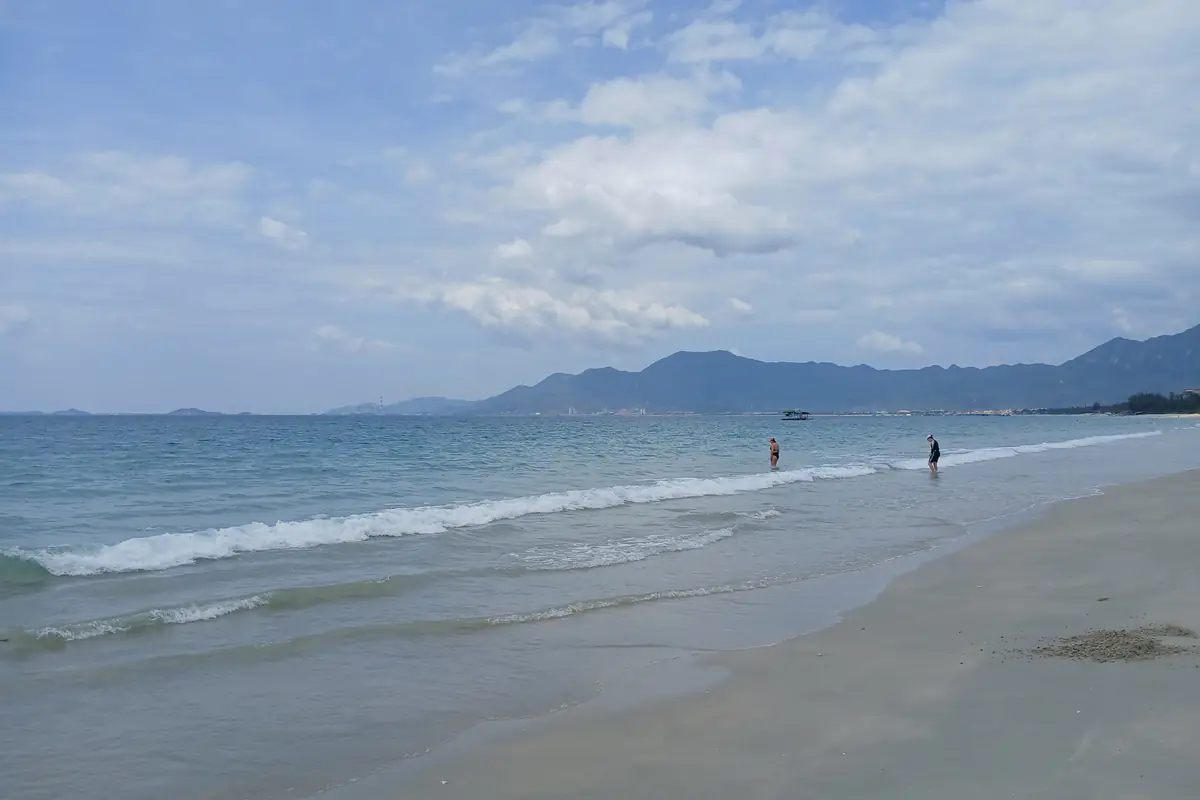
Photo: Victor311 · CC0 · Wikimedia Commons
What each season suits #
The best time to visit Nha Trang also shifts with your plans. Beaches and island hopping fit best between February and August, when rain is light and the sea is usually calm. For choosing a boat, a route and a budget, see our Nha Trang island hopping guide.
Snorkeling and diving are also best in February-August, when local operators say the water is clearest. That is trade experience rather than official data. Since June 13, 2024, diving has only been piloted in four zones of the bay, and Hon Mun (Hòn Mun) is not one of them.
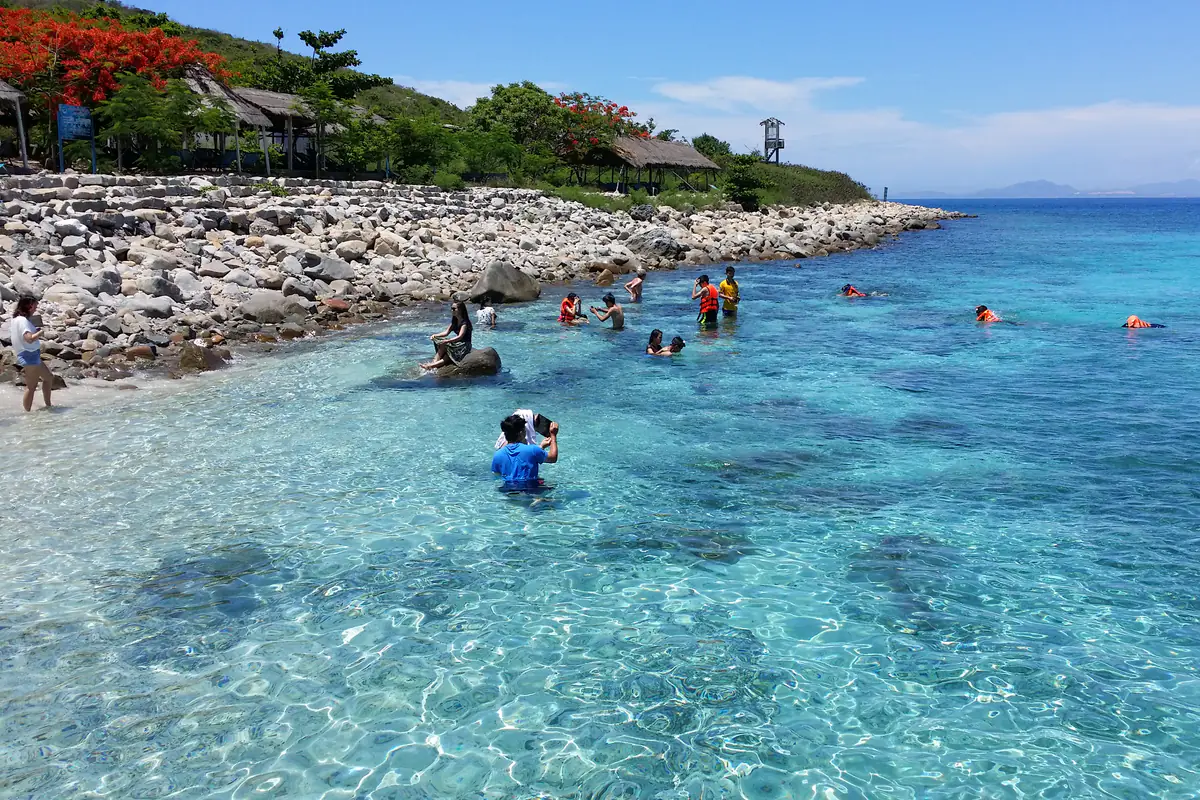
Photo: Nguyen Hung Vu · CC BY 2.0 · Wikimedia Commons
Late in the year, when the sea turns rough, the cloud trip up Hon En is another way to take in the bay, this time from above. On days of solid rain there is the oceanography museum, the mud baths and the other indoor picks in our list of things to do in Nha Trang.
How hotel and tour prices move with the seasons #
There is a money side to the best time to visit Nha Trang, and prices here follow the dry season quite predictably. The peak is June-August plus Vietnamese holidays, when domestic tourists pour in, so book a few weeks ahead. February-May brings similar weather at rates that are usually softer than summer.
September-December is usually the cheapest stretch for hotels, apart from the areas serving the Russian winter market, which stay busy. Trip budgets are broken down in our Nha Trang travel guide. When storms keep fishing boats in port, seafood can get scarcer and pricier, which affects the dinner plans in our what to eat in Nha Trang guide.
Climate table for choosing, forecast for fine-tuning #
The climate table helps you pick your dates; a forecast close to departure helps you adjust the plan. Ten years of data can point you to the best time to visit Nha Trang, but not whether a tropical depression will pass through during your particular week.
Three to five days before your trip, check the National Center for Hydro-Meteorological Forecasting, which issues Vietnam's official storm news and marine warnings. Once you are in town and want to know whether the day suits a swim, open our is the sea nice today tool, also on the Review Nha Trang homepage.
What to wear and pack for each season #
Once you have settled on the best time to visit Nha Trang, packing is simple. The temperature barely changes through the year, so the clothes stay the same. What changes is how much sun and rain gear you need.
January and February nights drop to around 21-22 degrees C, with a steady breeze off the sea. A light jacket covers an evening on the promenade.
From March to August, plan around the sun. Bring a wide-brimmed hat, sunglasses, a thin long-sleeved layer and reef-safe sunscreen if a boat day is on the list. In midsummer, hit the beach early or after 4 pm and keep the middle of the day for lunch and a rest. If boats make you queasy, take seasickness pills about 30 minutes before boarding.
From September to December, the useful kit is a packable rain poncho, a waterproof pouch for your phone and passport, and sandals with a back strap instead of canvas shoes. The sunrise cloud trip up Hon En in September or October calls for a jacket too, since it means a 15 km ride in the dark. Keep an indoor plan, such as the oceanography museum or a mud bath, for days when it pours from morning to night.
Traveling with young kids? In any month, keep them in a life jacket the whole time on the boat and in the water. Adults, too, should skip swimming right after a heavy meal or a few beers.
FAQ: the best time to visit Nha Trang #
A few common questions about choosing a month, answered from the climate table above.
What is the best month to visit Nha Trang?
For a beach trip, the best time to visit Nha Trang is usually February through April: the year's lowest rainfall (40-54 mm a month, 2015-2024 average), a usually calm sea and moderate heat. May-August still suits beaches and boat tours, just hotter and busier.
Does it rain in Nha Trang in August and September?
August averages 112 mm over about 16 rainy days, still dry season, mostly evening thunderstorms. September jumps to 173 mm and counts as the transition month: doable, but keep an indoor backup plan.
When is storm season in Nha Trang?
The regional storm season falls late in the year; ten years of data show the rain peak in October-November (260-370 mm a month). Follow storm bulletins at nchmf.gov.vn and choose changeable island-tour bookings then.
Is December a good time to visit Nha Trang?
It can be, as long as you do not expect a beach day every day: December still averages 232 mm of rain and the sea is often rough. In exchange you get low room rates and quiet streets, good for a resort, food and mud-bath trip.
What is the best season for diving in Nha Trang?
Local operators usually suggest February through August, when the water tends to be calmer and clearer (trade experience, not official data). Diving has only been piloted in four zones of the bay since June 13, 2024, not including Hon Mun.
📚 Sources
Information in this article draws on the sources below, as of the update date.
- Open-Meteo ERA5 2015-2024: Nha Trang temperature and rainfall (self-compiled, queried September 28, 2026)
- National Center for Hydro-Meteorological Forecasting (nchmf.gov.vn)
- Khanh Hoa newspaper: beach safety notes for Nha Trang (February 2026)
- Khanh Hoa newspaper: large-wave warning for Nha Trang waters (October 2025)
- Thanh Nien: Khanh Hoa welcomes first direct flight from Russia (September 24, 2026)
- Dan Tri: Nha Trang under a 'sea of clouds' at sunrise (September 28, 2026)
- South Nha Trang portal: Khanh Hoa Sea Festival 2026 (July 17-19, 2026)
- Bao Chinh phu: Thap Ba Po Nagar ranked a special national relic (July 2025)
- CafeF: stinging jellyfish hit Nha Trang swimmers (August 8, 2026)
- Znews Lifestyle: diving piloted in four zones of Nha Trang Bay (June 13, 2024)