Hanoi (Hà Nội) Weather by Month: When to Go and What to Pack
October and November are usually comfortable months to visit Hanoi, with less rain and cooler mornings and evenings. Late March and April are warm and pleasant too, though still damp. Winter brings cold snaps and poor air on still days, while summer is hot, with downpours that can flood the streets.
Written by Tụi mình mê biểnPublished Updated
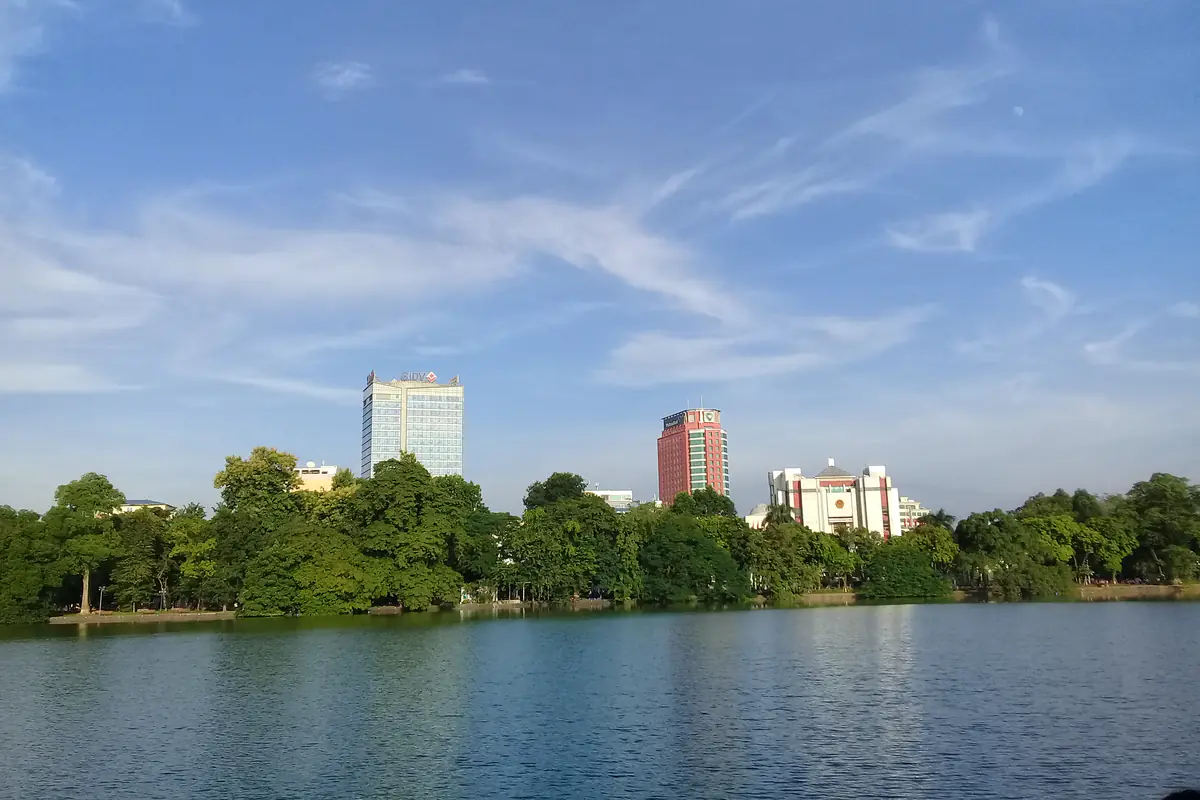
Photo: Trung geo
An October morning beside Hoan Kiem Lake is usually an easy walk: the sun is soft and there is a breeze off the water. The same path can be slick with drizzle in March and baking by noon in June. Hanoi has four fairly distinct seasons, and what you pack changes with each.
Hanoi weather by month #
| Month | Average low-high | Rain, rain days |
|---|---|---|
| January | 14.5-19.8°C (58-68°F) | 23 mm (0.9 in), 10 days |
| February | 15.8-20.6°C (60-69°F) | 25 mm (1.0 in), 11 days |
| March | 18.4-23.2°C (65-74°F) | 47 mm (1.9 in), 16 days |
| April | 21.9-27.7°C (71-82°F) | 92 mm (3.6 in), 14 days |
| May | 24.8-31.9°C (77-89°F) | 185 mm (7.3 in), 15 days |
| June | 26.4-33.4°C (80-92°F) | 253 mm (10.0 in), 15 days |
| July | 26.5-33.4°C (80-92°F) | 280 mm (11.0 in), 17 days |
| August | 26.1-32.6°C (79-91°F) | 309 mm (12.2 in), 17 days |
| September | 25.2-31.5°C (77-89°F) | 228 mm (9.0 in), 13 days |
| October | 22.8-29.2°C (73-85°F) | 141 mm (5.5 in), 10 days |
| November | 19.3-25.7°C (67-78°F) | 67 mm (2.6 in), 7 days |
| December | 15.8-22.0°C (60-72°F) | 20 mm (0.8 in), 5 days |
These are long-term averages for the Lang (Láng) weather station, published in Vietnam’s building standard QCVN 02:2022/BXD: the average daily low and high, total monthly rainfall and the number of days with rain. They describe the climate, not the forecast for your trip.
October and November: the best time to visit Hanoi #
If you can pick only one window, make it October to mid-November. Days are still warm, mornings and evenings are cool, and the air is far drier than in spring, so walking the Old Quarter, sitting at a sidewalk cafe or cycling around West Lake (Hồ Tây) is comfortable. It is also a pleasant season for a morning at the Temple of Literature (Văn Miếu).
Autumn is not always cool, though. Early October can still feel muggy at midday, and Vietnam’s national forecasting center still forecast afternoon highs of 32-34°C (90-93°F) for October 24, 2026. Pack light clothes for the middle of the day and add a light jacket for November evenings.
Hanoi in winter: December to February #
December is Hanoi’s driest month in the station averages, though individual days can still be grey or hazy. January, the coldest month, and February turn damper, and cold air masses can push temperatures well below the averages in the table. Most recently, Hanoi had severe cold through January 23, 2026, with lows of 10-12°C (50-54°F).
Vietnam defines a severe cold spell (rét hại) as a day when the mean temperature falls below 13°C (55°F). Open-Meteo model data for 2015-2024 shows Hanoi averaging about seven such days a year, almost all between December and February. For the coming winter, Vietnam’s national forecasting center (outlook issued October 15, 2026) expects severe cold to arrive later and on fewer days than usual, though short, sharp cold snaps are still possible.
In December, Hanoi is much drier than Hue (Huế) or Hoi An (Hội An), which makes it a good first stop on a December trip through Vietnam. The mountains are another story: Sa Pa is much colder than Hanoi and needs proper winter layers, and it is worth comparing the sleeper bus and night train to Sa Pa before you book.
The next Tet (Tết), the Lunar New Year, falls on Saturday, February 6, 2027, in the cold season and at the start of the damp spell. Pack warm layers, and expect many restaurants to close for the first days of the new year and train and bus tickets around Tet to sell out early.
February to April: the damp season (nồm) #
From late February, Hanoi enters nồm, the damp spell when floors, walls and windows sweat with condensation and laundry refuses to dry. The Lang station records its highest average humidity of the year in March and April, around 84-85%, and March averages more than nine days of drizzle. VnExpress reported in March 2025 that each damp spell typically lasts from three days to a week.
For visitors, nồm will not ruin a trip, but everything takes longer to dry and hotel lobbies and pavements get slippery. Choose a room with air conditioning that has a dry mode, pack shoes with good grip and bring a few zip bags for electronics. By late March and April it is noticeably warmer and the drizzle eases, making this the second-best time to visit.
May to September: heat, downpours and typhoons #
Hanoi summers are hot and humid. Open-Meteo model data for 2015-2024 shows more than 20 days a year with highs of 35°C (95°F) or more, mostly from May to July.
If you travel now, plan Old Quarter walks and market visits for early morning and late afternoon, and spend the middle of the day at your hotel or an air-conditioned museum. A lunchtime plate of bun cha (bún chả) under a fan, followed by a rest, is a sensible rhythm.
This is Hanoi’s rainy season, and rain tends to arrive as heavy downpours, sometimes with thunderstorms. Overnight on September 16-17, 2026, much of the city received 80-160 mm (3-6 in) of rain, and Hoa Bang (Hòa Bằng) Street flooded 60-70 cm (2 ft) deep. Typhoons can reach the capital too, with winds strong enough to bring down trees.
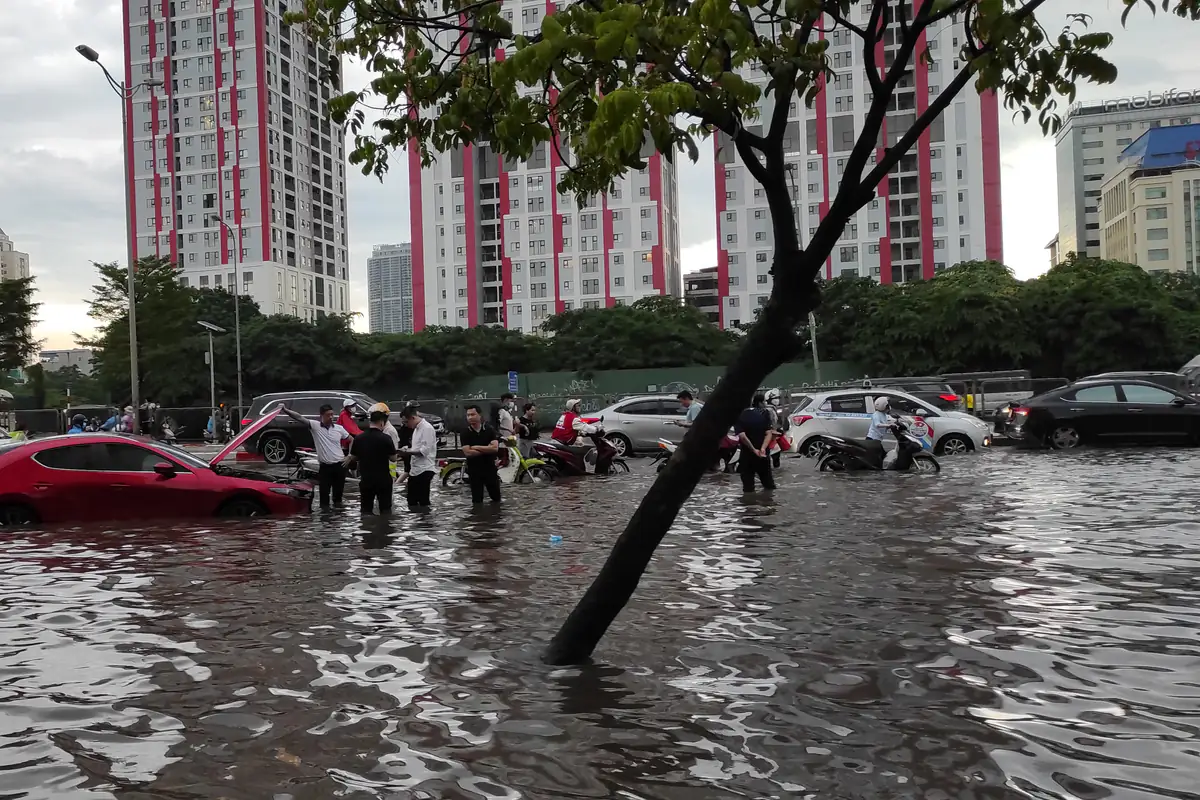
Photo: Nguyen QuocTrung
Heavy rain can also slow the ride between Noi Bai (Nội Bài) airport and the Old Quarter, so leave extra time on the day you fly.
Air quality in the dry season #
According to the Hanoi Department of Agriculture and Environment (October 2026), pollution episodes, mainly fine particulate matter (PM2.5), usually begin in October and are worst in the dry season from November to March. On calm days, pollution can rise sharply: on the morning of February 4, 2026, the Giai Phong (Giải Phóng) monitoring station recorded an AQI of 232, in the “very unhealthy” range (VnExpress International).
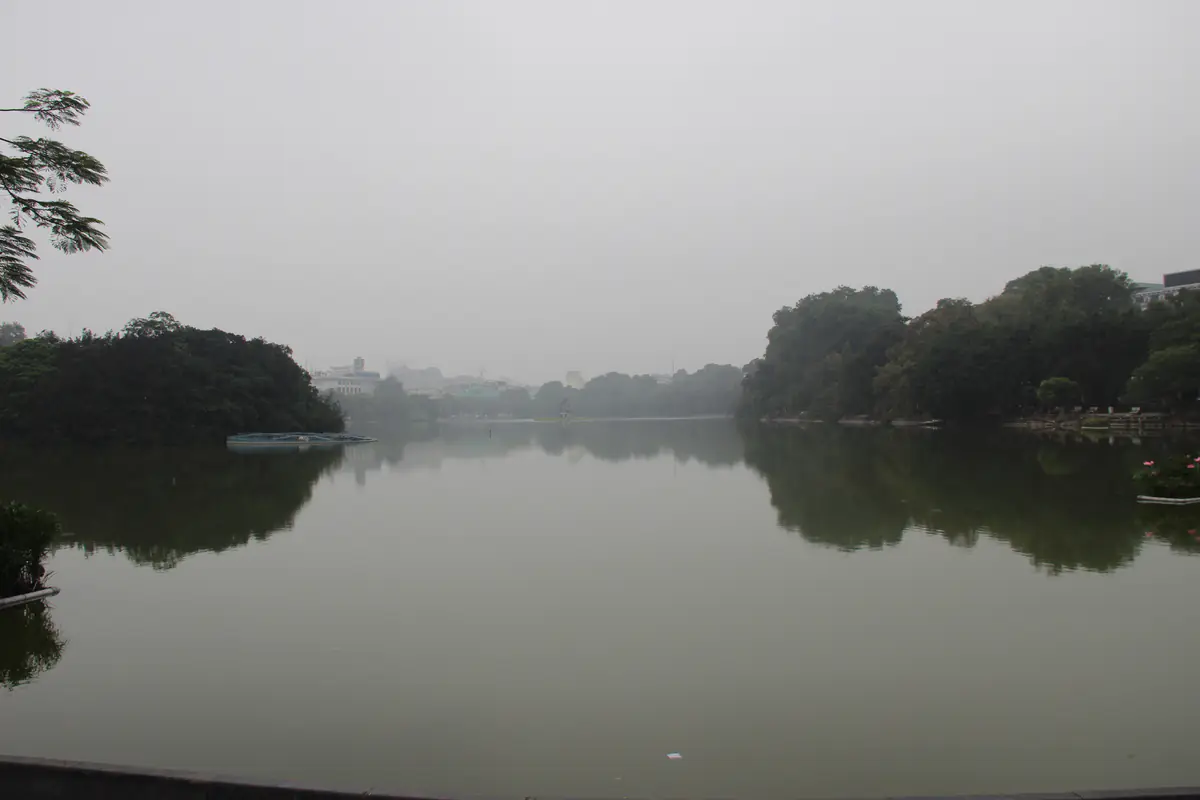
Photo: Gary Todd
Check the AQI on the Hanoi environmental monitoring portal (moitruongthudo.vn) or an air quality app before planning a long walk. Check which AQI scale the service uses; the thresholds below refer to the US EPA scale. On that scale, readings above 100 can affect sensitive groups, and above 150 some healthy people may feel effects too. On those days, cut back your time outdoors; if you need to go out, a well-fitted mask that filters fine particles can reduce how much you breathe in. If you have asthma or another lung or heart condition, talk to your doctor before a winter trip and bring enough of your usual medication.
What to wear in Hanoi by season #
- October-November: T-shirts and light shirts for the day; a light jacket or thin sweater for the evening, especially in late November.
- December-February: a warm jacket or light down jacket, a sweater, scarf and socks; wear layers you can peel off in cafes and museums. Ask your hotel whether rooms have reverse-cycle air conditioning or a heater.
- February-April: a light waterproof jacket, quick-dry clothes and shoes with good grip.
- May-September: breathable fabrics, a wide-brimmed hat, sunscreen, a packable rain poncho and strapped sandals for wet days.
For pagodas, temples or the Ho Chi Minh Mausoleum (Lăng Chủ tịch Hồ Chí Minh), we suggest covering your shoulders and wearing trousers or a skirt below the knee, even in midsummer.
Hanoi weather: your questions #
Does it snow in Hanoi?
Do not expect snow in Hanoi: even in Sa Pa, snow is rare and impossible to predict far ahead.
Do the temperatures in the table match how it feels on the street?
Not exactly. The table shows long-term averages from one weather station. During heatwaves, forecasters note that it can feel 2-4°C (4-7°F) hotter than the measured temperature in areas with lots of concrete and few trees (May 2026). In winter, damp air and northerly wind can make it feel colder than the number on your phone.
How should I book a trip to Hanoi in the rainy season?
Choose flights and rooms you can change or cancel, and keep at least one free day before your international flight home or before a side trip to Sa Pa or Ha Long (Hạ Long) Bay. Bay cruises and mountain transport can change with weather warnings, so check with the operator the day before.
Related posts
Weather
Nha Trang Weather in February: Dry Days, Stronger Sun and a Calmer Sea
Little rain, stronger sun, a calmer sea with the odd rough spell: swimming and island trips in Nha Trang in February, and what Tet changes.
Weather
Vietnam in December: Weather by Region, Where to Go and Holiday Crowds
Which regions are sunny, cold or still wet in December, where to go for beaches or mountains, Christmas and New Year crowds, and what to pack.
Weather
Da Nang (Đà Nẵng) Weather in November: Rain, Floods and Whether to Go
November in Da Nang means rain in spells, rough seas and a chance of floods in Hoi An: who it suits, what to book flexibly and what to do on wet days.