Temple of Literature in Hanoi (Hà Nội): Tickets and Visiting Tips
The Temple of Literature (Văn Miếu - Quốc Tử Giám) suits an unhurried morning visit: a daytime ticket is VND70,000 and the five courtyards take about an hour and a half. The night tour costs over four times as much and suits a second visit better.
Written by Tụi mình mê biểnPublished Updated
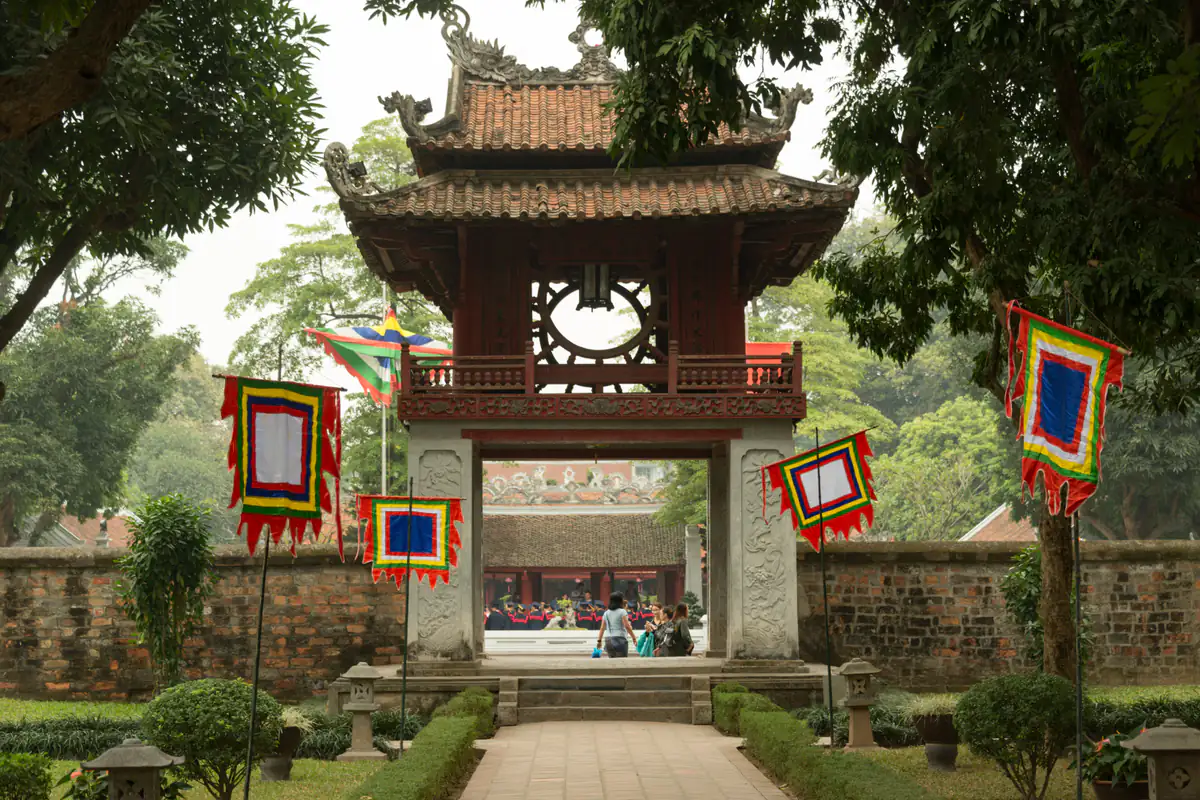
Photo: Xiquinho Silva
Step through the gate at 58 Quoc Tu Giam Street and a red brick path runs straight ahead between old trees, the traffic noise fading behind the wall. One more gate and you reach Khue Van Cac, a red wooden pavilion with round windows on all four sides. Beyond it lie a square pond, rows of stone stelae on the backs of tortoises, and the grounds of what is considered Vietnam’s first university.
Day visit or night tour? #
For a first visit, go by day. Daylight makes the inscriptions and stone carvings easier to see, along with the roof tiles and wood carvings, and the ticket costs less than a quarter of the night tour. A loop through the five courtyards, with longer stops at the stelae and the last courtyard, takes an hour to an hour and a half. We would aim for the 8am opening, while the sun is still low through the trees.
The night tour, called “The Essence of Education” (Tinh Hoa Đạo Học), suits people who have already seen the site by day or only have an evening in Hanoi. According to the official site, you walk through lit courtyards, meet a calligrapher, print an image of Khue Van Cac from a woodblock onto handmade dó paper and watch a 3D mapping show in the Thai Hoc (Thái Học) courtyard. Tickets are sold on the official site with online payment, or through the hotline at 033 644 1838; ask there which languages the guiding is in and what time the gate opens.
The booking page calls the two-show package a 7:45pm plus 8:45pm combo without saying whether the shows differ. We think one show is enough unless the hotline tells you otherwise. Night tickets go by height and day tickets by age, so a child of 1 m or taller pays at night even though they enter free by day.
The five courtyards: what to look for #
The site is a line of five walled courtyards, each entered through its own gate: Nhap Dao (Nhập Đạo), Thanh Dat (Thành Đạt), the stelae garden, Dai Thanh (Đại Thành) and Thai Hoc. The temple to Confucius was founded in 1070 and the Imperial Academy, Quoc Tu Giam, in 1076.
The main gate and first courtyard
The main gate, inscribed “Văn Miếu Môn” (Gate of the Temple of Literature), dates from the early 20th century, with a pair of stylized stone dragons in front. Inside is a lawn with a straight central path to the Dai Trung (Đại Trung) gate. This is a good place to put on an audio guide or check the site map before going further.
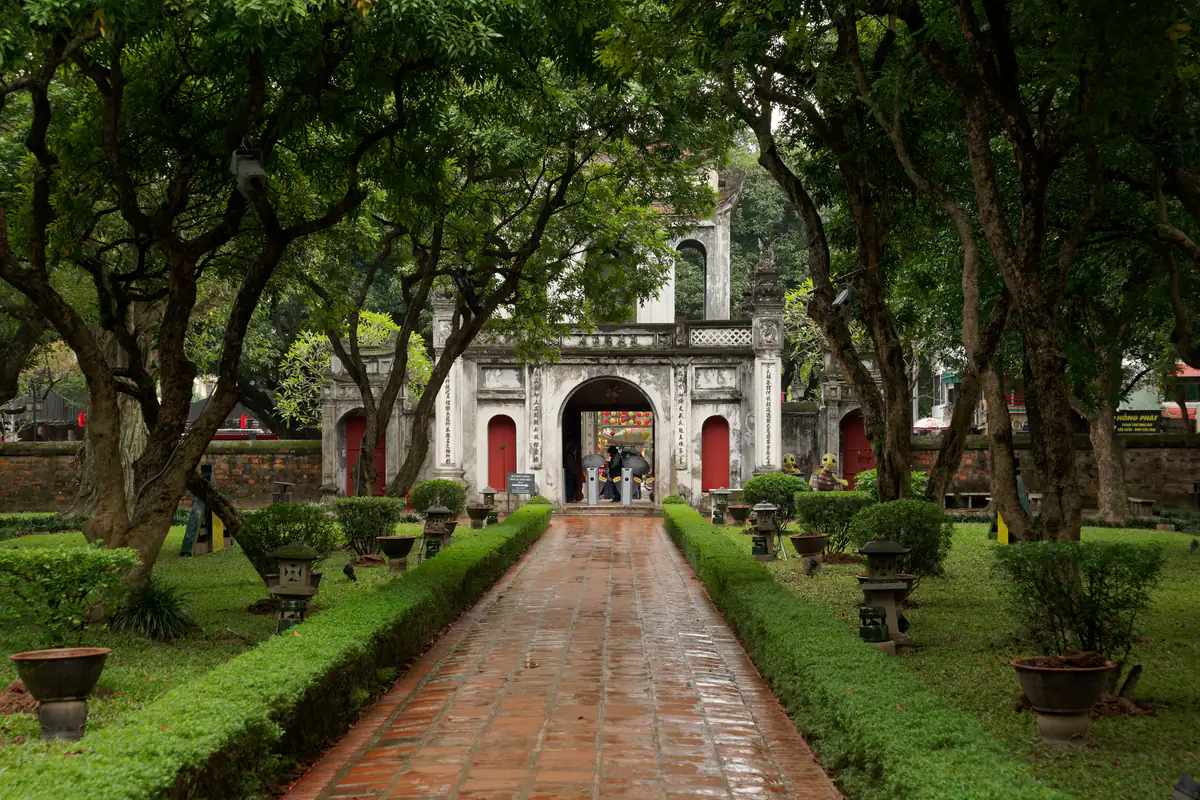
Photo: Jakub Hałun
Khue Van Cac
The pavilion was built in 1805: four brick pillars below, a wooden upper floor above, and round windows whose wooden spokes stand for the rays of the Khue star, the star of literature. The city has adopted it as the symbol of Hanoi. The classic photo is from the central path, looking straight at the pavilion.
The doctoral stelae
The Well of Heavenly Clarity (Giếng Thiên Quang) fills the middle of the third courtyard, with the stele houses on either side. According to UNESCO, the 82 stelae were erected between 1484 and 1780 to record the laureates of royal examinations held from 1442 to 1779, and they are on the Memory of the World register; Vietnam named all 82 a national treasure in 2015. Each stands on a stone tortoise. Walk slowly along one row and you will see the tortoises, their shells and the borders at the top of each stele change from period to period.
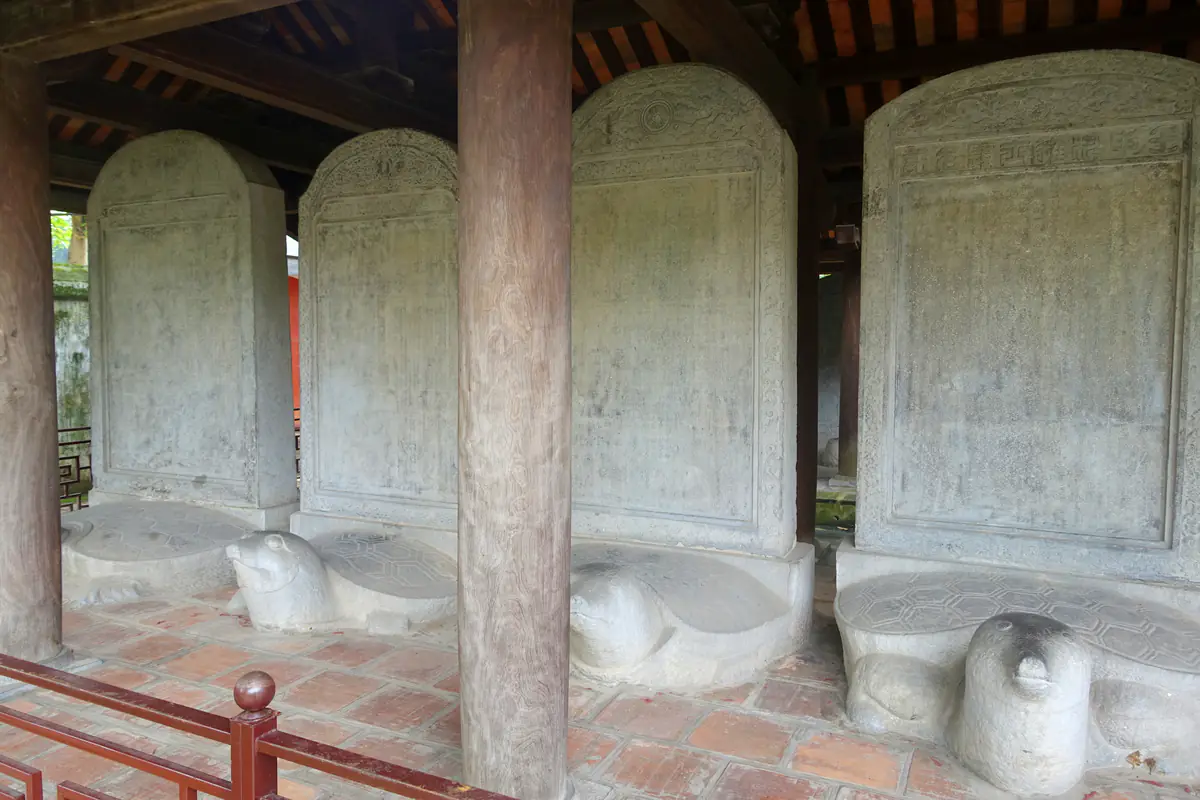
Photo: Daderot
The Dai Thanh courtyard
Through the Dai Thanh gate is the place of worship: a nine-bay House of Ceremonies on 40 ironwood columns, with a board reading “Vạn thế sư biểu”, honoring Confucius as the teacher of all generations. Schools and family groups still come here to offer incense for their students. Keep your voice down here; this is an active place of worship.
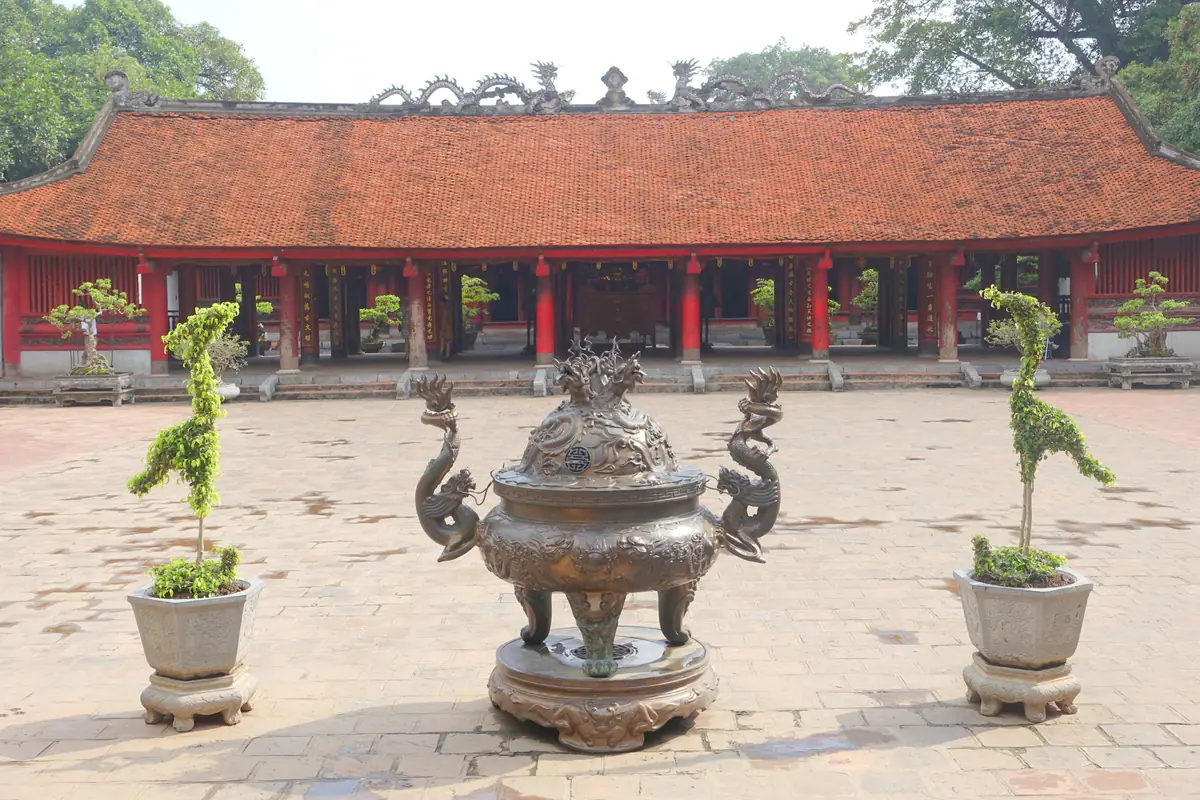
Photo: Daderot
The Thai Hoc courtyard
The last courtyard was rebuilt in 1999-2000 on the grounds of the old academy. The ground floor of the rear hall honors the teacher Chu Van An (Chu Văn An) and holds a small exhibition on the origins of Confucian learning; the upper floor honors three kings linked to the site’s founding. The broad brick yard, with a bell tower and a drum tower on either side, is the place for wide shots and a rest before leaving through the Van Mieu Street exit.
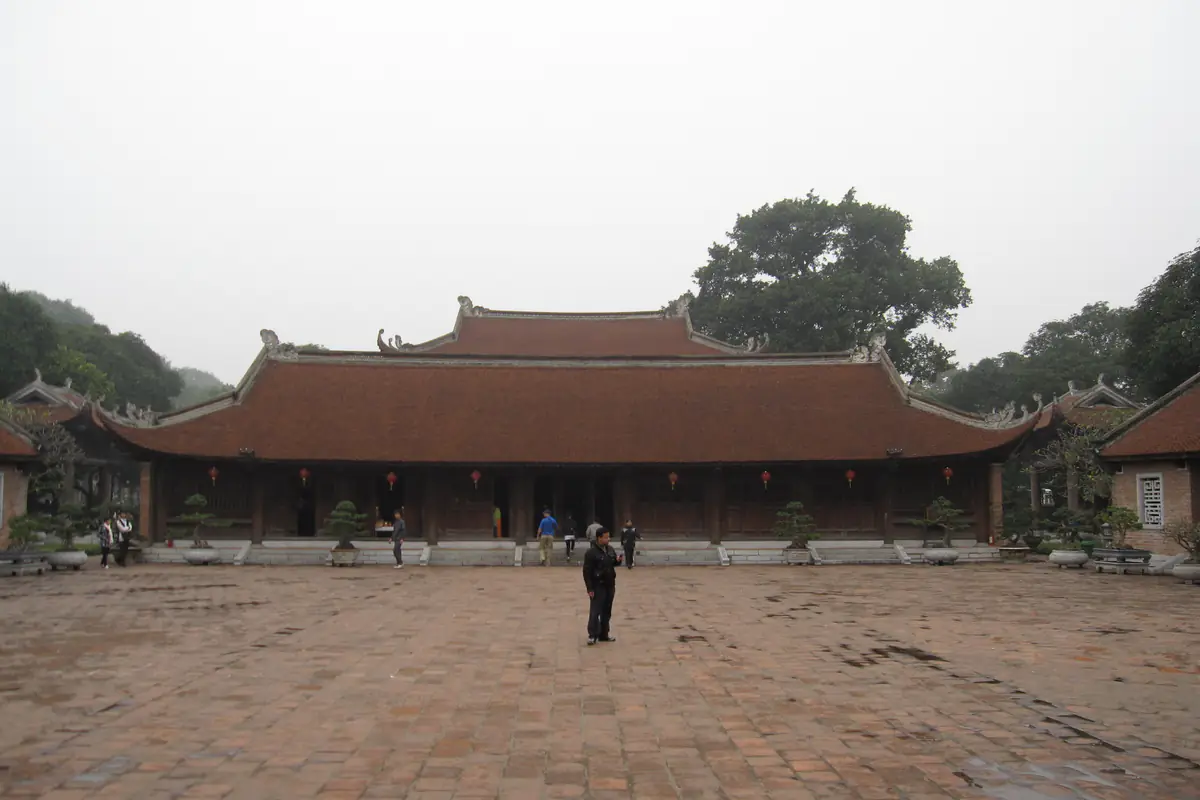
Photo: Gryffindor
When it’s less crowded #
The two busiest seasons are tied to exams and calligraphy. In the days before the national high school graduation exam, usually held in June, students and parents crowd in to light incense. Over Tet (Tết), the Lunar New Year, a calligraphy fair fills the Van Lake (Hồ Văn) grounds in front of the temple; in 2026 it ran from February 11 to March 1.
During Tet 2026, the site closed from noon on Lunar New Year’s Eve and reopened on the first day of the new year (Báo Văn Hóa); the schedule for the coming Tet, which begins on February 6, 2027, had not been announced as of October 25, 2026. If you want calligraphy without the crush, pick a weekday later in the fair. Beyond the temple, Tet changes opening hours and transport across Vietnam, so plan the rest of your days around it.
On November 23, Vietnam’s Cultural Heritage Day, Hanoi’s fee-charging heritage sites waive admission under the fee rules in force since January 1, 2024; it falls on a Monday this year, so check with the site first. Outside these dates, a weekday morning at opening time is the calmest slot. When you pick a date, factor in Hanoi’s weather month by month: hot, humid summers, cool winters and spells of poor air.
Dress code, etiquette and photos #
The official rules ask for respectful attire in the shrines and quiet in sacred areas; both the Dai Thanh courtyard and the Thai Hoc halls are places of worship. The rules do not spell out what counts as respectful, so we suggest covered shoulders, shorts or skirts to the knee, and shoes with grip, since the brick yards get slippery after rain.
The rules also forbid touching, writing or drawing on artifacts, stelae and buildings; the stainless steel railings around the stele houses are there to stop people rubbing the tortoises’ heads for exam luck. Look and photograph from outside the railing, and do not reach over it or leave coins or papers on the stelae.
Photos are fine throughout the courtyards. Inside the shrines, avoid standing in front of people who are praying and turn the flash off. Smoking is banned on site, and so is walking on the grass. There is an information desk, free Wi-Fi and an audio guide for anyone who wants the story behind each stele.
Pairing it with the mausoleum, the citadel and the Old Quarter #
Measured on the map, the Van Mieu Street exit is about 1.2 km on foot from the Ho Chi Minh Mausoleum (Lăng Chủ tịch Hồ Chí Minh) and 1.3 km from the Imperial Citadel of Thang Long (Hoàng thành Thăng Long); Hoan Kiem (Hoàn Kiếm) Lake is about 2.5 km from the entrance, a 35-minute walk or a short ride. Buses 02 and 41 stop opposite 40 Ton Duc Thang, and route 38 stops right at 58 Quoc Tu Giam.
The mausoleum opens only on Tuesday, Wednesday, Thursday, Saturday and Sunday mornings. The mausoleum command announced a maintenance closure through November 2, 2026, reopening November 3; from November 1 to March 31, hours are 8am-11am, until 11:30am on Saturdays (Tuoi Tre News, August 2026). The citadel is open 8am-5pm every day, VND100,000. Because the mausoleum closes early, a day with all three works best in this order:
- 8am: the mausoleum, on the days it opens.
- Around 10am: walk about 20 minutes to the temple entrance and stay until close to noon.
- Lunch: a plate of bun cha, then a break from the heat.
- 2pm-4:30pm: the Imperial Citadel.
- Evening: the Old Quarter around Hoan Kiem Lake and an egg coffee or salt coffee.
On Mondays and Fridays, when the mausoleum is closed, start at the temple at 8am and move on to the citadel late in the morning. For the night tour on a Wednesday, Saturday or Sunday, have an early dinner in the Old Quarter and arrive before the 7:45pm show.
Temple of Literature FAQ #
Is the Temple of Literature a pagoda?
No. It is a temple to Confucius and other sages, and Quoc Tu Giam was a school, not a Buddhist pagoda. Visitors only need a ticket; lighting incense is optional, and the site rules forbid superstitious practices.
Do foreign students or seniors get the reduced ticket?
The VND35,000 rate is listed for students of schools in Vietnam with a student card and for visitors 60 and over carrying a Vietnamese citizen ID card, so students from schools abroad do not qualify. Seniors traveling on a passport should ask at the ticket desk whether it is accepted.
Is it worth visiting in the rain?
Light rain is fine: the stele houses and the House of Ceremonies are roofed, but the brick courtyards get slippery, so wear shoes with grip. If thunderstorms or heavy rain are forecast, move your visit to another day.
Related posts
Places
Things to Do in Hoi An (Hội An): 1-Day and 2-3-Day Plans
Plan by trip length: the old town, tailors, basket boats, Tra Que, My Son and the Cham Islands, with prices, opening hours and a 2-day itinerary.
Places
Is Nha Trang Worth Visiting? Who It Suits, How Long to Stay and When to Go
Who Nha Trang suits, how long to stay, when to go, pros and cons, a quick comparison with Da Nang, Hoi An and Phu Quoc, and beach and boat safety.
Places
Is Phu Quoc (Phú Quốc) Worth Visiting? Pros, Cons and the Best Time to Go
Who Phu Quoc suits, pros and cons, the November-April dry season, the 30-day visa exemption, things to do by area, getting around, costs and sea safety.