Vietnamese Coffee: Drinks to Try by Region, How to Order and What It Costs
Start with iced coffee with condensed milk, ca phe sua da (cà phê sữa đá), or the milkier bac xiu (bạc xỉu) if strong coffee is new to you. Save egg coffee for Hanoi (Hà Nội) and salt coffee for Hue (Huế).
Written by Tụi mình mê biểnPublished Updated
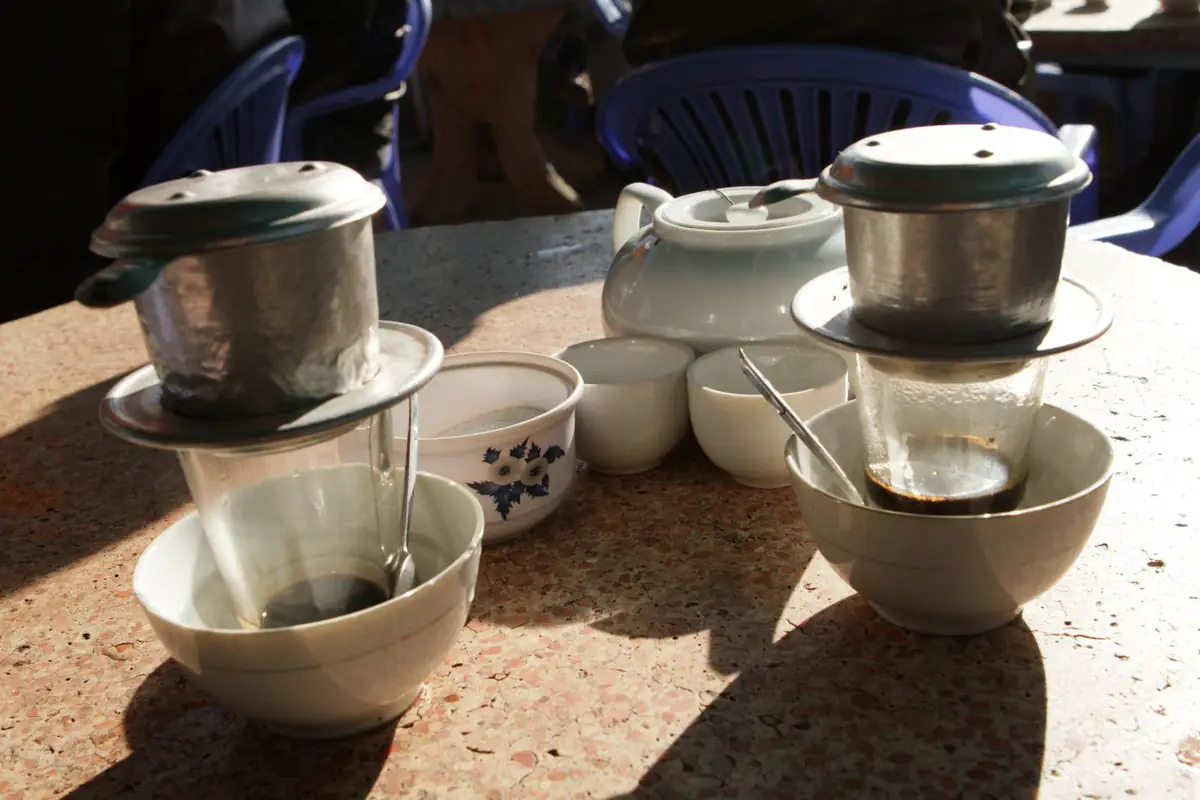
Photo: Frank Fox
Hot water goes into a small aluminum filter, the lid goes on, and then you wait. Dark, syrupy drops fall one by one onto the condensed milk at the bottom of the glass while you sit on a low plastic stool and watch the street. That wait is the same from Hanoi to Saigon (Sài Gòn). What ends up in the glass changes from region to region.
Vietnamese coffee drinks at a glance #
| Drink | What is in it | Where to try it |
|---|---|---|
| Black or milk coffee: ca phe den (cà phê đen), ca phe sua (cà phê sữa), called nau (nâu) in the north | Phin-brewed, hot or over ice; the milk version uses sweetened condensed milk | Everywhere, from sidewalk stools to chains |
| Bac xiu | Lots of milk, a little coffee, gentle | Born in Saigon, now widely available |
| Egg coffee, ca phe trung (cà phê trứng) | Egg yolk whipped with condensed milk, spooned over hot coffee | Hanoi, especially the Old Quarter |
| Salt coffee, ca phe muoi (cà phê muối) | Condensed milk, coffee and a lightly salted cream top | Hue; now in other cities too |
| Coconut coffee, ca phe cot dua (cà phê cốt dừa) | Coconut milk blended with condensed milk and ice, coffee poured over | Cafes and chains in the big cities |
| Fresh-milk coffee, ca phe sua tuoi (cà phê sữa tươi) | Coffee with fresh milk instead of condensed milk | Modern cafes and chains |
Why it tastes so strong: the phin and robusta #
The French brought coffee to Vietnam in the 19th century, but the brewing method that stuck is the phin, a small metal filter that sits on top of a glass or cup: hot water seeps slowly through the grounds under a press disc, and what comes out is a short, very concentrated brew.
The beans are usually robusta, which made up more than 90% of Vietnam's 2025-2026 harvest, according to the Vietnam Coffee and Cocoa Association. Robusta contains more caffeine than arabica and tastes bitter and heavy, and it pairs well with condensed milk. For something lighter and brighter, look for a cafe that names arabica on the menu; in the big cities, that usually means a specialty roaster.
Egg coffee in Hanoi #
The usual story is that in the 1940s, with fresh milk scarce, Nguyen Van Giang (Nguyễn Văn Giảng), then a bartender at the Metropole Hotel, whipped egg yolk as a substitute. The MICHELIN Guide and the hotel date the drink to 1946. Giang later opened his own cafe under his name.
The cup arrives with a thick, pale-yellow layer of egg cream over hot coffee, often set in a bowl of hot water to keep it warm. Some people spoon up the cream first, others stir everything together. It is rich and sweet, so a small cup after a bun cha lunch in the Old Quarter is plenty. The cream is egg yolk that not every cafe cooks, so young children, older adults, pregnant women and anyone with a weakened immune system should read the raw egg advice below before ordering.
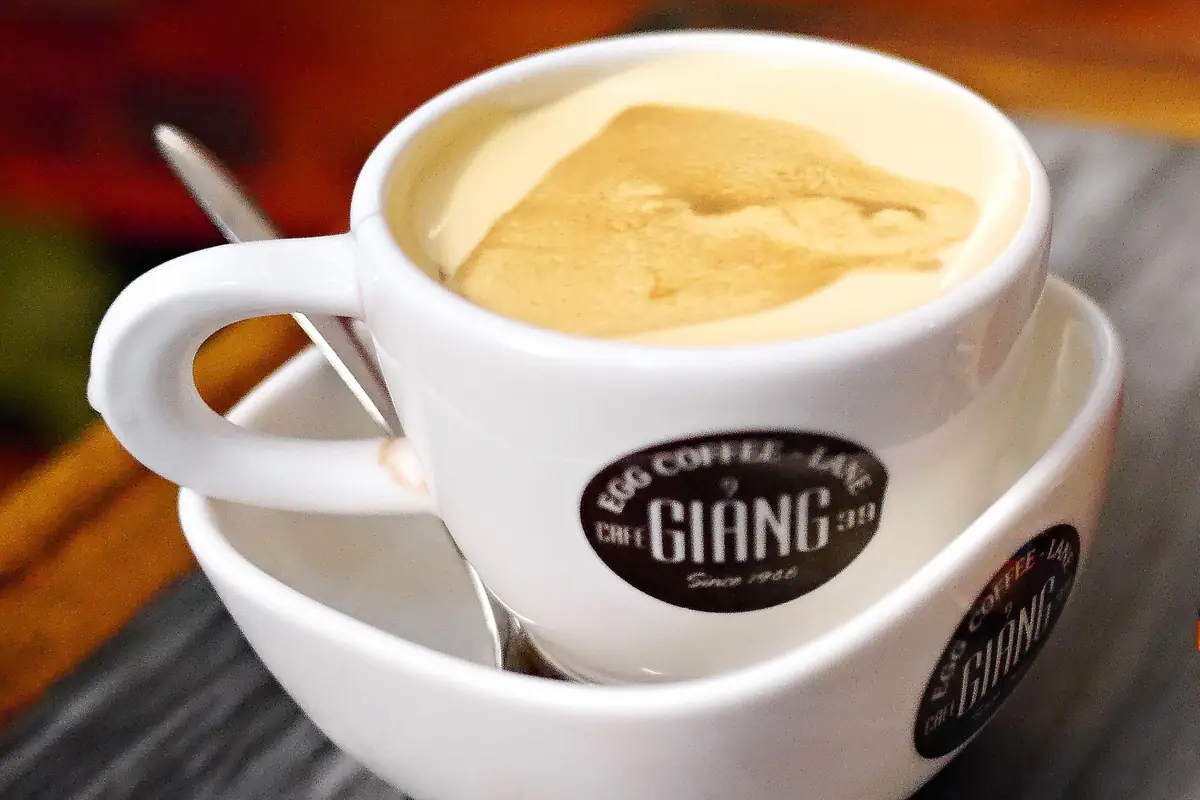
Photo: travel oriented
Cafe Giang is down the alley at 39 Nguyen Huu Huan (Nguyễn Hữu Huân). Cafe Dinh (Đinh), at 13 Dinh Tien Hoang (Đinh Tiên Hoàng), overlooks Hoan Kiem Lake (Hồ Hoàn Kiếm) and was opened by Giang's daughter. A cup of egg coffee in Hanoi costs roughly VND30,000-50,000, according to Znews (August 2025).
Salt coffee in Hue #
Salt coffee is much younger. It appeared in Hue around 2010, created by the couple who ran Cafe Muoi (Cà phê Muối) at 10 Nguyen Luong Bang (Nguyễn Lương Bằng). Stir its three layers of condensed milk, coffee and salted cream together, and the salt softens the bitterness and tames the sweetness, a little like salted caramel.
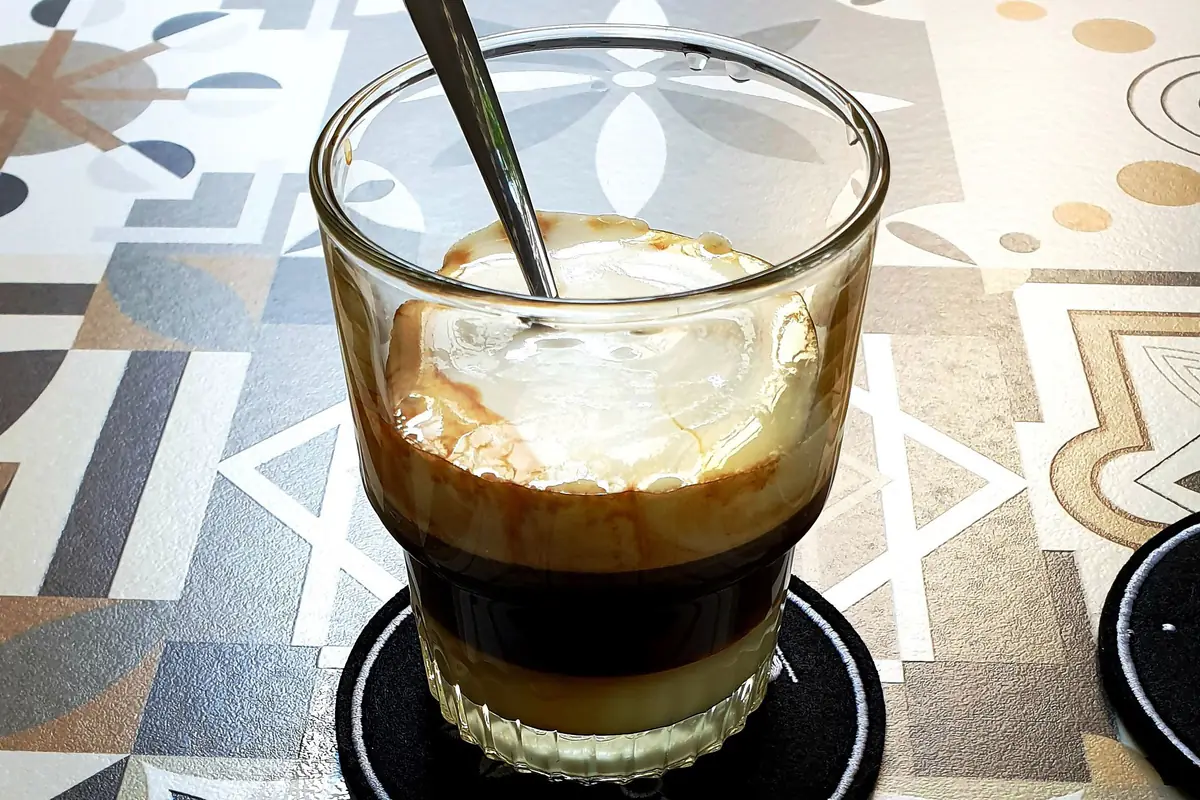
Photo: Phương Huy
In April 2023, VnExpress found cafes in central Hue charging VND15,000-20,000 a glass; check the menu for today's price. A glass after a morning at the Imperial City (Đại Nội) is a natural time to try it.
Iced coffee, bac xiu and coconut coffee #
Ca phe sua da comes from the streets of Saigon: the phin drips straight onto condensed milk, you stir, and ice goes in. Iced black coffee, den da (đen đá), is often sweetened already, so ask for less sugar before it is made.
The MICHELIN Guide traces bac xiu to the Chinese community in Cholon (Chợ Lớn) in the early 20th century, with a popular origin story linking it to drinkers who found coffee too bitter.
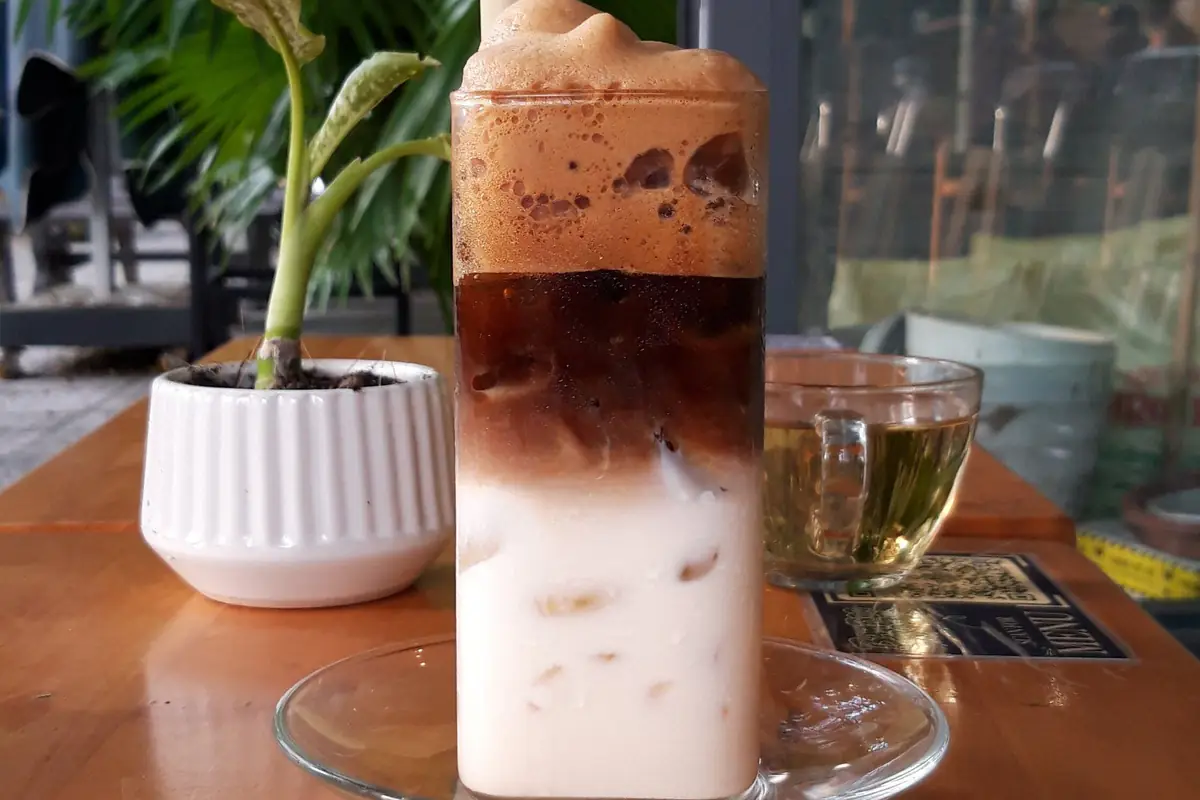
Photo: Klientos
Coconut coffee comes out thick and slushy, while fresh-milk coffee is the less sweet option.
How to order coffee in Vietnam #
Vietnamese is tonal, so showing the words often works better than saying them. Type your order into your phone and hand it over: a misplaced tone mark can turn sữa (milk) into sứa (jellyfish).
| Say or show | Meaning |
|---|---|
| Cho mình một cà phê sữa đá | One iced coffee with condensed milk, please |
| Một nâu đá | One iced milk coffee (the Hanoi way to say it) |
| Đen đá, ít đường | Iced black coffee, less sugar |
| Không đường | No sugar |
| Đá riêng | Ice on the side |
| Mang về | To take away |
| Tính tiền | The bill, please |
Prices depend on the cafe and the city. In a June 2025 VnExpress column, the owner of a cafe in central Ho Chi Minh City wrote that a sidewalk coffee can cost as little as VND12,000, while his own cafe, which roasts on site, charges VND35,000-55,000. Beachfront cafes, rooftops and upmarket chains cost more because you are paying for the seat. Carry some small notes for street stalls.
Sidewalk coffee culture #
In Vietnam, going for coffee means meeting people. Sidewalk cafes stay busy from morning to night; expect low plastic stools, a small table and often a pot of tea. Lingering over one drink is common, though space may be limited at busy times. With young children, take a table set back from the traffic.
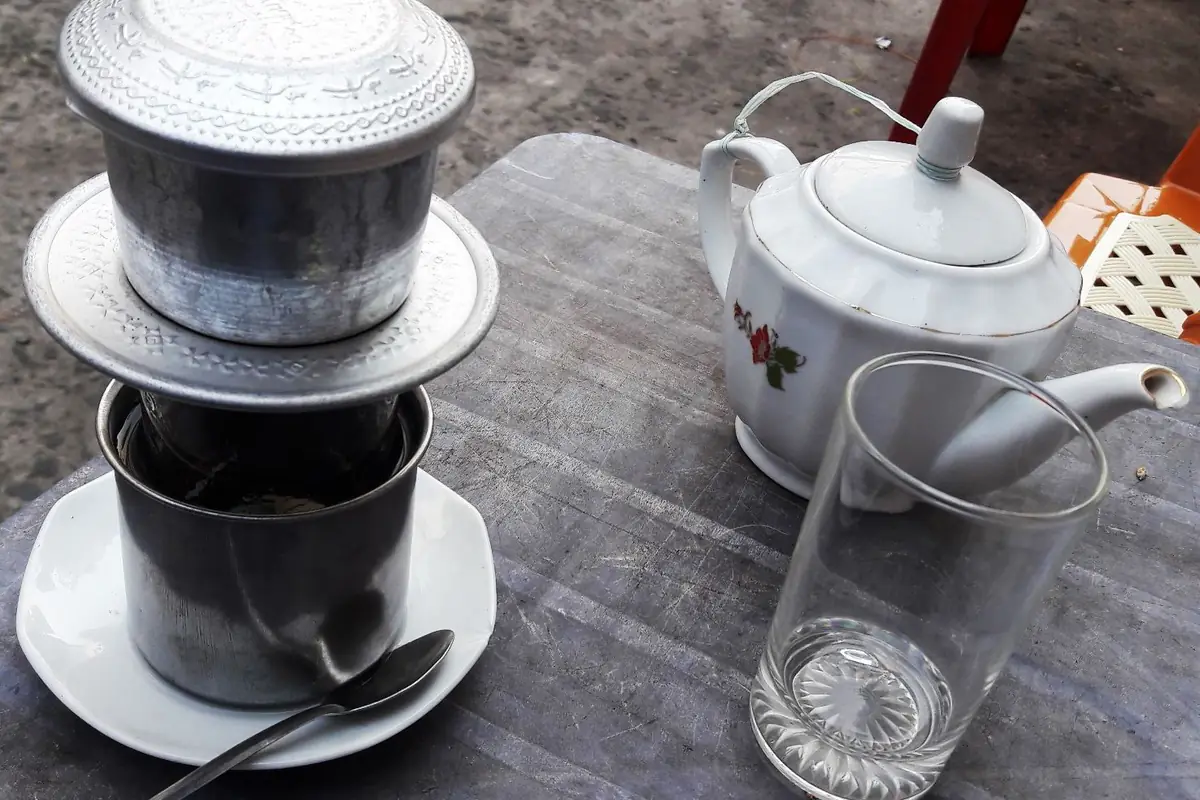
Photo: Phương Huy
In Nha Trang, the same early ritual plays out at street-side cafes in town, an easy stop after breakfast.
Using a phin filter at home #
A phin is cheap and light to pack; pick one that sits steadily on the glass or mug you use at home.
- Add a few spoonfuls of ground coffee and settle the press disc on top.
- Pour in a splash of just-boiled water, wait half a minute, then fill to the top and cover.
- Too fast? Press the disc harder or grind finer next time. Barely dripping? Do the opposite.
- For iced coffee, brew onto condensed milk, stir and pour over ice.
Bringing Vietnamese coffee home #
Packaged roasted, ground or instant coffee travels well, but each country sets its own biosecurity rules. Australia allows roasted, ground or instant coffee for personal use up to 10 kg; green (unroasted) coffee needs a phytosanitary certificate; civet coffee, sold in Vietnam as ca phe chon (cà phê chồn), is limited to 1 kg, roasted and commercially packaged, and must be declared and inspected (Australia's agriculture department, page updated March 2026). The US allows unlimited roasted coffee but it must be declared, and green beans cannot enter Hawaii or Puerto Rico (USDA APHIS). For anywhere else, check your own country's customs and biosecurity pages before you buy.
Bottled ready-to-drink coffee counts as a liquid: on Vietnam Airlines international flights, carry-on containers are limited to 100 ml each and 1 liter in total; other airlines publish their own rules. Flying into the US, powders over 350 ml in carry-on bags may need extra screening, so the TSA suggests packing them in checked luggage. Sealed, labeled packs with a receipt are easier to declare than coffee scooped loose at a market stall.
Caffeine, raw egg and ice #
A phin of robusta can be stronger than the coffee you drink at home. The US FDA cites 400 mg of caffeine a day as an amount not generally associated with negative effects for most adults, but sensitivity varies widely; if you are pregnant, breastfeeding, have a medical condition or take medication, ask your doctor what suits you. Take the first glass slowly.
Vietnamese coffee: quick answers #
Is there a dairy-free Vietnamese coffee?
Order black coffee, hot or iced. Milk coffee, bac xiu and salt coffee all use condensed milk; coconut coffee, as the MICHELIN Guide describes it, also contains condensed milk; and egg coffee usually contains both egg and dairy. If you have a milk allergy, tell the staff and check the ingredients before ordering.
Should I buy whole beans or ground coffee to take home?
Whole roasted beans suit you if you have a grinder; ground coffee is ready for a phin. Either way, pick packs that show the roast date, best-before date and ingredients.
Can I get egg coffee iced?
Often, yes: when VietNamNet visited Cafe Dinh in Hanoi, guests were ordering it both hot and iced. Not every cafe makes both, so ask first. The raw egg advice above applies to the iced version too.
Related posts
Food
Famous Vietnamese Food: What to Eat in Each Region
A region-by-region list of Vietnamese dishes to try, easy picks for your first meals, what a bowl costs now, vegetarian days and which dishes contain peanuts, shellfish or fish sauce.
Food
Bun Cha (Bún Chả) in Hanoi (Hà Nội): What It Is, How to Eat It and Where to Go
What comes in a serving of bun cha, how to eat it, what it costs, which Hanoi places are in the MICHELIN Guide and the story of the Obama combo.
Food
Nha Trang Fish Cake Noodle Soup (Bún Chả Cá): Where to Eat It and What to Order
Where to eat bun cha ca in Nha Trang, what is in the bowl, how it compares with bun sua and how to take fish cake home.