Nha Trang Weather in January: Less Rain, Cool Water and Beach Conditions
By January the year-end rains have eased off and the days are the mildest of the year, but the northeast wind keeps blowing and the sea is not yet as calm as it gets later on. It is a good month to escape winter, walk the city and eat well; swimming and island trips are a day-by-day call.
Written by Tụi mình mê biểnPublished Updated
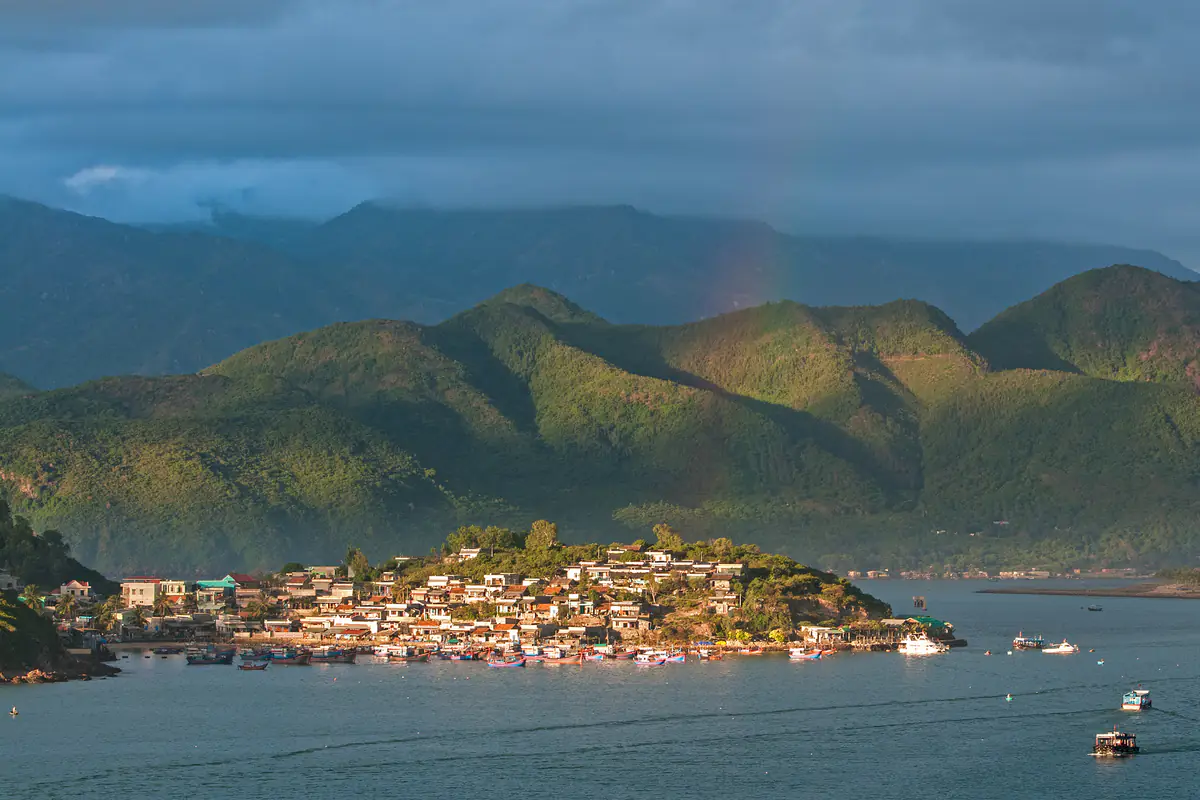
Photo: bvi4092
By early January, Nha Trang has usually seen the last of the long year-end rains. On dry mornings, Tran Phu Street (Trần Phú) feels fresh, with the northeast wind coming in off the sea. Some days are clear enough to pick out each ridge of the mountains to the west; on others, low grey cloud hangs over the bay, the water is flecked with whitecaps and the flags on the lifeguard towers are pulled taut.
If you are flying in from a Moscow, Almaty or Seoul winter, it is still a warm escape. If you are used to tropical heat, you may want a jacket for a seafront table after dark. January sits between December, the windiest month and a drier February; to compare all twelve months, see the best time to visit Nha Trang.
January in Nha Trang: light rain, mild days, a lingering wind #
| 2015-2024 average | December | January | February |
|---|---|---|---|
| Average daily high / low | 26.5 / 22.6°C (80 / 73°F) | 26.3 / 21.7°C (79 / 71°F) | 26.9 / 21.6°C (80 / 71°F) |
| Average rainfall | 232 mm (9.1 in) | 85 mm (3.3 in) | 50 mm (2.0 in) |
| Days with 1 mm of rain or more | 19 | 14 | 9 |
| Days with at least 20 mm of rain | 3.5 | 1 | 0.2 |
| Mean daily maximum gust | 54 km/h (34 mph) | 51 km/h (32 mph) | 49 km/h (30 mph) |
| Days with gusts of 60 km/h+ | 10-11 | 8 | 7 |
| Significant wave height, average daily maximum (*) | 1.3 m | 1.1 m | 1.0 m |
| Share of days with maximum significant wave height below 1 m (*) | About 1 in 6 | About 4 in 10 | About 1 in 2 |
(*) The two wave rows use marine model data from late 2021 to 2024, not the 2015-2024 series used for the other rows.
The big change from December is the rain: average rainfall drops to about a third, heavy-rain days become rare, and in ten years no January day reached 50 mm (2 in). The wind eases far less. January is still a northeast-monsoon month, only slightly lighter than December, and it is February that brings noticeably more low-wave days. January days are also the mildest of the year in this dataset.
85 mm is an average; most Januaries are drier than that #
The 85 mm average hides a large difference between years. Seven of the ten Januaries in the data had only about 27-43 mm (about 1-1.7 in) in total, spread over light showers. The other three, 2017, 2019 and 2023, had 184-237 mm each, most of it from a single wet spell of four or five days: January 1-5, 2019, January 5-9, 2023 and January 13-16, 2017. The wettest day in the series was January 8, 2023, at about 46 mm.
A day counts as rainy once rainfall reaches 1 mm, so 14 rainy days does not mean 14 days of continuous rain. Most of those days bring only a few millimeters, and on average just four January days a year see 5 mm or more. In the hourly data, about two-thirds of days record less than 1 mm of rain between 6 a.m. and 6 p.m., compared with fewer than half in December. Only about one evening in ten gets 1 mm of rain or more.
Early or late January?
January 1-15 averages about 64 mm (2.5 in) and January 16-31 about 21 mm (0.8 in). In the second half, about three days in four are almost dry in daytime, against roughly six in ten in the first half. Most of that gap comes from the three wet spells above, all in the first half of the month; in the other seven years, the two halves were much closer. Ten years is a small sample, so read this as a tendency rather than a rule.
In these datasets, late January has lower average rainfall but similar wind and wave conditions. That does not guarantee drier or calmer weather for a particular trip. If your dates can still move and rain is your main worry, we would lean toward the second half. If you are already booked for early January, check the forecast three to five days out to see whether a wet spell is on its way.
As for the coming January, the seasonal outlook issued on September 15, 2026 by Vietnam's National Center for Hydro-Meteorological Forecasting expects January 2027 rainfall of generally 50-120 mm (2-4.7 in), locally more, along the eastern parts of the provinces from Quang Ngai (Quảng Ngãi) to Dak Lak (Đắk Lắk) and Khanh Hoa (Khánh Hòa), with temperatures 0.5-1.5°C (0.9-2.7°F) above the long-term average while El Niño remains very strong. That is a regional trend, updated monthly, and it cannot tell you about the week you travel.
Can you swim in Nha Trang in January? #
You can swim when the beach permits it, inside buoyed areas with lifeguards on duty and in line with the warning flags, but January is not a month when every day is a beach day. Marine model data put the bay at about 25°C (77°F) in January, the coolest of the year and roughly 5°C (9°F) cooler than in May. That can feel brisk at first if you are used to bath-warm tropical water, while visitors from colder countries often find it pleasant. Once you are out of the water, the northeast wind cools you quickly, children especially, so have a large towel ready.
The waves matter more than the temperature. In the marine model data for 2022-2024, about four January days in ten had a daily maximum significant wave height under 1 m, and the years varied widely: January 2022 had 21 such days, January 2023 only seven. These figures are for a point out in the bay, not the breaking waves at your stretch of sand.
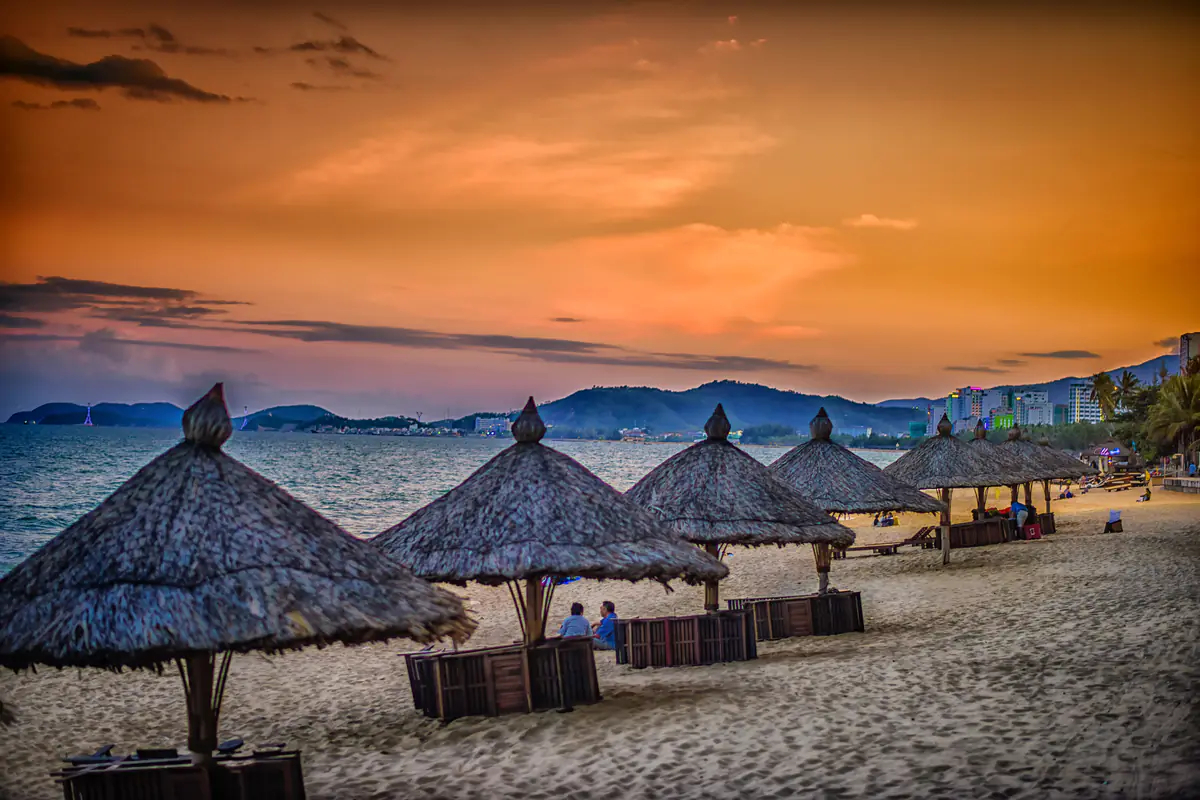
Photo: cloud.shepherd (Brian Miner)
Before heading down, the sea conditions tool shows the latest wave and wind forecast. The beach itself has the final say: swim only inside the buoyed area while lifeguards are on duty, follow the flags, and stay on the sand if a red or black flag is up. Rip currents are more likely on big-wave days, and the seawall edge is no place for photos.
On January 9, 2026, with a force 6-7 northeast wind and rough seas off Khanh Hoa, lifeguards from the Nha Trang Bay Management Board brought seven people back to shore after waves pulled them out along Tran Phu and Nguyen Chanh (Nguyễn Chánh) streets; many were Russian visitors. On days like that, follow the lifeguards' advice rather than judging safety from the surface alone.
Island trips and diving in January #
A strong northeast wind can still hold island boats in port or bring them back early, and tour boats only leave when the authorities permit departures. Keep island days flexible: book an island trip once the forecast for the next day or two is clear, and ask before paying whether you get a refund or a new date if the boat cannot sail. Shared four-island tours were selling for about VND450,000-810,000 per person in October 2026, depending on the boat and aquarium ticket. The main tourist pier is on Vo Thi Sau Street (Võ Thị Sáu), but confirm the pickup point and departure pier when you book.
Two things do not change with the season. In the sources checked as of early October 2026, we have not found an official notice allowing swimming or diving to resume at Hon Mun (Hòn Mun). Binh Ba (Bình Ba) and Binh Hung (Bình Hưng) islands are closed to tourism, so skip any tour advertised there.
If diving is the main reason for your trip, January is not the easiest month to pick a day. In the same model data, about three March days in four have a daily maximum wave under 1 m, and in May nearly every day does. If you still want to dive or snorkel in January, ask the operator about the site, that day's visibility and the policy if the trip is cancelled for waves.
New Year, winter visitors and booking a room #
Plan separately for New Year. January 1 is a public holiday in Vietnam, and in 2027 it falls on a Friday, creating a three-day break from January 1 to 3 for travelers who also have weekends off. If you are coming for New Year, book rooms for the nights of December 31 to January 3 early, ideally on free-cancellation rates. For New Year's Eve itself, including where to stay so you can walk back after the fireworks and how hotel drop-offs work when roads close, see the Christmas and New Year section of our December guide.
Lunar New Year (Tết) falls in February in 2027: the first day is Saturday, February 6, and the official public-sector holiday runs from February 4 to 10. So January 2027 does not overlap with Tet. In some years Tet lands in late January, as it did in 2012 when the photo below was taken. In those years, trains, buses and domestic flights around the holiday, and rooms on the days off, need booking much earlier, so settle how you will get to Nha Trang early too.
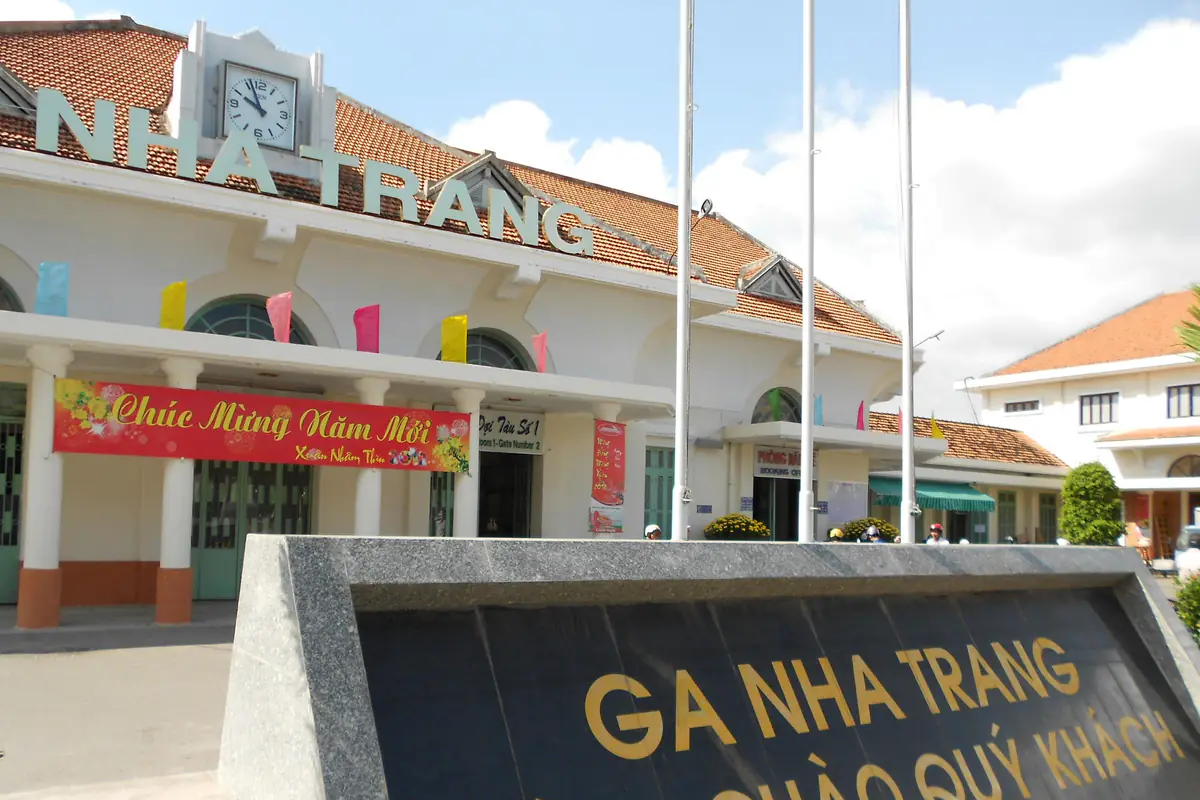
Photo: Kontrollstellekundl
If you are flying from Russia, Vietjet has operated a direct Moscow - Cam Ranh route since September 23, 2026, three times a week, with an increase to five weekly flights planned for early 2027, so check the winter schedule when you book. Cam Ranh Airport is about 35 km from the city center; allow 45-60 minutes by car, depending on traffic and where your hotel is. After the first week, January 2027 has no other major domestic holiday, so mid- or late-month travelers have more time to compare rooms and areas.
What to wear and pack for January #
Days around 26°C (79°F) are T-shirt and shorts weather. Nights average about 22°C (72°F), and the coolest in the dataset dropped to 17.7°C (64°F), on January 25, 2015 and January 15, 2021. Add the sea breeze, and a late evening outdoors can feel cooler than the number suggests. Worth packing:
- A light windbreaker or thin sweater for evenings and time on boats.
- Swimwear plus a large towel or cover-up; a long-sleeved rash guard if you feel the cold.
- Sunscreen, sunglasses and a wide-brimmed hat. January skies are clearer than December's.
- A packable rain jacket, in case your visit coincides with a wet spell.
- Shoes or sandals with grip for the stone steps at the Po Nagar Cham Towers (Tháp Bà Po Nagar) and the rocks at Hon Chong (Hòn Chồng).
Planning around calm days and windy days #
Heavy-rain days are rare in January, so it is usually the wind and waves that change your plans. Check the forecast the evening before and pick one of three kinds of day.
Low waves, light wind. Give the day to the sea: a morning at Tran Phu Beach if swimming is permitted, or an island trip if boats are cleared to sail. In the late afternoon, head up to Po Nagar (open 6 a.m. to 5:30 p.m., VND30,000) and look down over the Cai River (sông Cái) mouth in the low sun.
Strong wind, dry skies. Keep this day for sights in town, a mud bath and an unhurried meal. Spend the morning at Hon Chong watching the surf break white around the boulders; if the site is open, stay on the designated paths and well back from the spray. Take a mud bath in the afternoon, then warm up with fish cake noodle soup or hot banh can (bánh căn) on a cool evening.
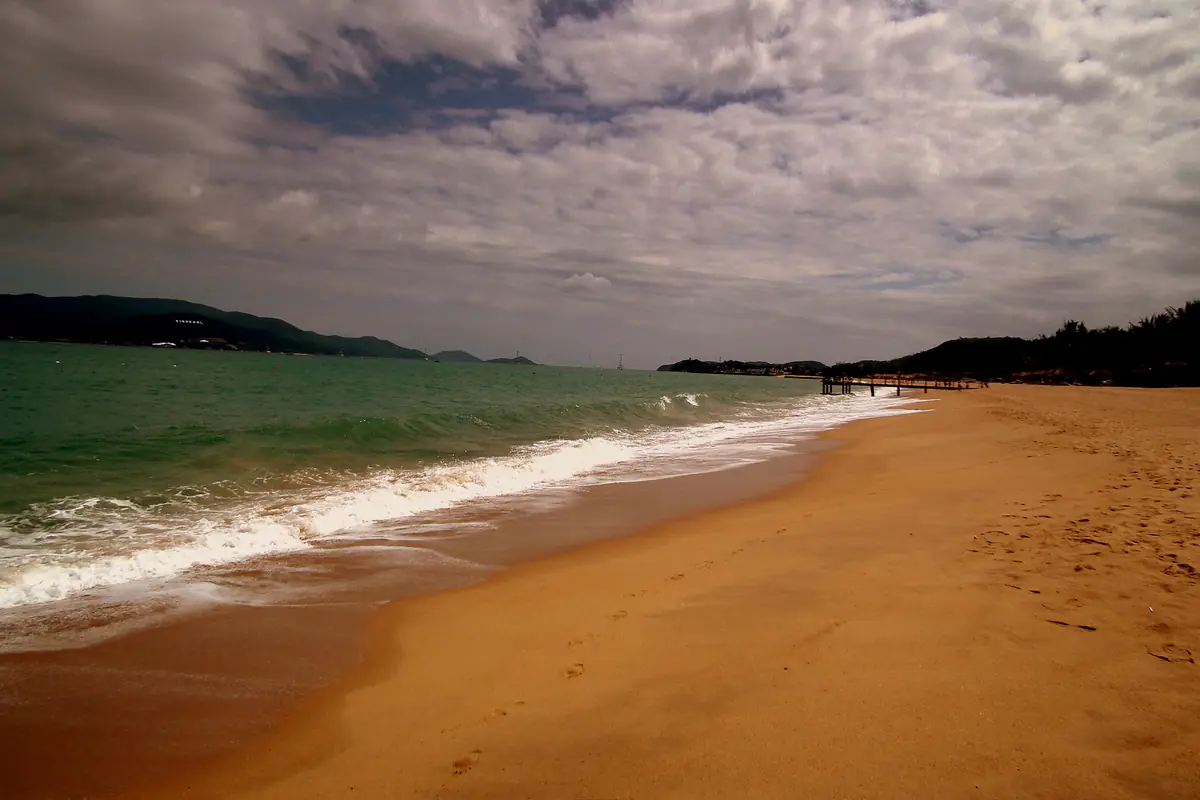
Photo: calflier001
A prolonged wet spell. Several rainy days can still disrupt a trip, as they did in 2017, 2019 and 2023. The Oceanographic Museum at Cau Da (Cầu Đá), Dam Market (chợ Đầm) and the city's cafés are easy to reach, and a mud bath still works in light rain. Save places that need clear skies, such as Hon En (Hòn Én), for another day. If a tropical depression, strong winds at sea or heavy rain are forecast for Khanh Hoa, follow the National Center for Hydro-Meteorological Forecasting and local authorities' instructions.
Staying near the sea, on Tran Phu or the streets just behind it, makes it easy to switch plans mid-trip: walk to the beach on a good day, and keep cafés and restaurants within a few minutes on a windy one. See where to stay for how the areas compare.
Who January suits #
January suits travelers escaping winter who want warmth without heat, enjoy walking, eating, cafés and mud baths, and can accept that swimming and island trips depend on the day. Compared with December, it is much drier, with clearer days and slightly cooler nights.
Compared with February, January is wetter and has fewer low-wave days. If the beach and islands are the point of the trip, February-March or the summer months make it much easier to find good days. If your holiday falls in January and you want it to center on swimming, compare Nha Trang with Da Nang (Đà Nẵng) and Phu Quoc (Phú Quốc) before you book.
How the figures were calculated #
The temperature, rain and wind figures come from historical weather data via Open-Meteo (its default blend of reanalysis models) for central Nha Trang, covering all 310 January days from 2015 to 2024. This is gridded data, not readings from a station on the beach. A rain day has 1 mm or more; heavy rain means 20 mm or more. Daily rain patterns come from the hourly data.
Wave height and sea temperature come from the same provider's marine model for a point in the bay, about 10 km offshore. The wave figure is significant wave height, taking the highest value each day. The wave series only starts in late 2021 (Januaries 2022-2024), and sea temperature uses January 2023-2024, so treat those numbers as a general guide.
Nha Trang weather in January: FAQ #
Does it rain in Nha Trang in January?
Yes, but much less than in December. January averages about 85 mm (3.3 in) and 14 days with at least 1 mm of rain. Many showers are light, though a prolonged wet spell is still possible.
Can you swim in Nha Trang in January?
You can swim when the beach permits it, inside buoyed areas with lifeguards on duty. In marine model data for 2022-2024, only about four January days in ten had a daily maximum wave under 1 m, because the northeast wind is still blowing. Swim only inside buoyed areas while lifeguards are on duty, and follow the flags.
How warm is the sea in Nha Trang in January?
About 25°C (77°F), according to marine model data for a point in the bay (about 24.5°C in January 2023 and 25.3°C in January 2024). It is the coolest sea of the year, roughly 5°C (9°F) cooler than in May.
What should I wear in Nha Trang in January?
Summer clothes for the day, when it is around 26°C (79°F). Nights average about 22°C (72°F) and occasionally dip below 18°C (64°F), with a sea breeze, so bring a light windbreaker or thin sweater, a large towel for after swimming and sunscreen.
Is New Year a good time to visit Nha Trang?
It works well if you mainly want to walk the city and see in the new year. In 2027, January 1 falls on a Friday, giving travelers who have weekends off a three-day break from January 1 to 3, and these days are usually busy, so book rooms early, ideally on free-cancellation rates. Lunar New Year 2027 falls in February (the first day is February 6), not in January.
Is early or late January better for Nha Trang?
In ten years of data, January 1-15 averaged about 64 mm of rain and January 16-31 about 21 mm, mainly because the three biggest wet spells all fell in the first half. Wind and waves were about the same in both halves. That does not guarantee drier or calmer weather for a particular trip.
📚 Sources
Information in this article draws on the sources below, as of the update date.
- Open-Meteo: January temperature, rainfall and wind, 2015-2024; waves, 2022-2024; sea temperature, 2023-2024 (own analysis, queried October 8, 2026)
- National Center for Hydro-Meteorological Forecasting: tropical depression, strong wind at sea and heavy rain warnings (viewed October 8, 2026)
- National Center for Hydro-Meteorological Forecasting: seasonal climate outlook, January-March 2027 section (in Vietnamese, September 15, 2026)
- Dan Tri: Seven swimmers rescued from drowning at Nha Trang beach (in Vietnamese, January 9, 2026)
- Government News: Deputy Prime Minister approves holiday plans for Culture Day, Lunar New Year and National Day (in Vietnamese, October 2, 2026)
- Thanh Nien: Khanh Hoa welcomes the first direct flight from Russia by a Vietnamese airline, three flights a week (in Vietnamese, September 24, 2026)
Related posts
Weather
Nha Trang Weather in November: Short Trips, Island Days and When to Reschedule
November rain can last several days, leaving little room to move a boat tour on a short trip. Keep the island day flexible and have a few plans for town.
Weather
Nha Trang Weather in December: Northeast Wind, a Cooler Sea and the Holiday Crowds
December brings less rain than November, but the northeast wind is at its strongest of the year and the sea is cooling. It is a good month for city walks and leisurely meals. Decide whether to swim from the conditions and lifeguard advice on the day, and book early for Christmas or New Year.
Weather
Nha Trang Weather in October: Rain Patterns, Sea Days and a Flexible Plan
October has many rainy days, but that count says little about how much of your trip will be wet. Hourly forecasts are more useful when deciding what to do each day.