Nha Trang Diving and Snorkeling: Where You Can Go and How to Book Safely
Beneath the blue of the bay, reefs are slowly recovering after years of damage. Before you book Nha Trang diving or a snorkel trip, it helps to know which option suits you, which waters are open and what to ask the operator.
Written by Tụi mình mê biểnPublished Updated
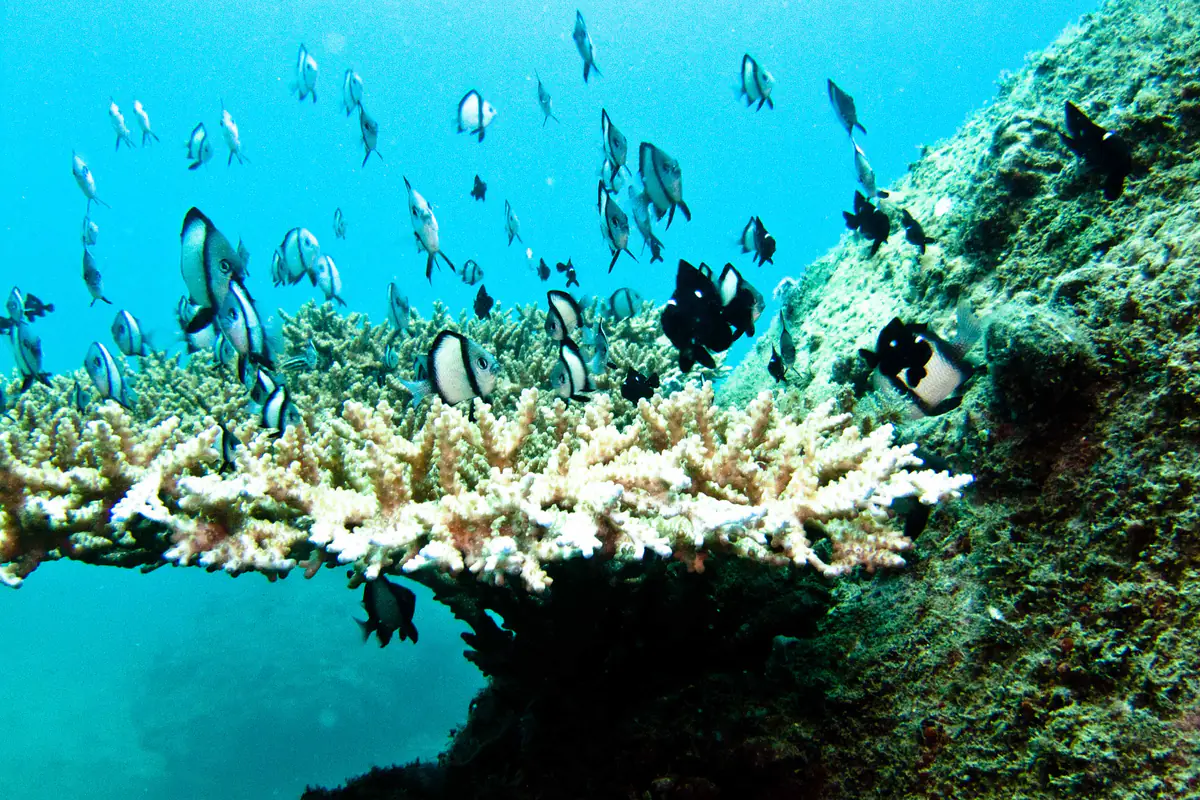
Photo: Ilse Reijs and Jan-Noud Hutten · CC BY 2.0 · Wikimedia Commons
From the deck of a boat, Nha Trang Bay is one sheet of blue stretching out to the islands. Put your face in the water behind a mask and another layer opens up: plates of coral, small fish circling them, anemones swaying with the swell.
The bay's reefs were badly damaged a few years ago and are now recovering, so where you can get in the water is no longer up to each boat. Hon Mun (Hòn Mun), the island behind most of the older dive photos you will find online, is still closed to swimming and diving. That makes the first question a simple one: what kind of time underwater do you actually want?
Snorkeling, a try dive or a full course: which one fits you #
Snorkeling is the easy entry point. You wear a mask, breathe through a snorkel, put on a life jacket and float at the surface looking down. No certification is needed, and the life jacket keeps less confident swimmers afloat. The trade-off is that you only see the shallow parts of a reef.
A try dive, often sold as Discover Scuba Diving, is for people with no certification. You get a briefing on the boat, then go down with an instructor right beside you. Over Vietnam's National Day holiday in early September 2026, a guided tank dive over a coral nursery on the bay floor lasted 15 to 30 minutes and cost VND1.2-1.5 million per person (August 2026).
If you want to dive on your own terms on later trips, you can take an entry-level PADI or SSI course here. It combines theory, skills practice in shallow water and a few open-water dives, so plan on several days rather than a single morning.
Freediving, diving on a single breath, also happens over the sandy patches of the bay floor. It needs proper instruction in breathing and equalizing, and someone at the surface watching every descent.
Helmet diving, sometimes called sea walking, has you wearing a large dive helmet and walking slowly along the bottom with a guide. Nha Trang had a site like this off Vinh Hoa ward from 2023; if it appeals to you, ask whether it is still operating before you plan around it.
| Option | Certification needed? | Suits | Ask before booking |
|---|---|---|---|
| Snorkeling | No | A relaxed look at the reef, families with older kids | Life jackets in every size, someone watching from the surface |
| Try dive | No | First-timers who want to go below the surface | Which zone, how many guests per instructor |
| PADI or SSI course | Issued at the end | People who want to keep diving elsewhere | Certifying agency, number of open-water dives |
| Freediving | Depends on the class | Strong swimmers curious about breath-hold technique | Is someone watching every descent |
| Helmet diving | No | Hesitant swimmers who still want to reach the bottom | Is it still running, does it hold a permit |
If your group is split between a lazy beach day on an island and a morning underwater, the island personality quiz is a quick way to settle who does what.
Hon Mun: famous in old photos, still closed #
Hon Mun is a marine protected area that used to have seven dive sites around the island. On June 27, 2022, the province suspended swimming and diving at all of them after finding widespread coral death and decline.
In May 2026, the Nha Trang Bay Management Board's conservation team dove the reefs again, collecting trash and removing crown-of-thorns starfish. Live coral cover, density and reef area had all grown compared with four years earlier.
That is good news, but it is a survey result, not a reopening notice. As of September 2026, there has been no official announcement allowing swimming or diving at Hon Mun again.
Sightseeing boats still pass close by so guests can see the island from the water, which is why many Nha Trang island hopping tours still list Hon Mun on the itinerary. If someone promises you a snorkel or dive at Hon Mun itself, ask to see the written permit before you pay.
Where Nha Trang diving is allowed: the four pilot zones #
After Hon Mun closed, dive operators crowded into Hon Rom, a protected area about 13 nautical miles offshore, and by late 2023 it was overloaded. In June 2024, the province approved a recreational diving pilot in four zones to spread the pressure:
- North of Hon Rua island, Vinh Hoa ward.
- The artificial reef area, also in Vinh Hoa.
- Northeast of Tri Nguyen island.
- The water between Bai Tranh and Bai Soi beaches, east of Tri Nguyen island.
The first two sit in the northern part of the bay; the other two are around Tri Nguyen in the south. A local dive guide has pointed out that the northern sites are a long ride with few places to dock, since most dive boats are used to leaving from the southern ports. When you book, ask which pier the boat leaves from and how long the ride takes.
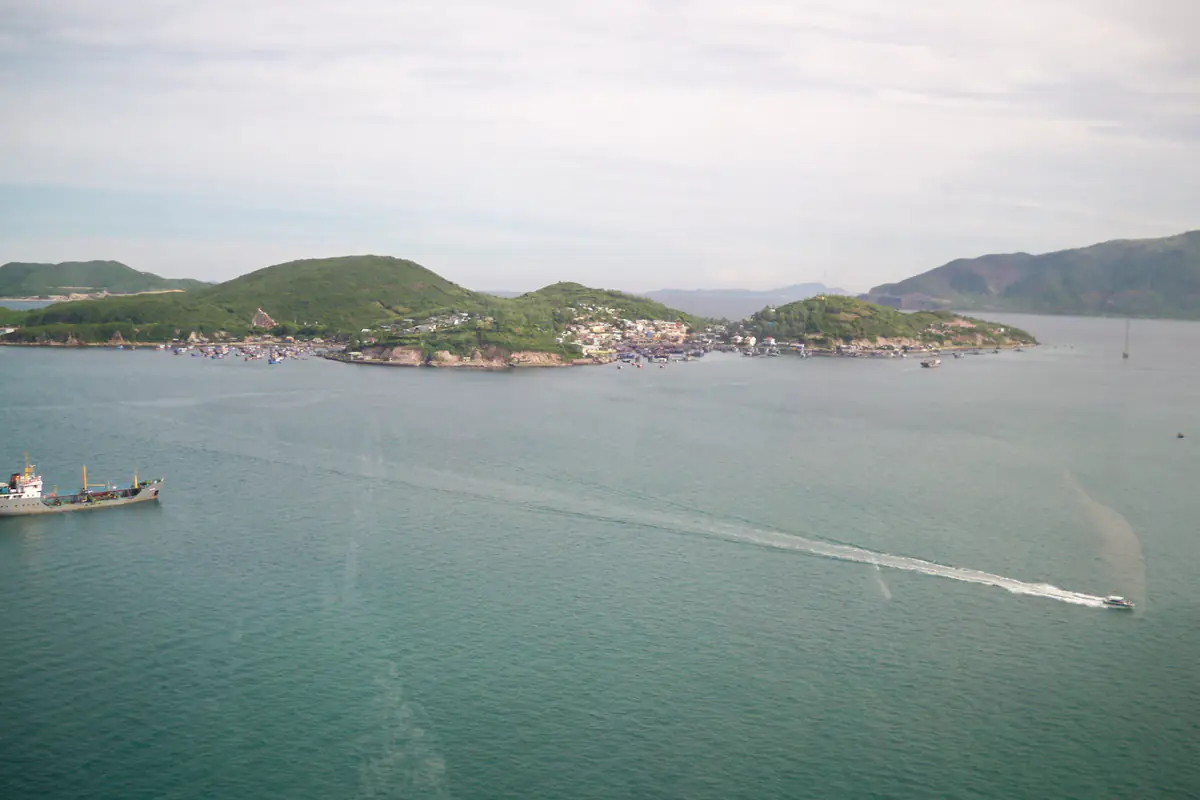
Photo: Liftold at Vietnamese Wikipedia · CC BY-SA 3.0 · Wikimedia Commons
The pilot runs for one year from the date operators receive their licenses, after which the province reviews it and decides what comes next. By September 2026, no review had been widely published, so these four zones remain the most recent official reference. Ask the operator exactly where you will get in the water and check it against the list.
Around the early September holiday in 2026, some boats also took divers to a coral nursery of more than two hectares on the bay floor, where guests could help plant coral with specialists. That trip suits people curious about reef restoration more than those hoping to swim along a long natural reef.
Already certified? What to bring and check #
Bring your PADI, SSI or other agency card, or have the digital version ready in the app, plus your logbook if you keep one. Operators often ask when you last dove. If it has been a year or more, a short refresher in shallow water is worth the extra hour, especially with unfamiliar rental gear.
Check your travel insurance before the trip, not on the boat. Some policies exclude scuba diving entirely, cover it only to a certain depth, or require that you dive within your certification level. If yours does not, a dedicated dive insurance plan is an option to look into.
Also ask what the operator provides and what you should bring. Many people prefer their own mask for fit; a long-sleeve rash guard or thin wetsuit helps with both sun and jellyfish.
Choosing an operator: questions to ask before you pay #
In Vietnam, recreational diving is a licensed business. Operators need a certificate of eligibility from the provincial authority, equipment that meets national rules, and guides and rescue staff with official training. A well-run operator will be happy to answer the questions below.
The ratio question matters most. Under Circular 21/2018 from Vietnam's Ministry of Culture, Sports and Tourism, each instructor may guide no more than one diver per dive. If you see one guide taking five or six first-timers down at once, think twice.
On board, a few things are easy to spot. The boat should fly a dive flag whenever someone is in the water. Your instructor should explain the regulator, breathing and hand signals, and ask about your health again. Try your gear on before the dive, so you find out about a leaky mask on deck rather than underwater.
A price well below the rest is not automatically a bad deal. Just ask where the difference comes from: less time underwater, no hotel pickup, or photos charged separately. Tank dives are usually not part of shared island tours, so set aside a separate line for them when you work out your Nha Trang trip budget.
Health: be honest on the medical form #
For scuba, the medical form is not a formality. Vietnamese rules require divers to declare their own health and take responsibility for what they declare, and agencies such as PADI use a medical questionnaire before a try dive. Depending on your answers, you may need a doctor's sign-off.
A "yes" to one question does not rule you out; it means a doctor should look first. The questions cover heart conditions, lungs and asthma, ears and sinuses, pregnancy, recent surgery and current medication. If any of those apply to you, talk to your doctor before you fly, rather than deciding at the pier. A printed sign-off from home is much easier than finding a clinic in Nha Trang the day before.
PADI's try-dive program starts at age 10. For younger kids, snorkeling in a life jacket with an adult close by is usually the more comfortable choice.
The night before, get a full night's sleep and skip the drinks. If you have a cold or a blocked nose, tell your instructor and consider postponing, because congestion makes it hard to equalize your ears on the way down.
Picking your day: Nha Trang diving season and the forecast #
Vietnam's national tourism authority puts the best months for diving in Nha Trang at roughly February through October, when the weather is warm and the sea calm. Long-term rainfall data shows February to August as the driest stretch; from October to December, frequent rain and spells of big waves can cancel dive trips. If your dates are still open, factor the dive in when you choose the best time to visit Nha Trang.
Traveling in October or the wetter months after it? Put the dive early in your stay so you have spare days if it gets postponed. After heavy rain, water near the coast can turn cloudy, so a sunny day in the middle of the rainy season does not guarantee clear views of the reef.
A day or two before, check the is the sea nice today tool for waves and wind, then message the operator to confirm the trip is still on. Most dive boats leave in the morning while the bay is calm. If you are doing a tank dive, keep it off the day you fly home.
In the water: hands off the reef, eyes on your guide #
Coral looks like rock but it is alive. One kick of a fin, or standing on a coral head to fix your mask, can break branches that take years to grow back. When snorkeling, stay floating at the surface. When diving, keep your distance from the bottom and let your instructor help you with buoyancy.
Do not feed the fish. In Nha Trang Bay, some guides and content creators have thrown bread and instant noodles into the water to draw fish into the frame. The leftovers foul the water and teach fish to stop foraging. A local coral scientist put the rule simply: take nothing but photos.
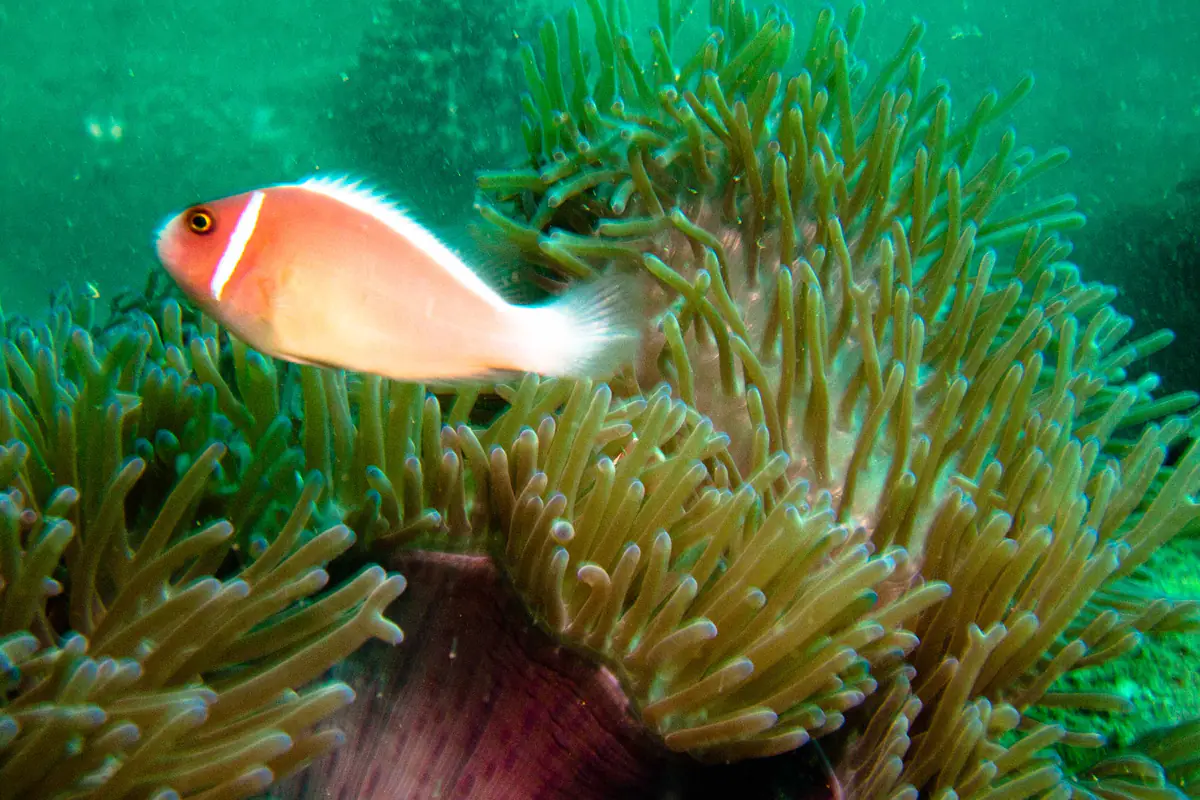
Photo: Ilse Reijs and Jan-Noud Hutten · CC BY 2.0 · Wikimedia Commons
Your sunscreen goes into the water with you. If you use it, pick a mineral formula with non-nano zinc oxide or titanium dioxide and skip products with oxybenzone or octinoxate. A long-sleeve rash guard means less sunscreen and fewer burnt shoulders.
Some of the prettiest animals sting. Lionfish fan out their striped fins like a paper fan, but the spines are venomous. The general rule is to touch nothing, even when it swims right up to your mask.
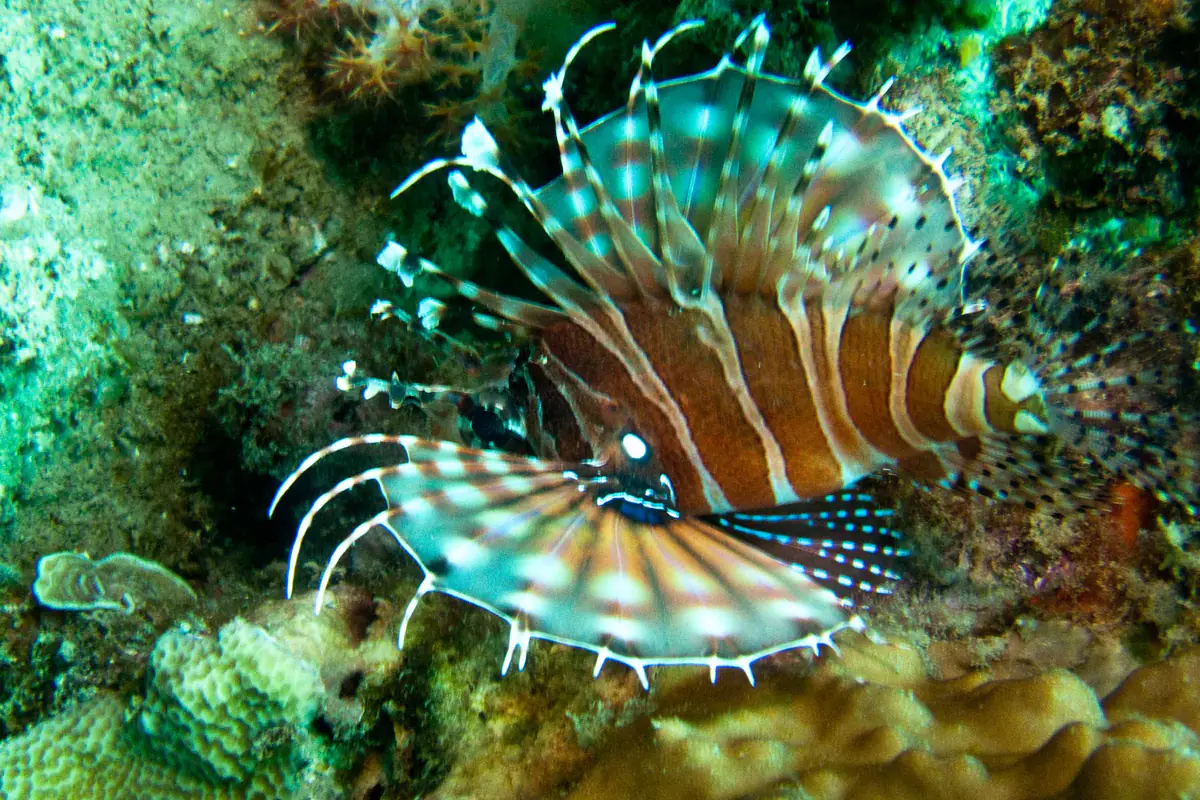
Photo: Ilse Reijs and Jan-Noud Hutten · CC BY 2.0 · Wikimedia Commons
In July and August 2026, stinging jellyfish gathered around Hon Mun, Hon Bac and a few other parts of the bay. Scan the surface before you get in; a long-sleeve suit leaves less skin exposed. If you are stung and feel burning, blistering, dizziness or trouble breathing, get back on the boat and tell your guide or a lifeguard right away rather than trying home remedies.
After the dive: rest, and timing your flight #
Back on board, drink water, rinse off with fresh water if there is some, and rest in the shade. A first dive can be tiring between the sun, the swell and the nerves, so keep the afternoon light.
For scuba, Divers Alert Network (DAN) recommends waiting at least 12 hours after a single dive before flying, and 18 hours after multiple dives in a day or several days of diving. Snorkeling carries no such limit. If your flight home leaves the next morning, move the dive a day earlier.
In the hours after a dive, if you notice joint pain, numbness, dizziness or unusual fatigue, tell the operator and get to a medical facility, and say how deep and how long you dove.
In the evening, a bowl of fish noodle soup or a seafood dinner in town is an easy way to end the day; start with what to eat in Nha Trang. The next morning, if your ears need a break, spend it at the Po Nagar Cham Towers or Hon Chong, two of the things to do in Nha Trang right in town.
Nha Trang diving FAQ #
Where is Nha Trang diving allowed?
Since June 2024, the province has piloted recreational diving in four zones: north of Hon Rua island, the artificial reef area off Vinh Hoa, northeast of Tri Nguyen island, and the water between Bai Tranh and Bai Soi. Hon Mun has been closed to swimming and diving since June 27, 2022 (as of September 2026). Ask your operator which zone you will dive.
Can I dive in Nha Trang without a PADI or SSI certification?
Yes. A try dive (Discover Scuba Diving) takes you down with an instructor beside you, and snorkeling needs no certification at all. PADI's try-dive program starts at age 10, and you will fill in a medical questionnaire first.
How much does a try dive cost in Nha Trang?
Around early September 2026, a guided tank dive over a coral nursery in the bay cost VND1.2-1.5 million per person for 15 to 30 minutes underwater. Prices vary with the operator, the zone and whether transfers and photos are included.
When is the Nha Trang diving season?
Roughly February through October, when the sea is calmer; February to August is the driest stretch. October to December brings heavy rain and big waves that can cancel trips, so check the wave and wind forecast close to your date.
How long should I wait to fly after diving?
DAN recommends at least 12 hours after a single no-decompression dive and 18 hours after multiple dives in a day or multiple days of diving. Snorkeling has no such limit.
📚 Sources
Information in this article draws on the sources below, as of the update date.
- VnExpress: Khanh Hoa allows diving in four areas of Nha Trang Bay (June 12, 2024)
- Ministry of Culture, Sports and Tourism: rules for recreational diving (Circular 21/2018/TT-BVHTTDL)
- VnExpress International: Nha Trang reveals new coral diving spots for conservation (June 2024)
- Tuoi Tre: swimming and diving suspended around Hon Mun from June 27 (June 24, 2022)
- Tuoi Tre: Hon Rom overloaded, four new dive sites proposed (December 1, 2023)
- Khanh Hoa newspaper: coral in the Hon Mun marine reserve recovering fast (May 2026)
- Tuoi Tre: freediving and coral planting draw visitors to Nha Trang Bay (August 31, 2026)
- Khanh Hoa newspaper: protecting the bay's coral reefs (May 28, 2025)
- Khanh Hoa newspaper: walking on the sea floor (July 7, 2023)
- CafeF: stinging jellyfish hit Nha Trang swimmers (August 8, 2026)
- Wikipedia: Pterois (lionfish)
- Vietnam National Authority of Tourism (vietnam.travel): Ideal places for scuba diving in Vietnam - accessed September 30, 2026
- PADI: Discover Scuba Diving FAQs and Diver Medical Questionnaire - accessed September 30, 2026
- DAN (Divers Alert Network): Flying After Diving - accessed September 30, 2026
- NOAA: Skincare Chemicals and Coral Reefs - accessed September 30, 2026