Ho Chi Minh City (Sài Gòn) Weather: When Is It Dry, and How Bad Is the Rain?
In Saigon, the midday heat of March and April wears you down more than a September downpour. December to February is the easiest time to visit. The rainy season works fine too; the bigger nuisance late in the year is high tides flooding riverside streets.
Written by Tụi mình mê biểnPublished Updated
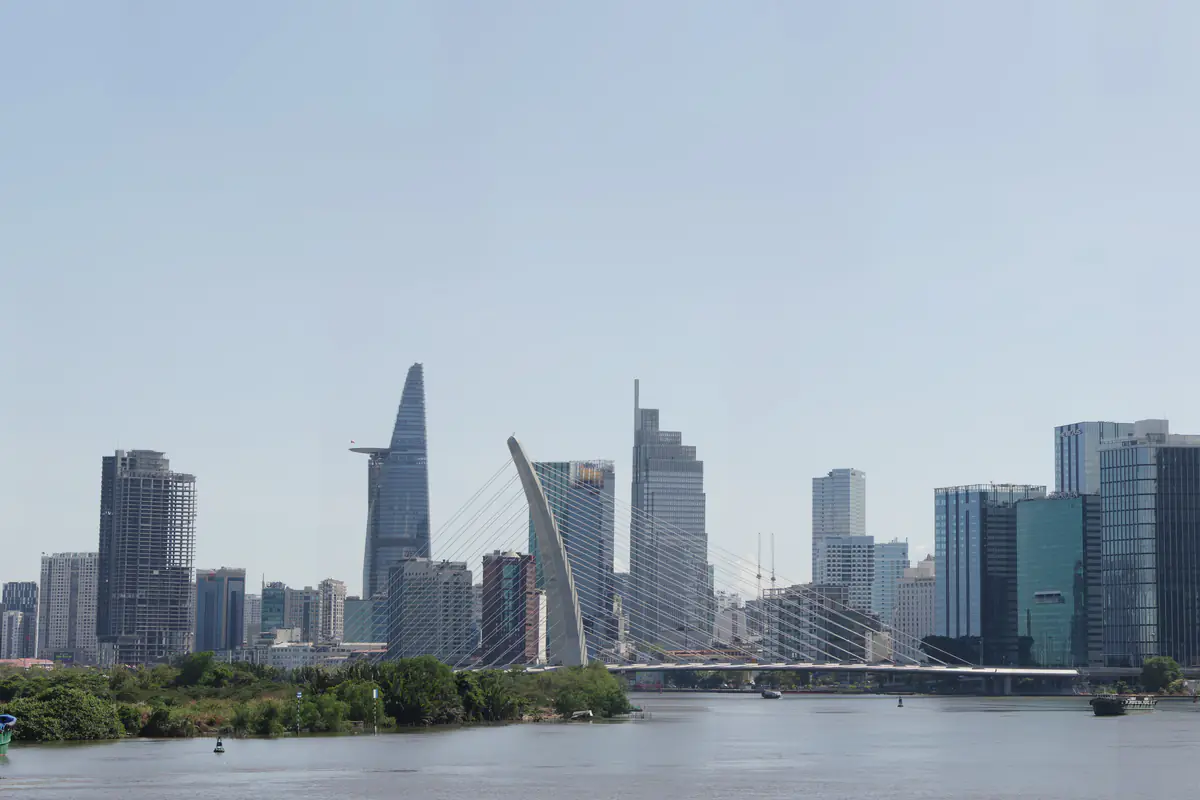
Photo: Pimnl
In Saigon’s rainy season, knowing when the rain usually arrives helps you plan the day. Mornings are usually dry, dark clouds pile up after lunch, the wind picks up and then the rain comes down hard. Motorbike riders pull under shop awnings to wriggle into ponchos, and street cafes drop their tarps. Most of these storms arrive fast, fall heavy and ease off, leaving shiny streets and an evening much cooler than the noon heat.
Ho Chi Minh City weather by month #
| Month | Average low-high | Rainfall |
|---|---|---|
| January | 23.0-31.8°C (73-89°F) | 29 mm (1.1 in) |
| February | 23.2-33.2°C (74-92°F) | 13 mm (0.5 in) |
| March | 24.6-34.5°C (76-94°F) | 16 mm (0.6 in) |
| April | 25.8-34.2°C (78-94°F) | 77 mm (3.0 in) |
| May | 26.2-33.0°C (79-91°F) | 219 mm (8.6 in) |
| June | 25.3-31.5°C (78-89°F) | 253 mm (10.0 in) |
| July | 25.0-30.7°C (77-87°F) | 295 mm (11.6 in) |
| August | 24.9-31.0°C (77-88°F) | 294 mm (11.6 in) |
| September | 24.6-30.6°C (76-87°F) | 346 mm (13.6 in) |
| October | 24.3-30.3°C (76-87°F) | 307 mm (12.1 in) |
| November | 24.0-30.7°C (75-87°F) | 147 mm (5.8 in) |
| December | 23.1-30.7°C (74-87°F) | 63 mm (2.5 in) |
The table shows 2015-2024 averages from Open-Meteo model data: the daily low and high and total rainfall for the month. They describe the climate, not the forecast for your trip, and model figures can differ a little from weather station readings.
December to April: the dry season, getting hotter #
December and January are the most comfortable months. Mornings are fresh, the air is dry, and walking around downtown or heading to the riverfront in the late afternoon is easy. Dry does not mean rainless, though: over the ten years of data, January was almost bone dry in some years and had more than 100 mm (4 in) of off-season rain in others.
February and March are the driest months, and the heat builds from there. March and April each average about 12 days with highs of 35°C (95°F) or more, and the daily peak "feels like" temperature averages 38-39°C (100-102°F). May brings the first storms but little relief: the humidity climbs, so it feels about as hot as April. In these months we suggest spending the middle of the day at your hotel or an air-conditioned museum. If you feel dizzy, nauseous or get a headache, get somewhere cool and rest right away.
The next Tet (Tết), the Lunar New Year, falls on Saturday, February 6, 2027, in the middle of the dry season. The weather is not the issue then; what matters is that flights and buses around Tet sell out early and many family-run restaurants close for the first days of the new year.
May to November: afternoon showers or all-day rain? #
Mostly afternoon showers. The rainy season usually starts in early May and runs to the end of November, and heavy rain with thunder tends to arrive in the afternoon or early evening. On long-term averages from Open-Meteo model data, about three fifths of the rain from May to November falls between noon and 6pm, and only around 15% between 6am and noon.
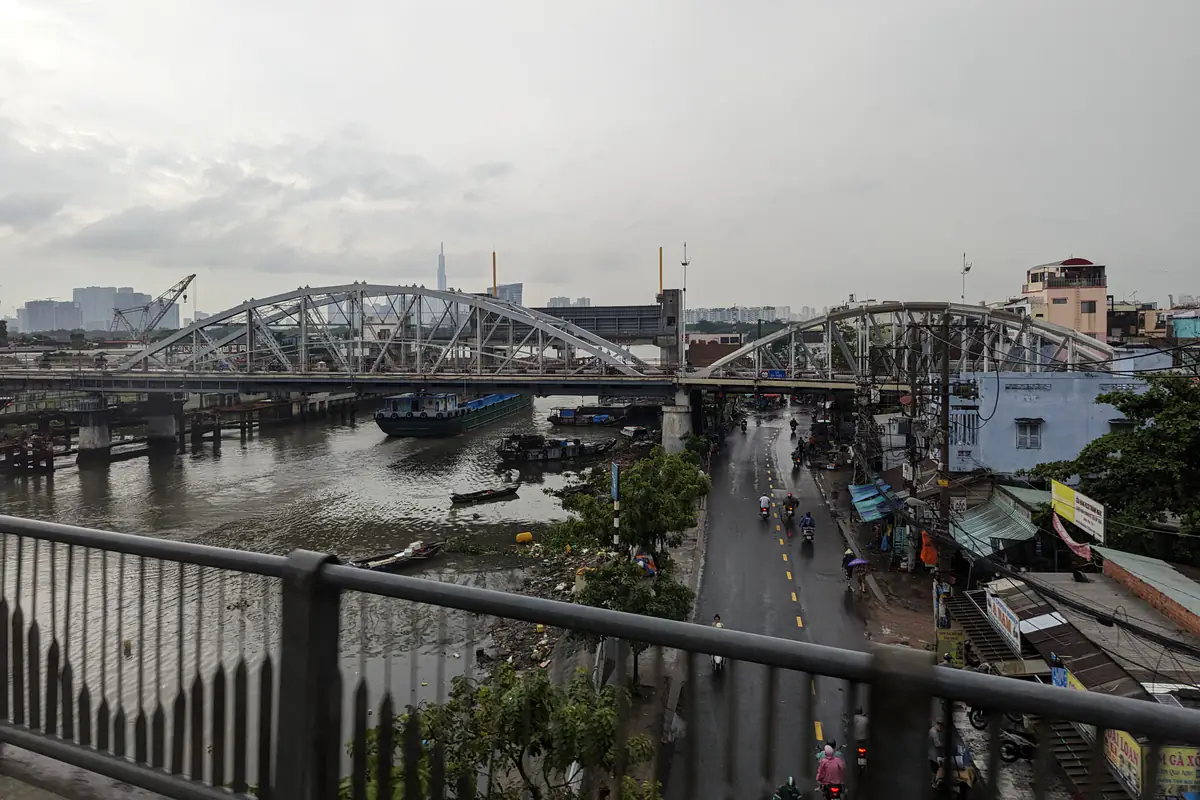
Photo: Syced
Some spells bring rain day after day. When the southwest monsoon strengthens, it can rain every day for a week to ten days, sometimes heavily. Longer wet spells happen too, so do not assume every rainy day will follow the usual afternoon-shower pattern.
When a typhoon or tropical depression passes nearby, the rain can be huge: on November 25, 2018, the remnants of Typhoon Usagi dumped more than 400 mm (16 in) of rain on Tan Binh (Tân Bình), more than the average for the whole of September, and many streets were still flooded the next morning.
September and October are the wettest months. In November, rainfall drops to about half of October’s and thins out toward the end of the month, as the south moves into its dry season.
Will the rain spoil your trip? #
Rarely, if you plan around it. Use the mornings for outdoor sights and longer trips: the Cu Chi Tunnels (địa đạo Củ Chi), a walk past the Central Post Office (Bưu điện Thành phố) and Notre Dame Cathedral (Nhà thờ Đức Bà), the riverfront. After lunch, move indoors: the War Remnants Museum (Bảo tàng Chứng tích Chiến tranh), Independence Palace (Dinh Độc Lập), the covered Ben Thanh Market (chợ Bến Thành), or an upstairs cafe where you can watch the rain. By early evening the rain has usually eased, and Nguyen Hue (Nguyễn Huệ) walking street and the night food areas fill up again.
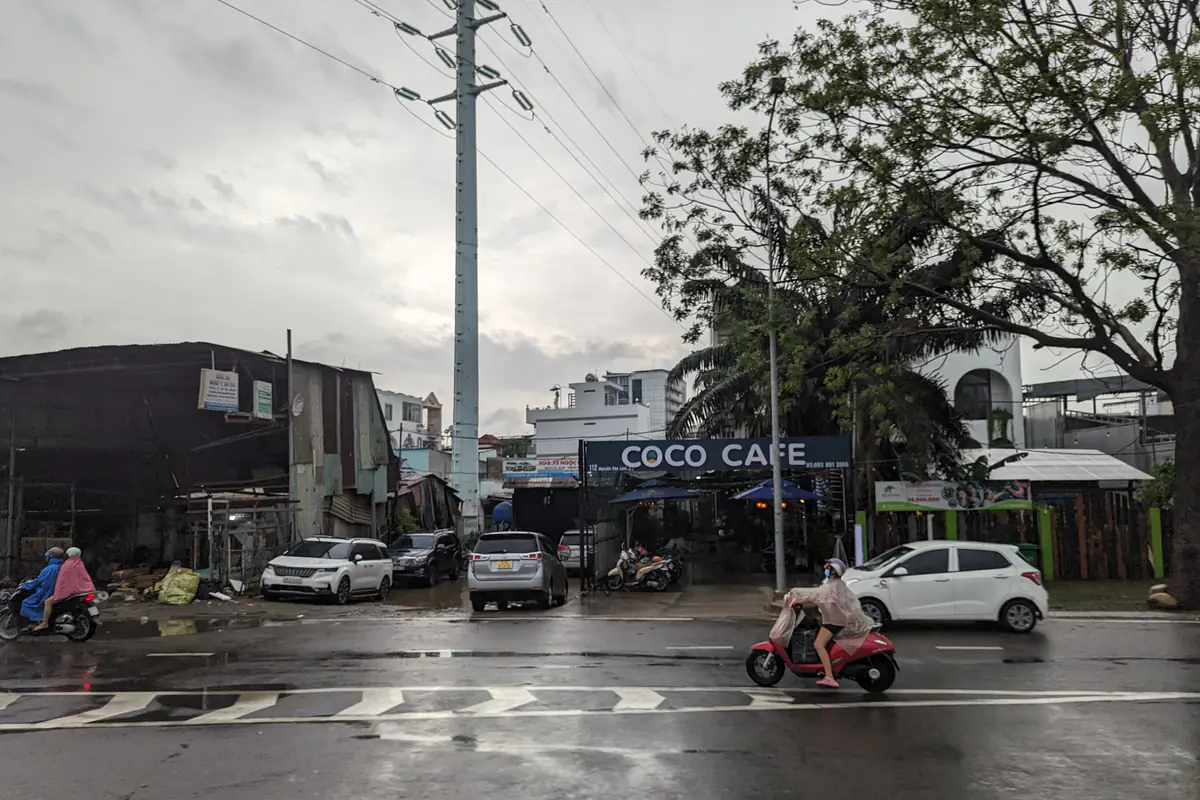
Photo: Syced
Ride-hailing fares can jump while it is pouring, so we usually suggest waiting for the rain to ease before booking a car. On the day you fly, especially on an evening flight in the rainy season, leave extra time for the ride from downtown to Tan Son Nhat (Tân Sơn Nhất) airport: heavy rain at rush hour slows traffic a lot.
High tides and flooded streets #
High tides (triều cường) are a late-year problem, and the year’s highest usually come between October and December. There are two spells a month, and they follow the lunar calendar: the Saigon River (sông Sài Gòn) peaks a few days after the 1st and 15th days of the lunar month, often around the 2nd-3rd or 17th-18th. During late-year high-tide spells, flooding often coincides with the morning and evening rush hours. Peak times vary by day and location, so check the tide bulletin for your dates. When a high tide meets a heavy downpour, the water drains slowly and floods last much longer.
Low-lying areas by the river and canals flood first: the south of the city around the former District 7 and Nha Be (Nhà Bè), including Tran Xuan Soan (Trần Xuân Soạn) and Huynh Tan Phat (Huỳnh Tấn Phát) streets, and the Thanh Da (Thanh Đa) peninsula in the former Binh Thanh (Bình Thạnh) district. Heavy rain can flood streets elsewhere too, main roads included. Traveling from October to December, we suggest choosing a hotel you do not reach through a low riverside area, and asking the hotel whether the street outside tends to flood.
To see whether your trip lines up with a high-tide spell, check a lunar calendar for your dates. A few days before you go, look for the tide bulletin from the Southern Regional Hydro-Meteorological Center, which local news sites repost with water levels and peak times.
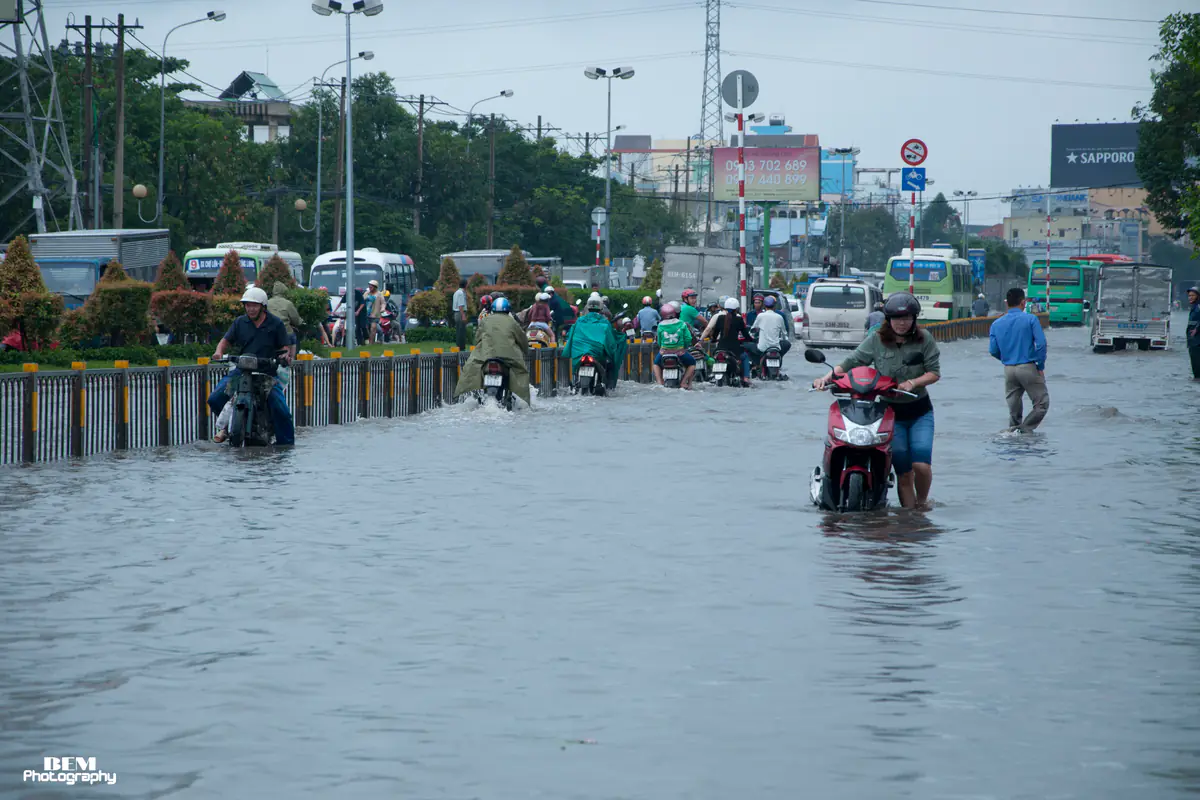
Photo: Bem photography
What to wear and pack #
- December-April: T-shirts and light, pale shirts, a wide-brimmed hat, sunglasses, sunscreen and a water bottle. Add a light layer for sleeper buses, cinemas and malls, where the air conditioning runs very cold.
- May-November: a packable rain poncho (a two-piece rain suit if you ride a motorbike yourself), strapped sandals or quick-dry shoes, and a waterproof pouch for your phone and passport. Convenience stores sell thin ponchos if you forget.
- All year: insect repellent, especially in gardens and along rivers. If you get a fever after mosquito bites, see a doctor, as our health tips for Vietnam explain.
Ho Chi Minh City weather: your questions #
Does it still rain a lot in Ho Chi Minh City in November?
Much less than in September and October. On the other hand, November is in the middle of high-tide season, so check the high-tide dates before booking a hotel in the low riverside south of the city.
Can I visit the Cu Chi Tunnels or the Mekong Delta in the rainy season?
Yes. Start early and put outdoor stops in the morning. A Mekong Delta (miền Tây) trip usually takes the whole day, so plan for afternoon rain rather than counting on being back before it starts. On delta boat trips, wait or reschedule if a thunderstorm comes. August to November is also the floating season, most visible upstream around Chau Doc (Châu Đốc) and Tan Chau (Tân Châu).
Does Saigon pair well with Nha Trang from October to December?
Their seasons do not line up. Saigon dries out from late November, while Nha Trang is in its peak rainy months in October and November, with rain often coming in spells of a few days and rough seas. If Nha Trang is on your route then, book flights and rooms you can change, and keep a spare day for the island trip.
Related posts
Weather
Nha Trang Weather in October: Rain Patterns, Sea Days and a Flexible Plan
October has many rainy days, but that count says little about how much of your trip will be wet. Hourly forecasts are more useful when deciding what to do each day.
Weather
Best Time to Visit Nha Trang: 12-Month Climate Table and Season Guide
The best time to visit Nha Trang depends on whether you want beach days, island trips or a slower, quieter break. The climate table and season notes below help you pick your dates; a forecast close to departure helps you adjust the plan.
Guides
Ho Chi Minh City (Thành phố Hồ Chí Minh) Airport to the City Center: Bus 109, Grab or Taxi
T1, T2 or T3, bus 109 or a Grab, where ride-hailing cars pick up at each terminal, typical fares, late-night arrivals and the airport touts to walk past.