Nha Trang Beaches: Where and When to Swim, and What to Know First
Nha Trang's main beach runs right past the hotels and costs nothing to use. For a swim in town, start with the buoyed zone nearest your hotel, check that lifeguards are on duty and follow the flags. Bai Dai (Bãi Dài) and Doc Let (Dốc Lết) offer alternatives if you are staying farther out or planning a day trip.
Written by Tụi mình mê biểnPublished Updated
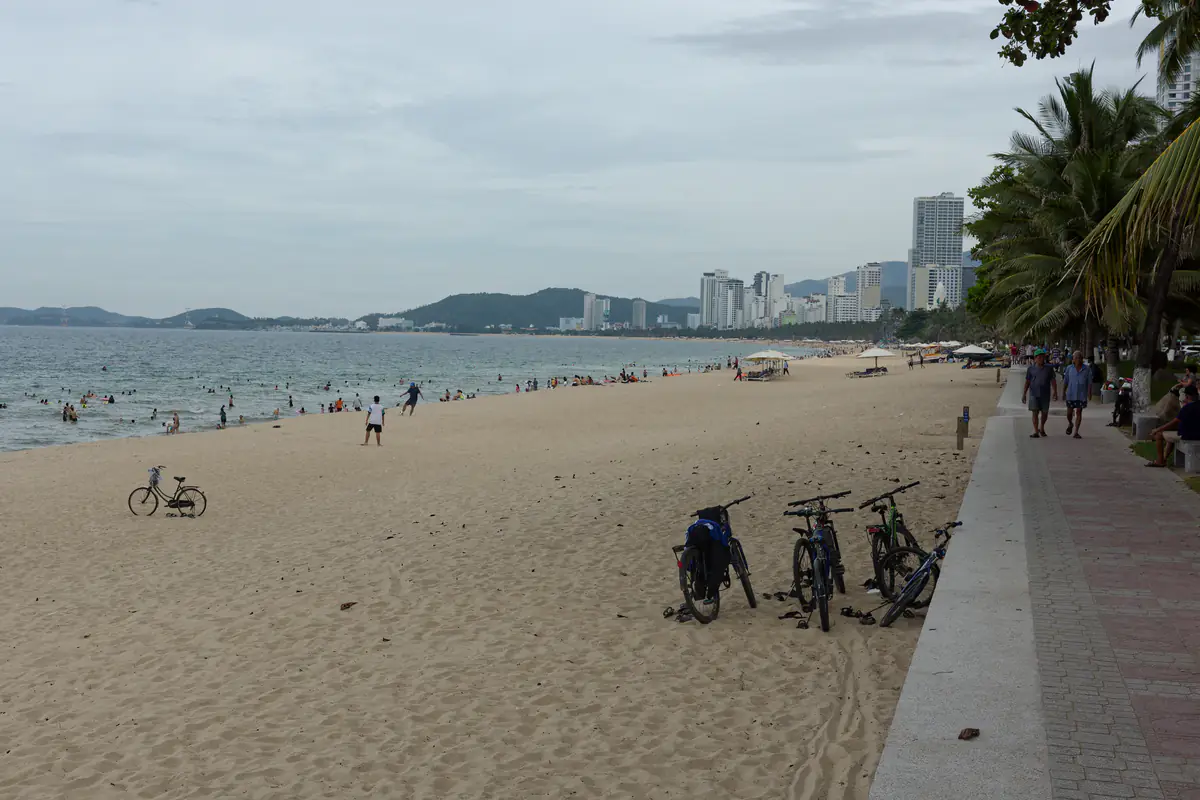
Photo: Leonid
The streetlights on Tran Phu are still on when the first swimmers wade in. The sun comes up out of the sea and older locals do their exercises on the sand. At midday the beach empties out, then fills again when the afternoon cools down.
Which beach suits your plans? #
Most visitors only need the beach across the road from their hotel. You might head further out for a quieter beach, a gently shelving one, or simply a rocky spot to sit and watch the sea.
| Beach | Good for | Safety note |
|---|---|---|
| Tran Phu, swim zone opposite Tram Huong Tower | First visit, a hotel in town, food within walking distance | Swim inside the buoys while lifeguards are on duty and follow the flags; swimming may be banned on rough days. |
| Tran Phu, the other swim zones | Hotels near Nguyen Chanh, Tue Tinh or Thanh Nien Park | Walk to the nearest buoyed zone; do not swim off an empty stretch with no buoys. |
| Pham Van Dong, Hon Chong beach | Staying on the north side, pairing a swim with Hon Chong and Po Nagar (Tháp Bà Po Nagar) | Rocky bottom; stay off the reef at low tide, skip it after heavy rain and after dark. |
| Bai Tien (Bãi Tiên) | Sea views, photos, sitting on the pebbles | Pebbles and rock ledges; we would not swim here. |
| Bai Dai (Bãi Dài), Cam Lam (Cam Lâm) | Resort stays, a wide and quiet beach | Open sea with little shelter; swim only where there are buoys and lifeguards on duty, follow the flags, use the pool on rough days. |
| Doc Let (Dốc Lết), Ninh Hoa (Ninh Hòa) | Families who want a gently shelving beach on a dry-season day trip | Children go in only inside a buoyed area with lifeguards on duty, following the flags, with an adult within arm's reach; waves pick up late in the year. |
Tran Phu: find the swim zone nearest your hotel
The beach is long but the places to actually swim are few: look up the buoyed zone closest to your hotel in the quick facts list above. Buoys sometimes come out and go back in later, so check that the line and a lifeguard are there when you arrive.
The zone in front of Tram Huong Tower, by April 2 Square (Quảng trường 2 Tháng 4), is the liveliest and most convenient: cross the road after a swim for breakfast, walk to the night market in the evening. On a first visit, we suggest starting here.
Hon Chong: rocks first, swim second
The stacked boulders of Hon Chong are for looking at and photographing; the ticket and the best light are covered under visiting Hon Chong and Po Nagar. The nearby sandy beach has a buoyed swimming area. Use it only while lifeguards are on duty and the flags allow swimming. The bottom is rocky and a reef sits close to shore, so do not swim past the buoys. On low-tide afternoons, rock and coral are exposed; the Nha Trang Bay Management Board asks visitors to watch from a safe spot, not to wade out, and not to step on or take coral.
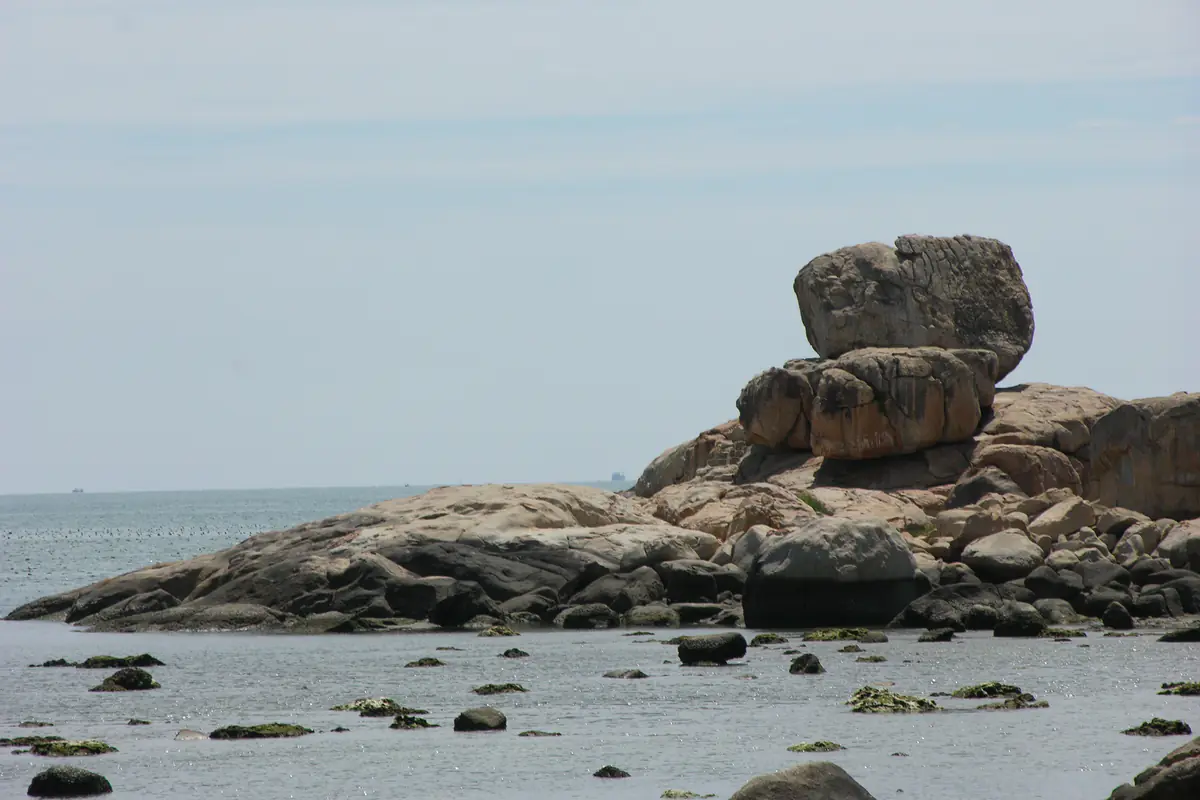
Photo: Vinhtantran
After heavy rain, pick another beach: when runoff exceeds pumping capacity, untreated wastewater spills into the sea at Hon Chong; a project to close the outfalls along the northern beaches is planned for 2026-2028. A swimmer drowned here in March 2026, and the board advises against swimming in risky spots, especially at night or when waves are high.
Bai Tien: for sitting on the rocks, not for swimming
Bai Tien, at the end of Pham Van Dong near the Luong Son (Lương Sơn) pass, is a cove of smooth pebbles and rock ledges where people come to watch the sea, fish and take photos. We treat it as a stop on a ride up the north coast; for a swim, head back to a buoyed zone in town. The rocks at the waterline are slippery, so wear shoes with grip and keep back from where the waves break.
Bai Dai and Doc Let: further out for more space
Bai Dai, south toward the airport, suits you best if you are staying at a resort there. It is wide and empty early in the morning, but it faces the open sea with little shelter, so it is not necessarily calmer than the bay. Swim only where there are buoys and lifeguards on duty and follow the flags; on rough days, treat the pool as your main swim. Choosing a resort there is covered in where to stay in Nha Trang.
Doc Let is nearly 50 km north, with gently shelving white sand, but wave conditions vary from day to day. If children are going in, choose a buoyed area with lifeguards on duty, follow the flags and keep an adult within arm's reach; adults should swim there too. The best months and how to pair it with Ba Ho (Ba Hồ) stream are in day trips from Nha Trang.
Beaches on islands such as Hon Tam (Hòn Tằm) and Hon Mieu (Hòn Miễu) are reached by tour boat; see which islands are open in Nha Trang island hopping.
When to swim #
Early morning is a good time for a first visit: the sand is cooler, and locals are out walking, exercising and swimming. Lifeguards on the central stretch work from 5am to 5pm (Bao Van Hoa, February 2026). Wait until a lifeguard is in place before you go in, inside the buoys and following the flags. To watch the sun come up first, check daily times with the sunrise and sunset tool.
From late morning into early afternoon the sun is fierce and the sand burns. According to the US CDC, UV reflects off water and sand, so you can burn even under an umbrella. We would head back for a rest and return once the light slants.
By three or four in the afternoon the heat eases and the beach fills up again, a good time for families. Be out of the water by 5pm, when the lifeguard shift ends; at beaches outside the central stretch, ask on the spot when they finish. The bay management board advises against swimming at night; evenings are for a walk or dinner.
Before you go in: buoys, flags and lifeguards #
A buoyed zone is a stretch of water marked off by a line of floats, watched by a lifeguard. Swim only inside it while the lifeguard is on duty, and do not swim past the line however calm it looks; the code of conduct for the Tran Phu - Pham Van Dong seafront park, in force since March 2025, also bans swimming outside the buoys and wherever a no-swimming sign is posted. Lifeguards signal conditions with flags, no-swimming boards, loudspeakers and in person. If you see a red flag or a no-swimming sign, stay on the sand. Not sure what a flag means that day? Walk over and ask; with a large group, tell the lifeguard before everyone goes in.
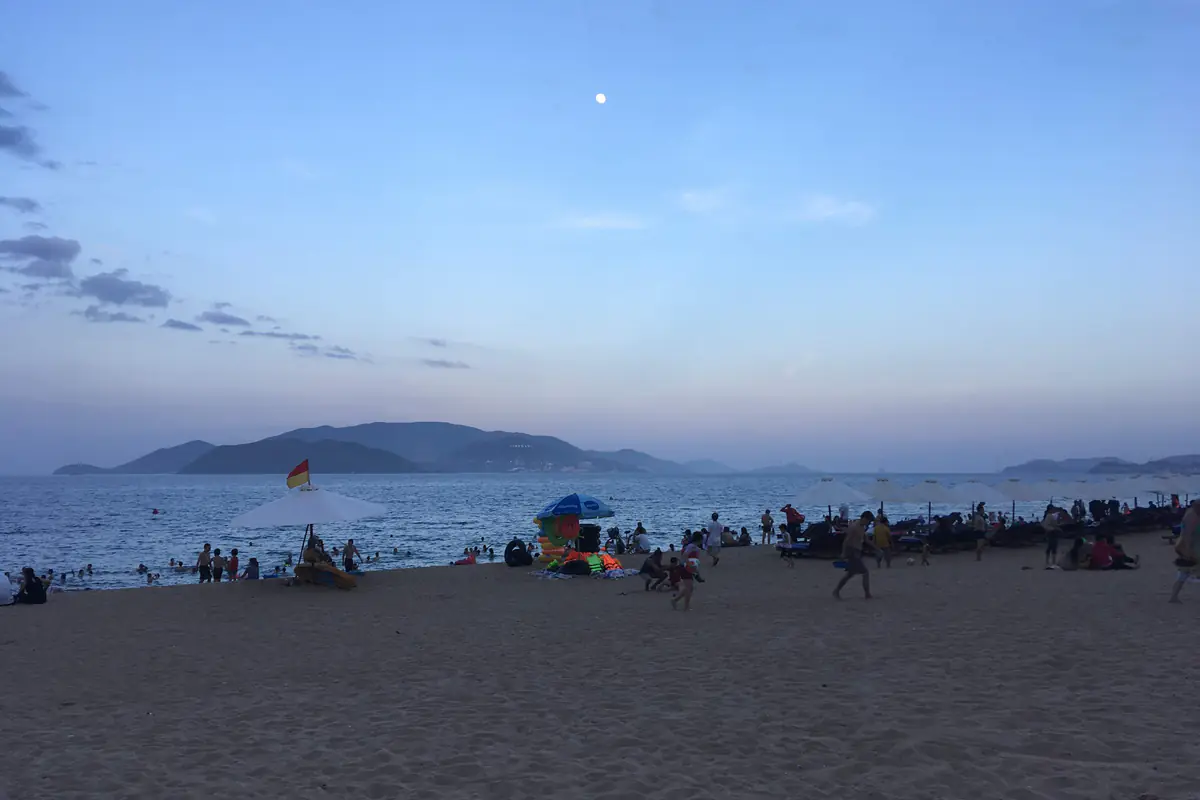
Photo: Christophe95
On rough days, exposed stretches along the seafront can be closed to swimmers. Before you pack a towel, check today's waves and wind, then follow the lifeguards' instructions on the beach.
Rip currents: why a calm sea can still be dangerous
A rip current is a narrow, fast channel of water running from the shore out to sea. The US National Weather Service notes that rips often form on calm, sunny days. Rip currents have also led to many rescues on Nha Trang's central beaches.
The bay management board says people with heart conditions or high blood pressure, or who have been drinking or taking drugs, should not swim in the sea, and even strong swimmers should warm up first. With small children, an adult stays within reach and watches them constantly; more on kids and the sea in Nha Trang with kids.
Loungers, showers, your bag and your bike #
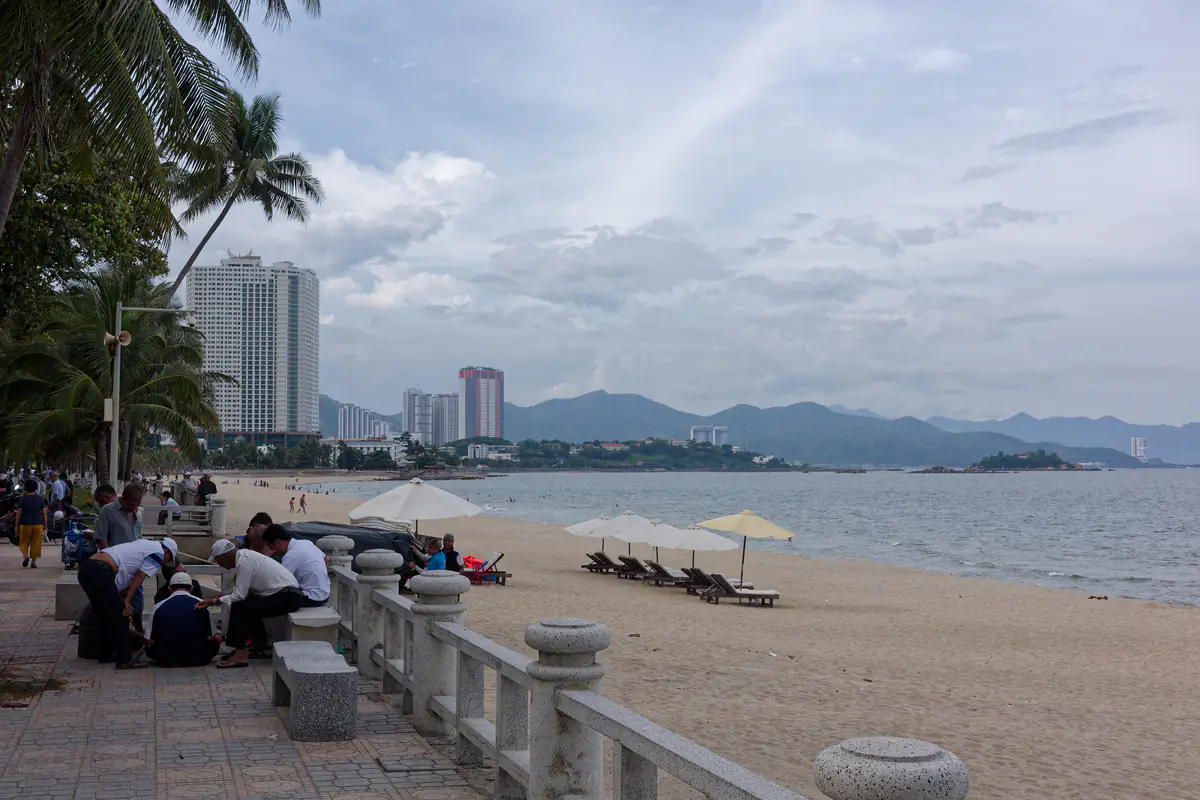
Photo: Leonid
Loungers and umbrellas belong to the businesses that lease sections of the beach, so ask the price before you sit down. Since August 12, 2026, Nha Trang ward has suspended loungers, tables and food service on the sand east of Tran Phu after 6pm, until further notice. If someone demands a "beach fee" while you are just walking, say no and tell a lifeguard or the ward police.
The foot-wash taps in the seafront park are for rinsing feet only; the rules do not allow showering, washing hair or laundry there. The easiest shower is back at your hotel; on check-out day, ask whether you can use the pool showers. If you rent a lounger, ask whether there is a freshwater shower.
The less you bring, the less you need to watch: a towel, a waterproof pouch for your phone and a little cash. If you are alone, leave your passport and valuables at your hotel and check whether the lounger operator offers bag storage before entering the water. In a group, take turns.
If you ride a scooter, use a staffed parking lot, take a ticket and keep it safe, and ask the price before you ride in; do not leave the bike on the pavement or the walkway.
Sand sea urchins and jellyfish: what to watch for #
In early October 2026, sand sea urchins (cầu gai cát) washed up in large numbers along the waterline in Nha Trang. About half the size of a rambutan, they are white with brown streaks and covered in fine, hair-like spines. So far there is no evidence their spines carry venom, but they are brittle and can snap off in the skin, causing pain, itching and swelling. The bay management board advises against walking barefoot where they gather, so wear water shoes along the edge.
The board says jellyfish usually appear on beaches inside the bay from May to August, mostly fire jellyfish or bits of tentacle drifting with the current. In summer 2026 they were dense around Hon Mun (Hòn Mun), with some swimmers stung at beaches in town too; a sting burns and raises a rash, and severe cases can lead to anaphylaxis. Look at the water before you go in and listen to the lifeguard announcements.
FAQ: swimming in Nha Trang #
Is there a Nha Trang beach without waves?
No beach is always calm. Doc Let has gently shelving sand, but wave conditions vary from day to day, and every beach has days with big waves and swimming bans. Check the wave and wind forecast, ask the lifeguard on the beach, swim only inside a buoyed zone while lifeguards are on duty and follow the flags.
Can I rent a jet ski or go parasailing on Tran Phu beach?
No. Jet skis and parasailing have been banned at all public beaches in Nha Trang for over 10 years and are only allowed in licensed waters at tourist areas and islands, away from swimming zones. If you book one, check the license and life jackets before you pay.
What is the best month for swimming in Nha Trang?
February to August is drier and the sea is usually calmer; September to December is the rainy season, with some rough days. Whatever the month, check the wave and wind forecast close to the day and the flags on the beach.
Can I fish in the swimming area or let my dog swim alongside people?
No. The seafront park rules for Tran Phu - Pham Van Dong, in force since March 2025, ban fishing near the shore within the swimming area and letting animals swim alongside people. Anglers tend to head to rocky spots such as Bai Tien.
📚 Sources
Information in this article draws on the sources below, as of the update date.
- Bao Khanh Hoa: Safety tips for swimming in Nha Trang, rip currents, 20 rescues on February 17-22, 2026 (February 23, 2026, in Vietnamese)
- NHS (UK): Jellyfish and other sea creature stings (last reviewed June 19, 2024, accessed October 14, 2026)
- Bao Khanh Hoa: Buoy lines reinstalled at five safe swimming zones in Nha Trang (April 7, 2026, in Vietnamese)
- Bao Van Hoa: Swimmers ignore high waves in Nha Trang; 25 lifeguards on duty 5am-5pm (February 22, 2026, in Vietnamese)
- SGGP: 10 banned activities in the Nha Trang seafront park, rules in force from March 24, 2025 (March 26, 2025, in Vietnamese)
- Thanh Nien: Nha Trang suspends services on the beach after 6pm (August 12, 2026, in Vietnamese)
- Bao Khanh Hoa: High-wave warning, swimming banned at exposed stretches along Tran Phu - Pham Van Dong (October 24, 2025, in Vietnamese)
- Dan Tri: Missing student found after swimming at Hon Chong, advice against swimming at night (March 10, 2026, in Vietnamese)
- NOAA Ocean Service: What is a rip current? (updated September 23, 2026)
- National Weather Service: How to Avoid Getting Caught in a Rip Current (accessed October 14, 2026)
- CDC: Sun Safety, UV index and reflection off water and sand (accessed October 14, 2026)
- Tuoi Tre News: Seeing sea urchins in Vietnam's Nha Trang? Don't fret (October 5, 2026)
- Thanh Nien: Sand sea urchins wash up in Nha Trang, are they dangerous? (October 5, 2026, in Vietnamese)
- Dan Tri: Spiny creatures wash up on Nha Trang beach (October 4, 2026, in Vietnamese)
- VnExpress: Jellyfish thick in Nha Trang waters, season May to August (August 7, 2026, in Vietnamese)
- CafeF: Hon Chong - Dang Tat reef exposed at low tide, visitors asked not to wade in (June 4, 2026, in Vietnamese)
- Thanh Nien: Khanh Hoa to close five outfalls along northern Nha Trang beaches (October 8, 2026, in Vietnamese)
- Tuoi Tre: Night swimming area opens in northern Nha Trang, 6:30pm-10pm (May 24, 2026, in Vietnamese)
- VnExpress International: TikToker fined after filming jet ski ride at Nha Trang beach, where it's been banned for a decade (April 1, 2026)
- VinWonders Wonderpedia: Bai Tien beach in Nha Trang, location and pebble shore (accessed October 14, 2026, in Vietnamese)
- Thanh Nien: Defibrillators along Nha Trang's seafront, Khanh Hoa 115 Emergency Center (August 21, 2026, in Vietnamese)
- Open-Meteo historical data 2015-2024: monthly rainfall in Nha Trang (compiled September 28, 2026)
Related posts
Islands & beaches
Nha Trang Diving and Snorkeling: What to Expect Before You Book
Beneath the blue of the bay, reefs are slowly recovering after years of damage. Before you book a dive or snorkeling trip in Nha Trang, it helps to know which option suits you, how a morning on the boat runs and what to ask the operator.
Islands & beaches
Nha Trang Island Hopping: Choosing a Boat, a Route and a Budget
Before booking an island tour, decide what kind of day you want, then confirm the pickup point, departure pier and inclusions.