Marble Mountains (Ngũ Hành Sơn), Da Nang (Đà Nẵng): Pagodas, Caves and the Climb Up Water Mountain
The Marble Mountains are worth a morning from Da Nang or Hoi An (Hội An). You only need one peak, Thuy Son (Thủy Sơn): get there at opening time and two to three hours covers its pagodas, caves and viewpoints before the heat builds. Am Phu Cave (động Âm Phủ) at its foot is an optional extra.
Written by Tụi mình mê biểnPublished Updated
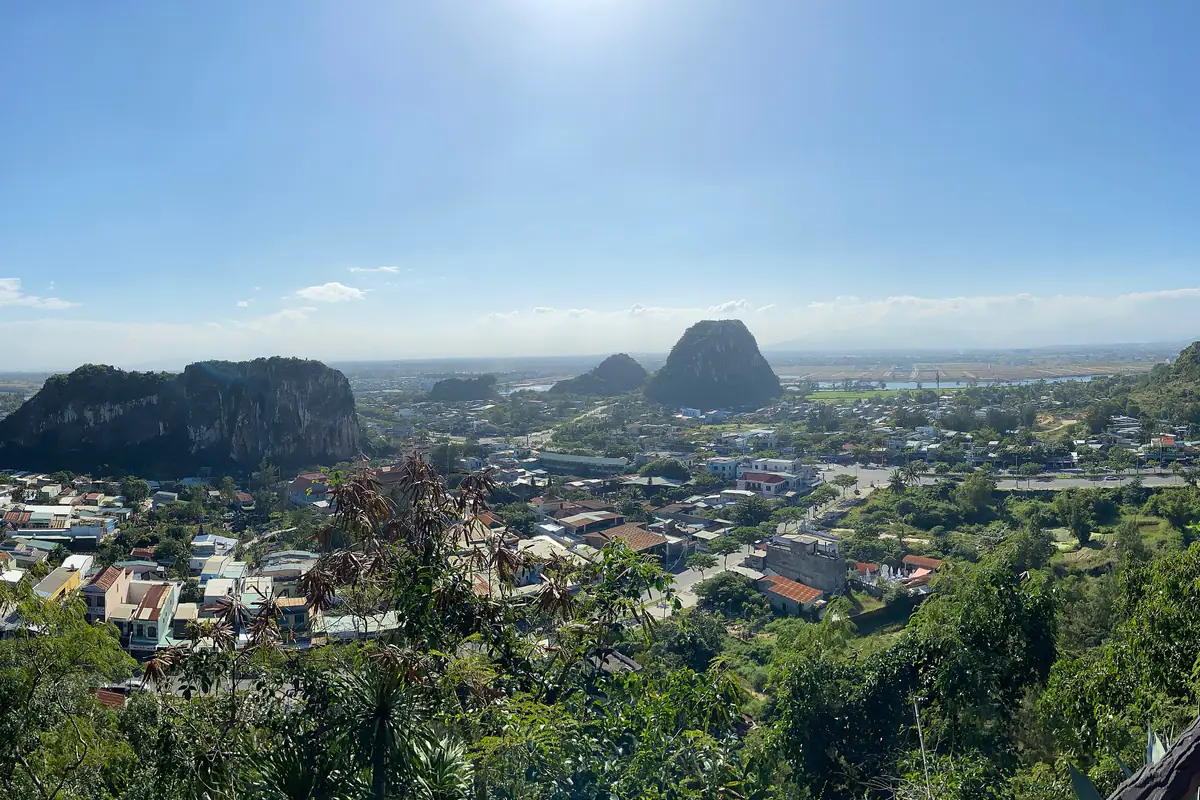
Photo: Kuroczynski
Head south out of Da Nang on the road to Hoi An and, between the beach hotels and housing blocks, a cluster of limestone outcrops rises from the coastal plain. Locals often call the area Non Nuoc (Non Nước). The five peaks are named for the elements, Metal, Wood, Water, Fire and Earth, but on a first visit you only need Water Mountain, Thuy Son, where nearly all the pagodas, caves and views are.
Are the Marble Mountains worth it, and how long do you need? #
The mountains sit on the road between Da Nang and Hoi An, tickets are cheap, and in a few hours you pass old pagodas, walk down into caves with Buddhas carved into the rock and look up the coast from above. This is still a working place of worship. The peaks stand in the middle of a suburb, ringed by houses and stone workshops, so if you are picturing wild karst scenery, expect something busier. Add about half an hour if you also visit Am Phu Cave.
These are entrance fees only, not transportation. The student rates do not say which cards count, so if you study abroad, show your card at the counter and ask.
When to go: beating the heat and the crowds #
Most steps and courtyards are in full sun, and by midday the pale stone throws the heat back at you. We suggest arriving at opening time, while the paths are cool and before the tour buses. After 4 p.m., keep the visit short and choose a few stops near the entrance; the site closes at 5:30 p.m. For the full two-to-three-hour circuit, set aside a morning. Huyen Khong Cave (động Huyền Không) is the exception: its shafts of light are stronger once the sun is high, so do the pagodas first and the cave last.
Da Nang's rainy season falls in the last months of the year. After rain, the polished marble steps and cave floors get very slippery. In light rain you can still walk the pagoda level in shoes with rubber soles, but skip the climb to the top. If there is a thunderstorm, heavy rain or a city flood warning, postpone the visit, even if you have booked a car. In November, learn how to read Da Nang flood warnings.
Weekends, public holidays and the Quan The Am Festival (lễ hội Quán Thế Âm) below Kim Son (Kim Sơn) are busiest. The festival runs on the 17th to 19th days of the second lunar month, which usually falls in March or early April.
Elevator or stairs? #
There are two ways up Thuy Son, each with its own ticket counter; on foot it is more than 150 stone steps. The elevator is at the Huyen Tran Cong Chua Street entrance (the one near Am Phu Cave has stairs only) and stops at Linh Ung Pagoda (chùa Linh Ứng) and the Xa Loi Tower (tháp Xá Lợi). To reach Tam Thai Pagoda (chùa Tam Thai), Huyen Khong or the higher viewpoints you still climb. We suggest riding up and walking down. On steep steps, go slowly, put your whole foot on each step and hold the rail or the rock, especially when it is wet.
If you have bad knees or a heart condition, are pregnant or are traveling with older relatives, take the elevator and stay around the Linh Ung level; check with your doctor before attempting the summit or the tight cave passages. Bring a baby carrier rather than a stroller, and hold small children's hands near steep steps and rock edges. Wear shoes with grip, carry water and a hat, and if the heat makes you dizzy, stop and find shade.
A loop of Thuy Son: pagodas, caves and viewpoints #
The paths form a loop, signposted at the main junctions. The stops below run from the elevator up, summit last.
Linh Ung Pagoda and the sea view
The elevator lets you out at Linh Ung Pagoda, which faces the sea and was rebuilt under Emperor Minh Mang (Minh Mạng) in 1825. A stone path to the right of the pagoda climbs to Vong Hai Dai (Vọng Hải Đài), a lookout over the long beach and, on a clear day, the Cham Islands (Cù Lao Chàm) to the southeast.
Tam Thai Pagoda and the river view
Next comes Tam Thai Pagoda, founded in 1630, with a wide courtyard, a Maitreya Buddha and plenty of bonsai, a good rest stop before the caves. Thuy Son's other lookout, Vong Giang Dai (Vọng Giang Đài), faces west over the other peaks and the Co Co River (sông Cổ Cò).
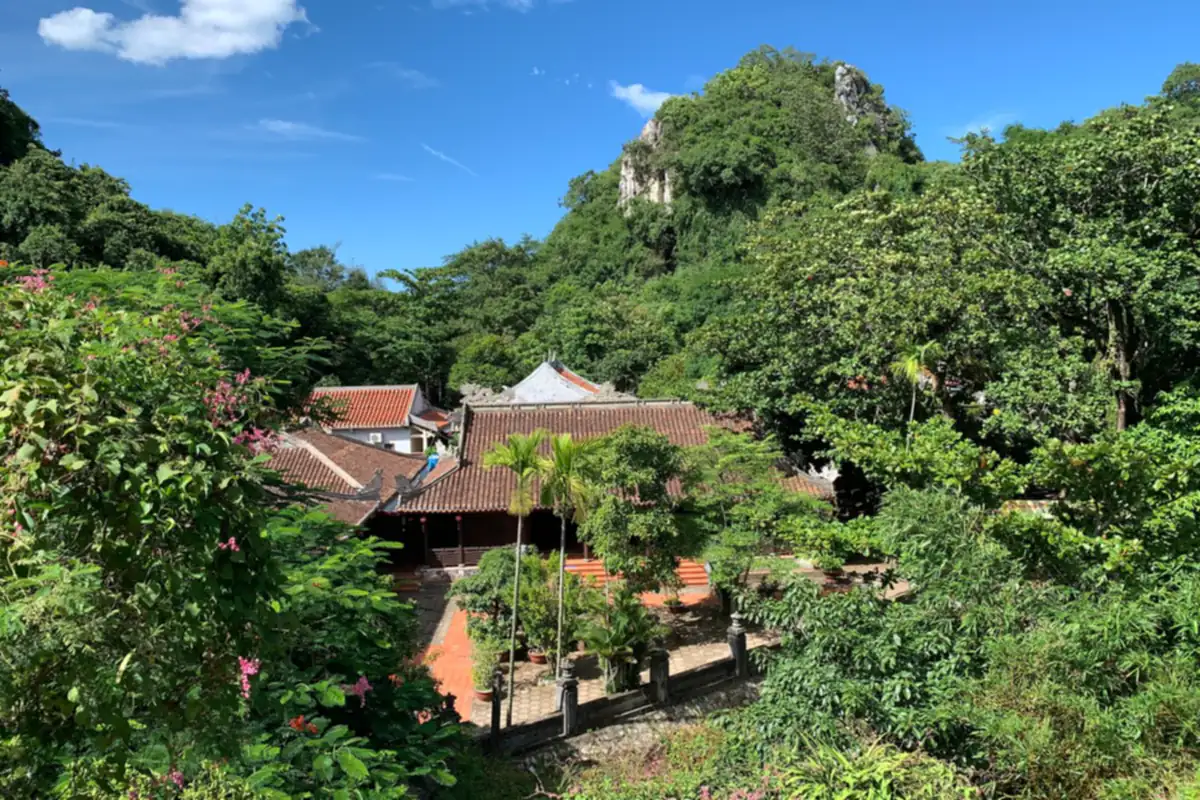
Photo: Chainwit.
Hoa Nghiem (Hoa Nghiêm) and Huyen Khong caves
To the right of Tam Thai a fairly level path leads to a stone gate inscribed "Huyen Khong Quan" (Huyền Không Quan). Just inside is the small Hoa Nghiem Cave, with a statue of Quan Am (Quan Âm), the bodhisattva of compassion. More than 20 steps further down is Huyen Khong, roomy, airy and to us the most striking cave on Thuy Son. Its roof is shaped like an upturned bell, and sunlight slants through openings in it and the incense smoke onto a Shakyamuni Buddha carved in 1960 by a Non Nuoc stone carver.
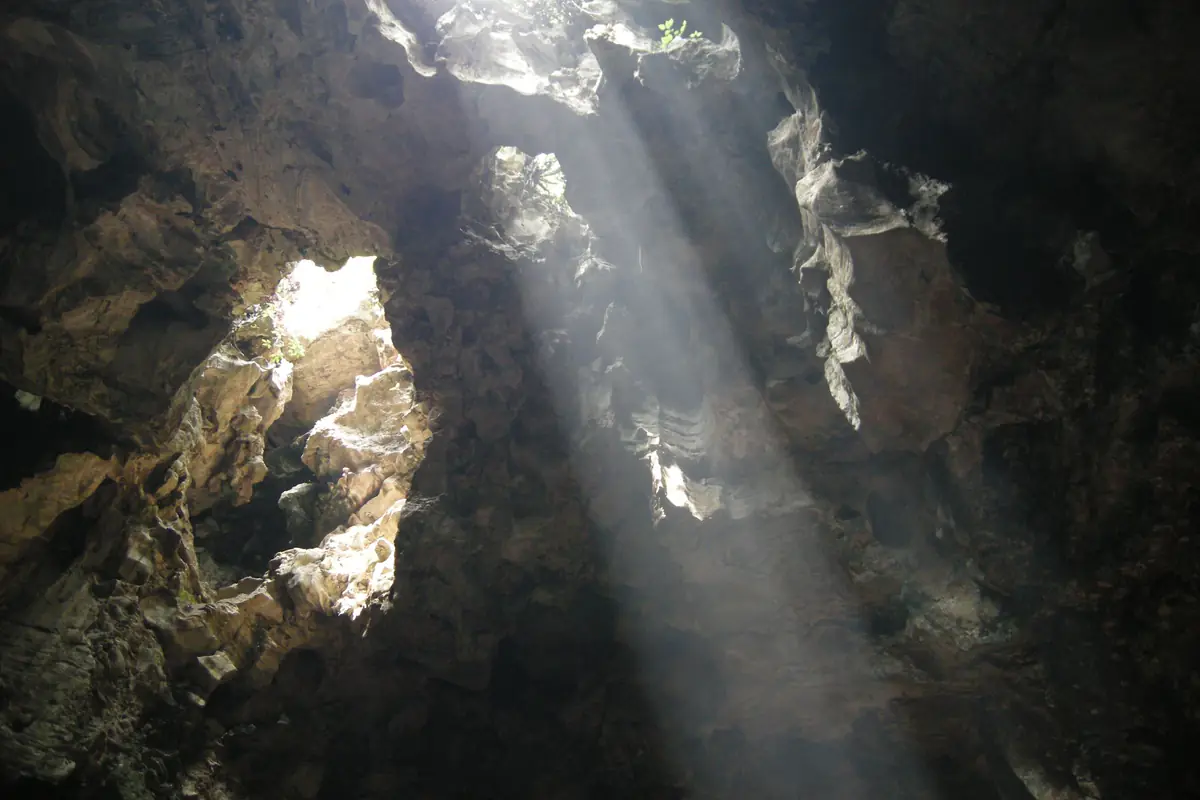
Photo: Vyacheslav Argenberg
The steps down into the cave are steep and damp, and your eyes need a few seconds to adjust after the sun, so pause at the top before you go down. During the wars the cave was a secret resistance base. Look out, too, for the Han Nom (Hán Nôm) inscriptions carved into rock faces around the mountain between the 17th and 20th centuries.
Tang Chon (Tàng Chơn) Cave and the climb to the top
On the way back, stop at Tang Chon Cave just behind Linh Ung Pagoda, a hollow open to the sky through a gap called Thien Long Coc (Thiên Long Cốc). The paths to the top are steeper and narrower, with sections where you steady yourself on the rock; the reward is the coast running north toward the Son Tra (Sơn Trà) peninsula. Keep both hands free, skip this part when the rock is wet or a storm is coming, and stay back from the edge when you take photos.
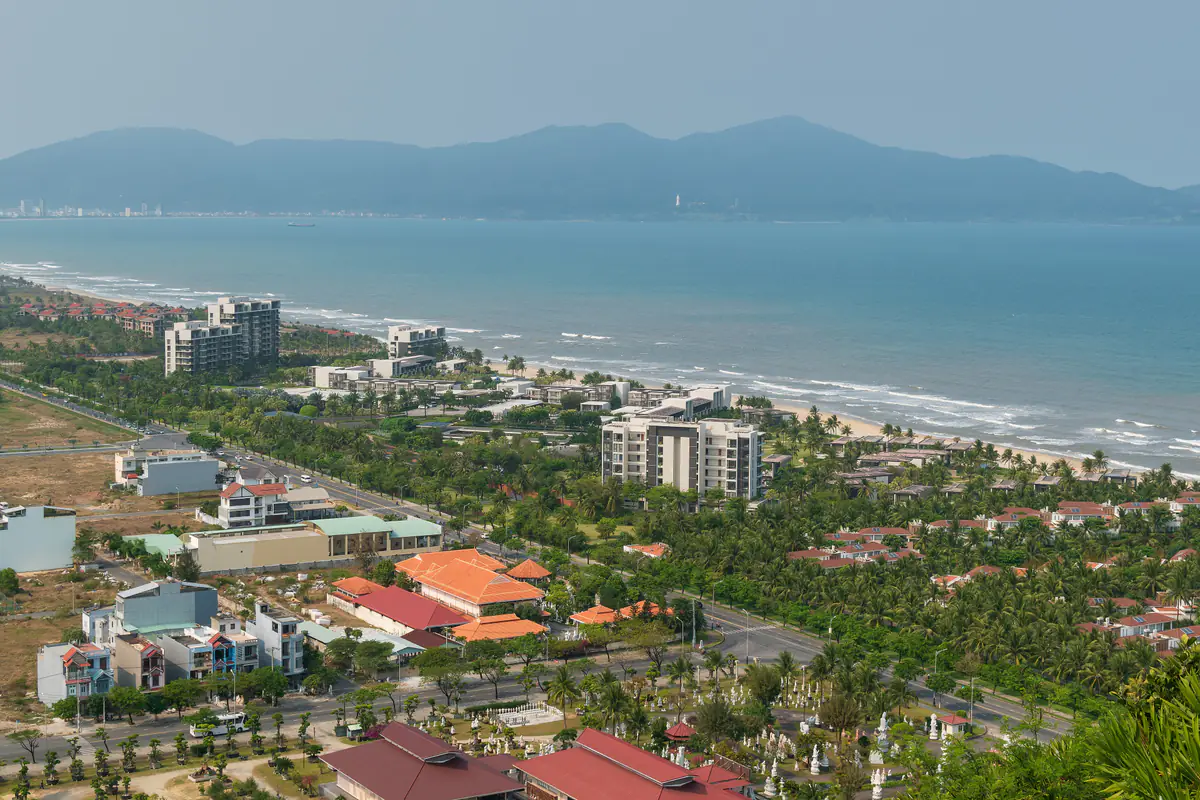
Photo: Dominic Nelson
Am Phu Cave: worth the extra ticket? #
Am Phu, whose name means the underworld, sits at the southern foot of Thuy Son with its own ticket. You cross the Am Duong Bridge (cầu Âm Dương), and inside the path splits: one branch goes down into "Hell", with statues acting out the punishments of folk legend, the other climbs toward "Heaven" on steps that grow lighter as you near the daylight. It is worth the extra VND20,000 if you enjoy folklore and do not mind dark, damp spaces. Passages are narrow and steep in places, so skip it if you are claustrophobic, and the punishment scenes are graphic for young children.
What to wear and how to behave in the pagodas #
Non Nuoc stone carving village: browse or buy #
Non Nuoc stone carving workshops, a craft dating to around the 17th century, surround the base of the mountains, their yards packed with Buddhas, lions and carp of every size. Browsing is fine without buying. Quarrying on the mountains has been banned since 1990, so carvers bring in stone from elsewhere: what you buy is Non Nuoc craftsmanship, not a piece of the mountain you just climbed.
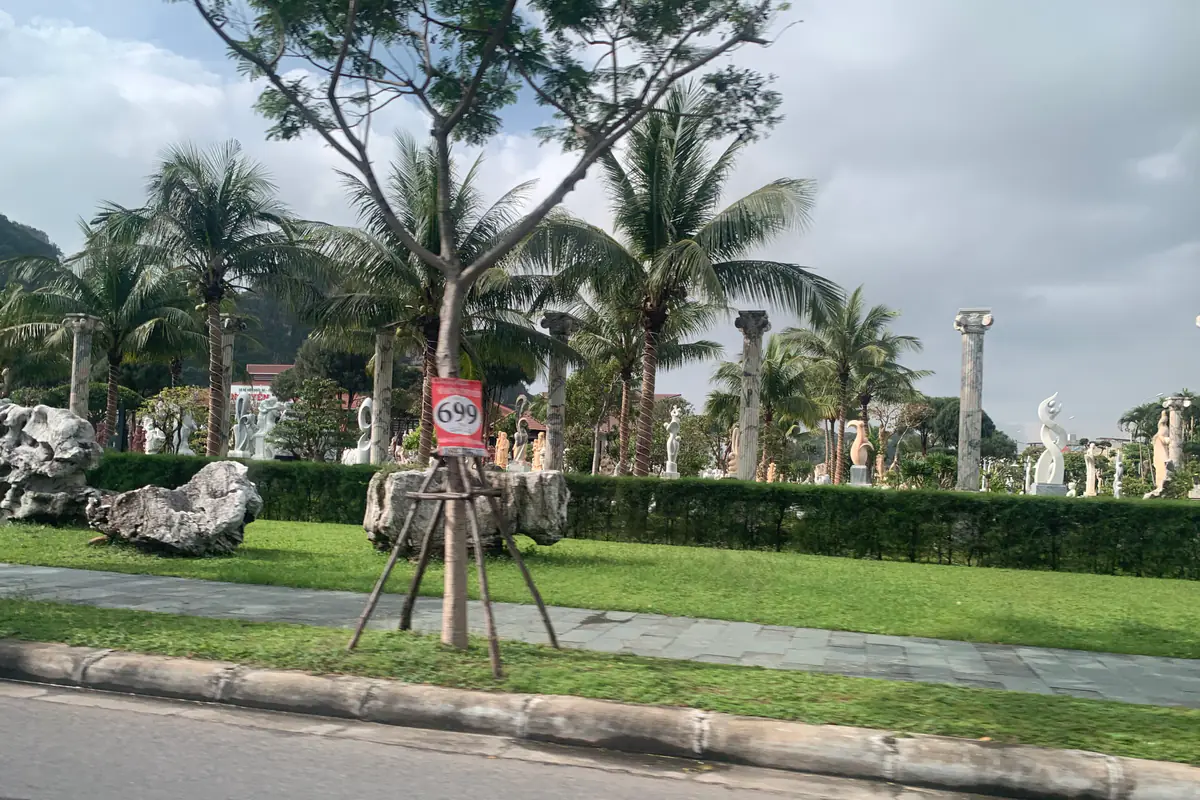
Photo: Martin Lewison
To buy, compare the same stone and size in a few workshops before you bargain. Ask what stone it is, whether the price includes crating and shipping to your country, who pays any import duties at home and whether you get an invoice.
Getting to the Marble Mountains from Da Nang or Hoi An #
From Dragon Bridge it is roughly 15 minutes by taxi or Grab. Set your destination as "Marble Mountains", "Ngu Hanh Son" or 81 Huyen Tran Cong Chua, not "Linh Ung Pagoda", which can send you to the bigger pagoda of that name on Son Tra.
Bus route 02, from Da Nang Central Bus Station to Cua Dai (Cửa Đại) in Hoi An, runs along Le Van Hien Street (Lê Văn Hiến). From Da Nang, get off at 754 Le Van Hien and walk about 550 m to the gate. From Hoi An, use the stop opposite 722-724 Le Van Hien, listed as Chua Non Nuoc. Stay on the sidewalk and use marked crossings. Buses run 5:15 a.m. to 6:30 p.m., every 15 to 30 minutes, for VND8,000 up to 10 km and VND20,000 for 10-25 km.
From Hoi An Old Town it is about 30 minutes along the coast road. We suggest climbing Thuy Son early, resting in Hoi An over lunch, then using the afternoon for a basket boat ride or a cooking class. The mountains sit between the two towns, so a morning visit works from a Da Nang or a Hoi An base.
Heading from Hoi An to Da Nang Airport? The mountains make a convenient stop along the way, with about 11 km still to go to the airport. Hire a car for the whole trip so your bags stay in it, stop only if you have allowed enough time for check-in, and skip it in rain or heavy traffic. Heading on to Nha Trang, you can visit in the morning and take an overnight train or a flight later that day.
Marble Mountains: common questions #
What else is nearby if I have time after Thuy Son?
Quan The Am Pagoda below Kim Son, part of the same cluster, has a museum of old Buddhist statues and ritual objects in its grounds.
Do I need a guide?
No. Signposts are enough to walk the loop on your own. For the stories behind each cave and inscription, ask at the ticket counter for a site guide, VND50,000 per group.
Can I swim at the beach afterward?
Non Nuoc Beach is just east of the mountains. Only swim in the buoyed area while lifeguards are on duty, follow the flags, and check the warnings posted on the beach before going in.
Related posts
Places
Things to Do in Hue (Huế): What to See in 1-3 Days
Plan by trip length: the Imperial City, three royal tombs, Thien Mu Pagoda, the Perfume River, Hue food and the Hai Van Pass, with ticket prices and a 2-day itinerary.
Places
Things to Do in Hoi An (Hội An): 1-Day and 2-3-Day Plans
Plan by trip length: the old town, tailors, basket boats, Tra Que, My Son and the Cham Islands, with prices, opening hours and a 2-day itinerary.
Guides
Da Nang (Đà Nẵng) to Hoi An (Hội An): Bus, Grab, Taxi and the Airport Run
Airport or city center, bus 02 or a Grab, where to catch a car at each terminal, typical taxi fares, a Marble Mountains stop on the way and when to leave Hoi An for your flight.